Basalt
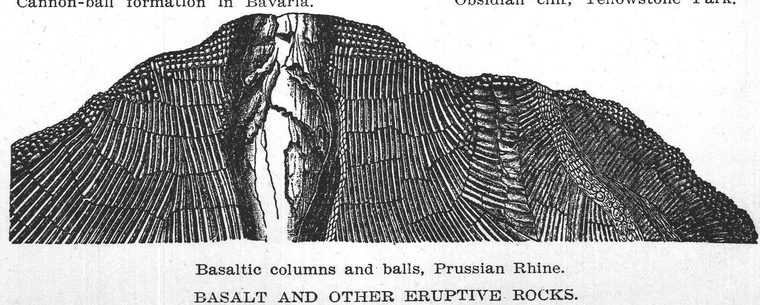
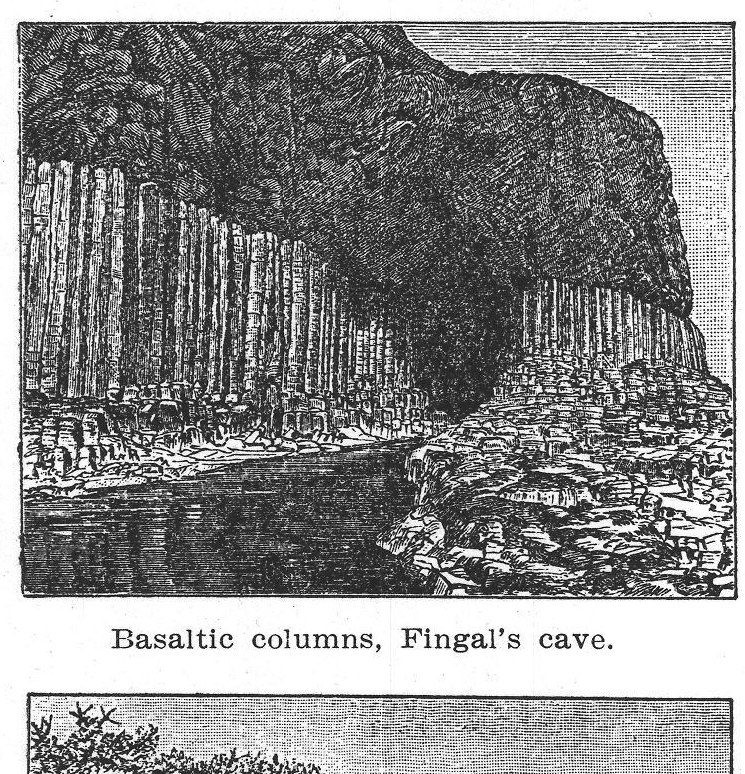
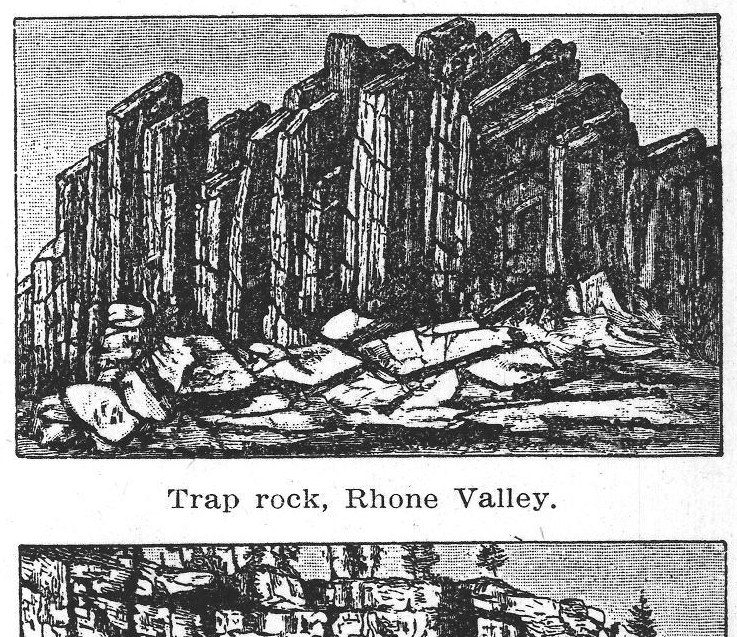
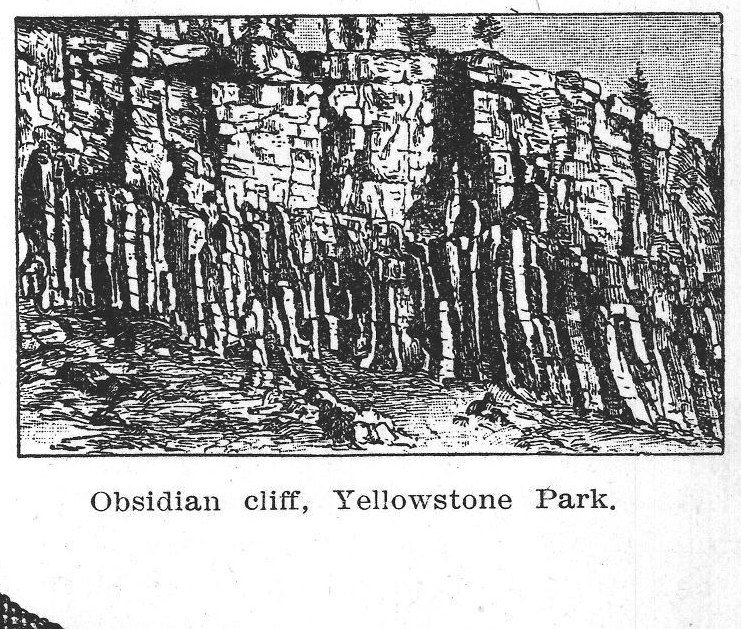
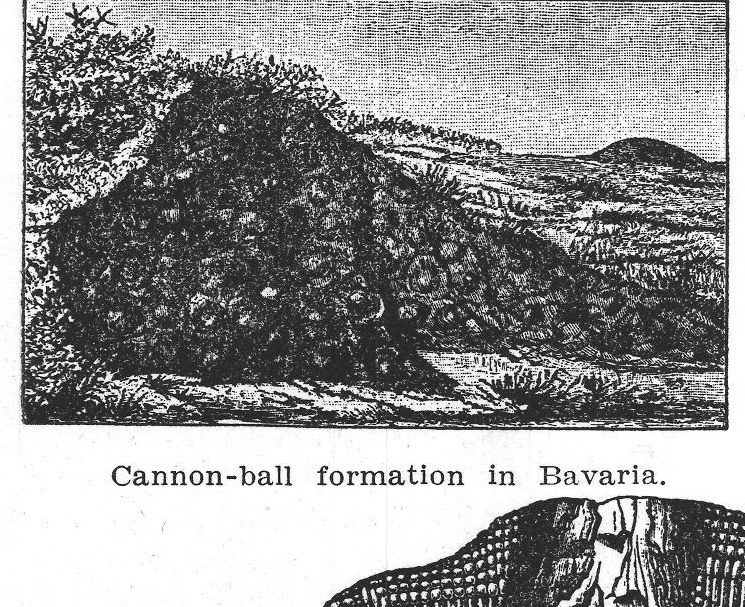
a dark, compact, finely grained, igneous rock. It is formed from lava by rapid cooling. It contains usually but little sand, potash, or soda; but is rich in lime, magnesia, and iron. When poured out into sheets, it is apt in cooling to take on what is known as a columnar or basaltic structure. The fluid mass cools into vertical, six-sided columns frequently of great regularity. The process is not essentially different from that which takes place when a mud flat dries and cracks in the sun, except that in the latter case regularity is lacking. The columns of the Giants' Causeway and of Fingal's Cave are familiar examples of a basaltic structure. The cliffs of the Columbia are noted for basaltic columns, as are the Palisades of the Hudson. In California, basalt forms the bottom rock under the gravel in rivers where the largest gold nuggets are found. The table lands of New Mexico and Arizona owe their shape to columns of basalt. See Lava; Volcano