Cat
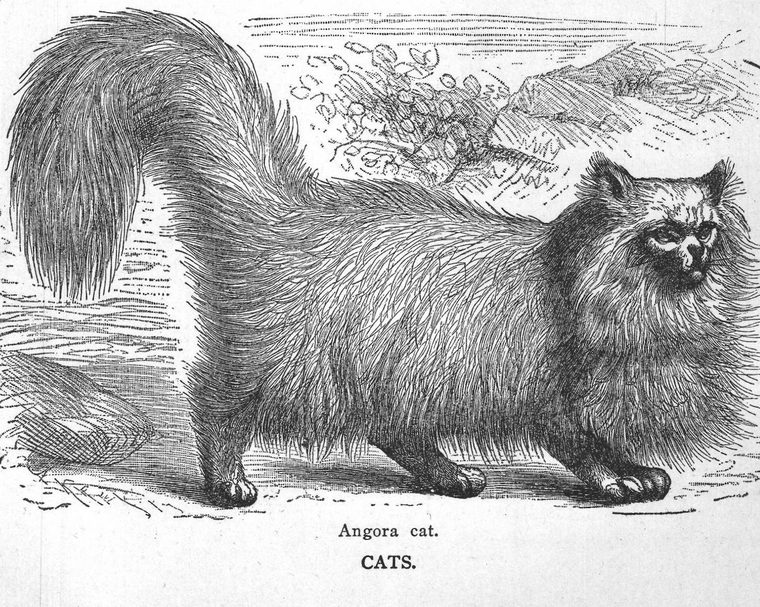
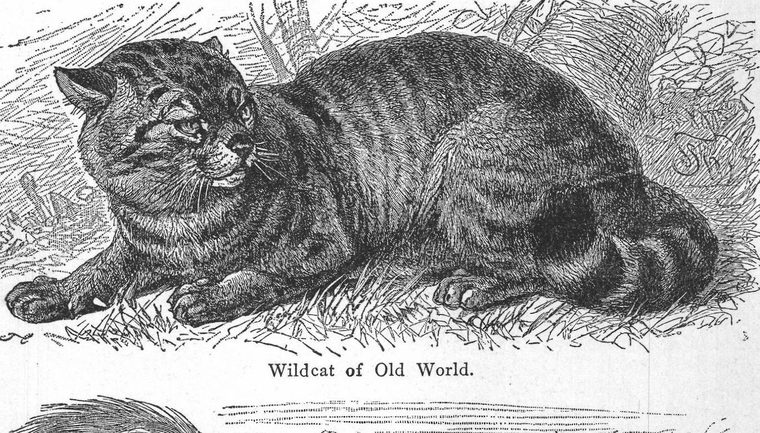
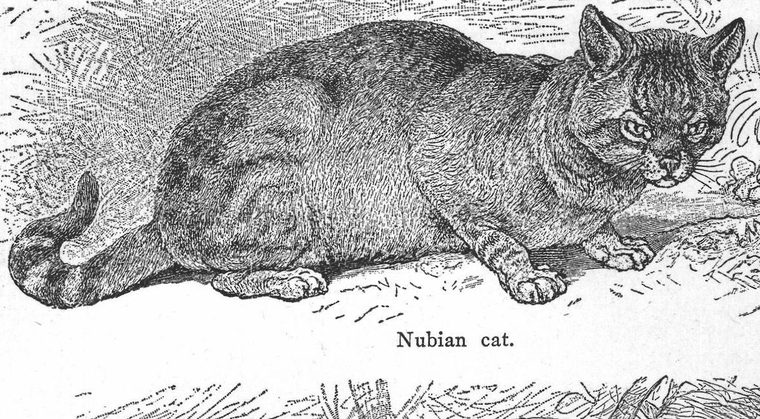
a family of animals including the lion, tiger, panther, lynx, and wildcat. Of all domestic animals the common house cat retains the greatest number of wild characteristics. It has never been tamed completely. It cannot be subdued by punishment, and, although attached to the fireside, it pines and dies in captivity. It seems to be very like some wild ancestor, and yet its origin is unknown. Domesticated animals are usually larger than their wild relatives; but the domestic cat is smaller than any known wild cat. Cats differ so that it is thought probable that they represent more than one forest cat of Europe and Asia, perhaps now extinct.
The cat is preeminently a hunter. It has a large, broad head, and a comparatively slender body, able to follow wherever the head can go. It has long whiskers or feelers on the sides of its face, calculated to assist its noiseless passage amid bushes or other obstructions. The pupil of the eye of the cat contracting or expanding in a marked degree adapts itself to varying degrees of light. That is why the cat can see as well at night as by day. The tongue is provided with rough, tooth-like projections that slant backward, giving it a rasping surface. The cat has five long, sharp claws on the front foot, and four on the rear. Each claw is hung on a peculiar joint, and is controlled by a pair of muscles. The under muscles draw the claws into position for striking and holding prey; while the upper muscles draw the claws upward and backward into little pockets in the ends of the toes, so that their owners can step softly on the ball-like projections of the foot. The cat has a remarkably lithe, powerful body, endowed with great endurance, giving rise to the proverbial expression that "a cat has nine lives."
Unlike the mink, the otter, and many other flesh-eating animals, the entire cat family shuns water. The fur is devoid of oil, and is, in consequence, naturally free from disagreeable odors. The cat is an exceedingly affectionate mother, and has a very amusing way of carrying her young about by the nape of the neck. The kittens are exceedingly frolicsome, giving rise to a Scotch proverb often offered mothers who are worrying about their wayward children, "A wanton kitten aye makes a douce cat."
Cats are usually classified as long-haired and short-haired, the former including the Siamese, Persian, and Abyssinian cats. The tabby cat, a term somewhat misunderstood, is applied to any cat having a light ground color with darker stripes, bars, or spots. Thus a yellow cat with orange red markings, or a gray cat with black markings, is a tabby. The term is derived from the name of a watered silk, which in turn had its name from the street of Atab in Bagdad, noted for its silk manufactures.
The service of the cat to the agriculturist is hardly appreciated at its full value. Although long recognized as a famous mouser and inveterate foe of rats, few realize that, without the assistance of the cat, it would be exceedingly difficult to raise or store food in the grain producing countries. Rats and mice, to say nothing of squirrels, multiply with such rapidity that they would devour not only grain in the fields but the grain in mills and elevators. We are sometimes provoked with the cat for disturbing the nests of innocent birds; but this offense is far more than offset by its service in protecting the food supply of mankind.
The Egyptians, who lived in what was called the "granary of the world," are said to have recognized the value of the cat at an early date. At all events the cat was carefully protected and even reverenced. Temples were erected in its honor. The members of the household shaved off their eyebrows as a sign of mourning when the cat died, and its mummied remains are found along with those of princes and priests.
It is said that the cat is wholly selfish in its actions, without affection for the members of the household. However that may be, the cat has long been a favorite companion, holding first place among pets. Robinson Crusoe, it will be remembered, was exceedingly attached to a cat. On the other hand, during the New England witchcraft craze, cats were considered the familiars of witches. Satan was supposed to communicate with his dupes by taking the form of a black cat.
The term cat has been applied variously. The cattail is a tall, aquatic herb, with sword-like leaves and a central stem, terminating in a cylinder of fuzzy seeds, something like a cat's tail. The cat-o'-nine-tails is a cruel whip of nine lashes, formerly used on British men-of-war. A cat-and-dog affair is a state of permanent hostility on a small scale, like that existing between the cat and dog. It is difficult to say just how the expression, "it rains cats and dogs," originated. To "let the cat out of the bag" is to divulge a secret, while, "a cat may look at a king," is expressive of the fundamental equality of man.