Chemistry
the science of the composition of material things. Chemistry aims to answer such questions as, of what are water, candles, air, and grass, in short, all things made? Of how many elements is the world composed, and what is each like? The subject of chemistry seems to have passed through five stages of development.
The ancients were fairly well agreed, the Greeks learning from the wise men of India, that the world is composed of four elements; namely, air, water, earth, and fire. Air is warm and moist, water is cold and moist, earth is cold and dry, fire is warm and dry. The air is the opposite of earth and water is the opposite of fire. They were also well acquainted with a number of practical operations, such as dyeing, glassmaking, soapmaking and working in gold, silver, copper, iron, lead, and tin. They were skillful in compounding cosmetics, salves, ointments, medicines, oils, paints, ink, perfumes, and poisons. The material of which all these substances, and many others, as wine and vinegar, in fact, the elements of which all substances are composed, were in their opinion, simply air, fire, earth, and water. Aristotle, the greatest gatherer and arranger of knowledge known to antiquity, added a fifth something, he did not know just what, but something outside of the four elements, a moving principle or force of some sort.
The second period in the history of chemistry is the age of alchemy. Wise men believed that iron was formed by water running into a crack of the heated earth; that water became air by fine subdivision; that fire turned to air when it went out; that air turned to mist, and mist turned to earth. Naturally they sought ways of turning cheap substances into valuable ones. The Egyptians, the Greeks, and the people of the Middle Ages were as fond of wealth as we are today. An enormous amount of making and carrying and buying and selling went on much as it does now. Gold and silver were prized. If all substances were at bottom fire, earth, air, and water, or, if not these, some other half dozen elements, and if one substance could be converted into its elements, and then by taking out part of one element or putting in more of another be changed into some other substance, why not become wealthy at a stroke by making gold and silver out of base metals? It is not surprising, then, that the alchemists of Egypt, Greece, Arabia, and of all Europe for a thousand years melted, heated, and stirred, added to and took from, trying to make gold out of sulphur or copper, and silver out of mercury. Many an enthusiast worked with furnace retort and crucible thinking himself on the verge of discovery. Many an imposter announced that the discovery was his. A feverish belief prevailed that the secret was out. If not known here, it certainly was known yonder. Fortunes were sunk in hopes of multiplying them. Needy princes borrowed and bestowed on alchemists that their coffers might be filled with streams of shining gold. Sir Walter Scott uses this delusion with good effect in describing the character of Dousterswivel in the Antiquary. Alchemy now seems to us a feverish craze, but in reality it was quite as sensible as many get-rich-quick schemes of the present day. The chief feature to be regretted is that men of science wasted their time so long and were diverted from making progress.
The third period of chemistry is noted for a theory that disease can be cured by chemicals. This theory came into vogue shortly after the discovery of America, and was part of the general stir of that time. The theory in brief is that the human body is made up of certain chemical materials, and that disease and illness are due to wrong relations between these elements--too much of one or not enough of another--and that it is the proper business of the physician and chemist to discover and administer the medicine that will establish harmony. One writer thought that these constitutents of the body were mainly mercury, sulphur, and salt. Too much sulphur gave rise to fever and the plague. An excess of mercury in the system was indicated by paralysis and depression, while diarrhoea and dropsy were due to an over supply of salt. In cases of dropsy the apothecary must take salt out of the system, or put in more mercury and sulphur. Of course, alchemy still ran its course; but the new theory of chemistry was a distinct step forward in that it proclaimed a higher motive. The chemist spent his time in making medicines rather than gold, and led the way to a more critical study of the nature of various plants and minerals with a view to their use as remedies. Chemical laboratories in the modern sense of the word, laboratories for investigation, date from this period.
The next period in the development of the theory of chemistry is the phlogistic period, during which a new theory of fire or combustion prevailed. According to this theory, fire is the outrush from burning stuff of phlogiston or fire material. According to this view, when a piece of coal burns the fire material is escaping. When this has all escaped ashes remain. A piece of wood, then, is made up of ashes and of this phlogiston, or fire material. The more nearly a substance could be consumed the more nearly it was composed of pure phlogiston. If the phlogiston and the coal ash could be brought together again, a piece of coal would be the result. This theory was acceptable by reason of fitting into so many experiments. It was held by all the eminent scientists of that period. In one respect, however, the theory was not satisfactory, and that defect led to its downfall and to the ushering in of the period of modern chemistry.
Coal and wood heated in an open retort do indeed throw off a something, be it phlogiston or what we please to name it. Whether the wood chars slowly or bursts into a flame, all that is left is a trifle of ashes almost as light as air. With coal and many other combustible materials the result is the same and was satisfactorily explained by the theory that phlogiston or fire material had been driven out by heat; but when iron or any other metal, that was not vaporized by heat, was subjected to intense heat in an open crucible, just as wood was heated, the metal grew heavier instead of lighter. Instead of driving off phlogiston, heat seemed to have added something to the metal. It seemed as though heat drove the greater part of wood and coal out to unite with something in the air, and that heat invited that something in air to enter iron and other intensely hot metals. When oxygen, that something in the air, was actually discovered and described, even though by men who were unaware of the service they were performing, the foundation of modern chemistry was laid and has not been shaken seriously since. According to modern ideas, the mystery of fire which had been a puzzle for centuries is simply the uniting of the substance, usually some form of carbon, with the oxygen of the air. Metals, intensely heated, attract oxygen, thus gaining in weight.
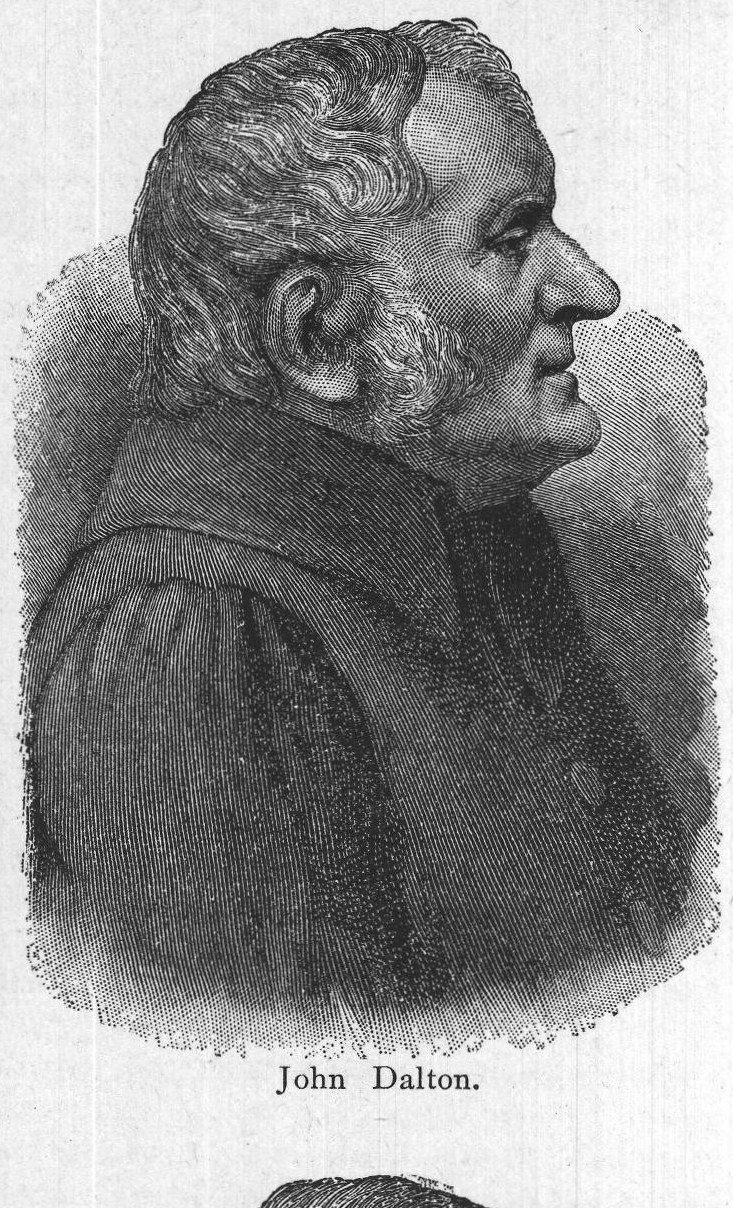
Chemistry now recognizes, not four elements, but over twenty times that number. Air is a mixture of several elements, water is a combination of two elements, separately invisible; fire is the uniting of two elements; and earth contains all the elements. Instead of striving to change iron and copper into gold, and mercury into silver, chemists now teach that, although elements may be combined into an infinite variety of substances, gold and silver and iron and mercury and many other substances are simple elements, and that no element can be destroyed or changed into another element. At the very basis of modern chemistry is the theory that each element, and hence the world, is made up of infinitely small particles, called atoms; far too small to be seen singly even under the most powerful microscope. These minute atoms are of different kinds--oxygen atoms, hydrogen atoms, copper atoms, iron atoms, gold atoms, sulphur atoms, silver atoms--all different. Atoms are exceedingly sociable and cling together in infinitely small groups called molecules. An atom will not leave the company of its associates unless thrown in with company it likes better. If similar atoms unite, we have an element, gold or oxygen, etc. If dissimilar atoms unite, as when atoms of hydrogen unite with half as many atoms of oxygen, we have a compound--in this case, water. An atom is unchangeable. Atoms of copper may shift about and be mixed as molecules today with zinc to form brass, and tomorrow be combined with chlorine to form a white powder; or they may combine with vinegar to form green, poisonous verdigris; but atoms of copper are still atoms of copper, and they are never anything else. The number of atoms of gold never changes. All the skill of man cannot make a gold atom or blot one out of existence.
The following table gives the names of elements with symbols and the theoretical weight of an atom as compared with the weight of an atom of hydrogen:
| Name | Atomic Weight. |
| Actinium | |
| Aluminum | 26.9 |
| Antimony | 119.5 |
| Argon | 40.? |
| Arsenic | 74.45 |
| Barium | 136.4 |
| Beryllium | 9.0 |
| Bismuth | 206.5 |
| Boron | 10.9 |
| Bromine | 79.34 |
| Cadmium | 111.55 |
| Caesium | 131.9 |
| Calcium | 39.8 |
| Carbon | 11.9 |
| Cerium | 138.0 |
| Chlorine | 35.18 |
| Chromium | 51.7 |
| Cobalt | 58.55 |
| Columbium | 93.0 |
| Copper | 63.1 |
| Crypton | See Krypton |
| Erbium | 164.7 |
| Ethereon? | |
| Fluorine | 18.9 |
| Gadolinium | 155.8 |
| Gallium | 69.5 |
| Germanium | 71.9 |
| Glucinum | See Beryllium |
| Gold | 195.7 |
| Helium | 4.? |
| Hydrogen | 1.0 |
| Indium | 113.1 |
| Iodine | 125.89 |
| Iridium | 191.7 |
| Iron | 55.5 |
| Krypton | 59.? |
| Lanthanum | 137.6 |
| Lead | 205.36 |
| Lithium | 6.97 |
| Magnesium | 24.1 |
| Manganese | 54.6 |
| Mercury | 198.5 |
| Molybdenum | 95.3 |
| Neodymium | 142.5 |
| Neon | 20.? |
| Nickel | 58.25 |
| Niobium | See Columbium |
| Nitrogen | 13.93 |
| Osmium | 189.6 |
| Oxygen | 15.88 |
| Palladium | 106.2 |
| Phosphorus | 30.75 |
| Platinum | 193.4 |
| Polonium | |
| Potassium | 38.82 |
| Praseodymium | 139.4 |
| Radium | 225.? |
| Rhodium | 102.2 |
| Rubidium | 84.75 |
| Ruthenium | 100.9 |
| Samarium | 149.2 |
| Scandium | 43.8 |
| Selenium | 78.6 |
| Silicon | 28.2 |
| Silver | 107.11 |
| Sodium | 22.88 |
| Strontium | 86.95 |
| Sulphur | 31.83 |
| Tantalum | 181.5 |
| Tellurium | 126.5 |
| Terbium | 158.8 |
| Thallium | 202.61 |
| Thorium | 230.8 |
| Thulium | 169.4 |
| Tin | 118.1 |
| Titanium | 47.8 |
| Tungsten | 182.6 |
| Uranium | 237.8 |
| Vanadium | 51.0 |
| Xenon | 128.? |
| Ytterbium | 171.9 |
| Yttrium | 88.3 |
| Zinc | 64.9 |
| Zirconium | 89.7 |
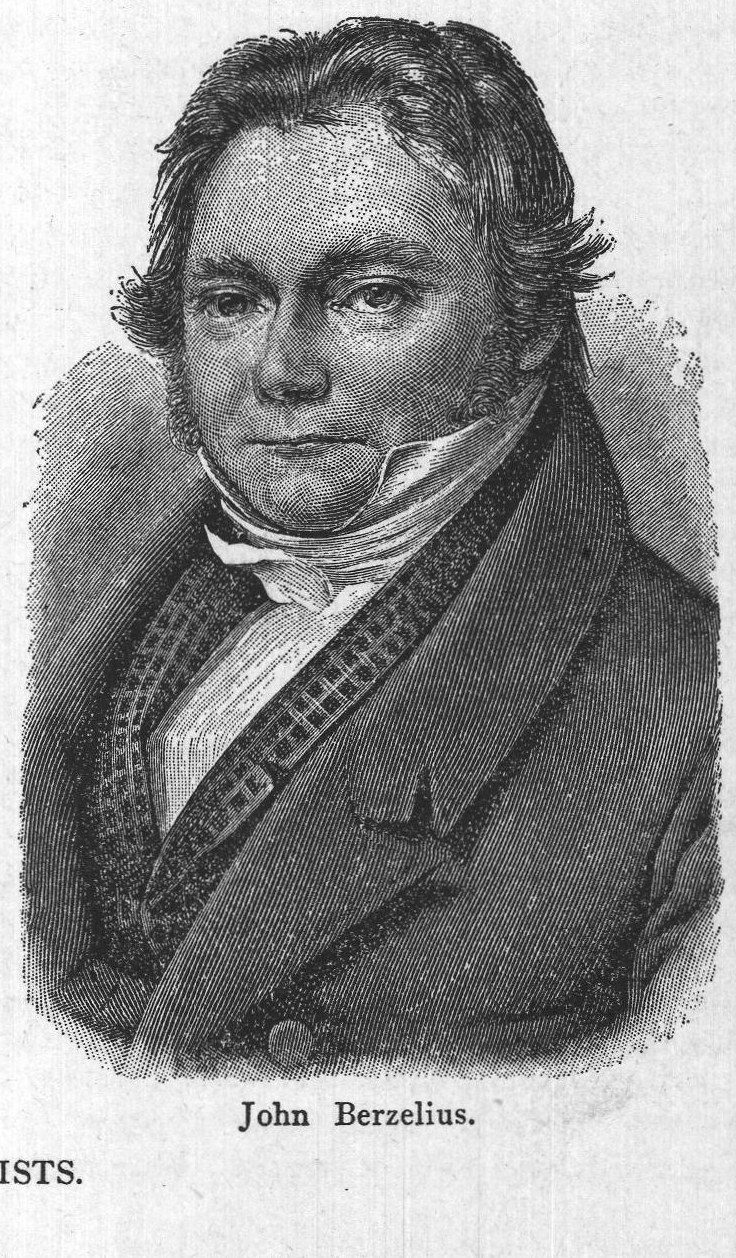
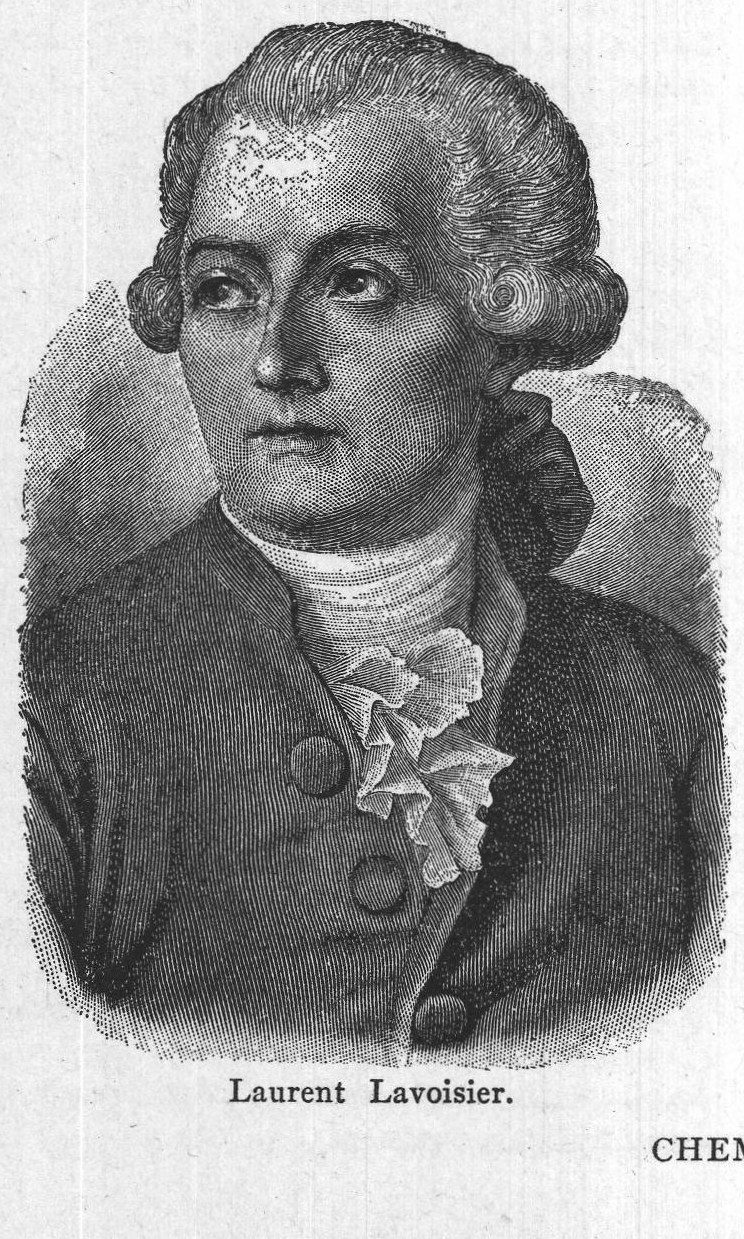
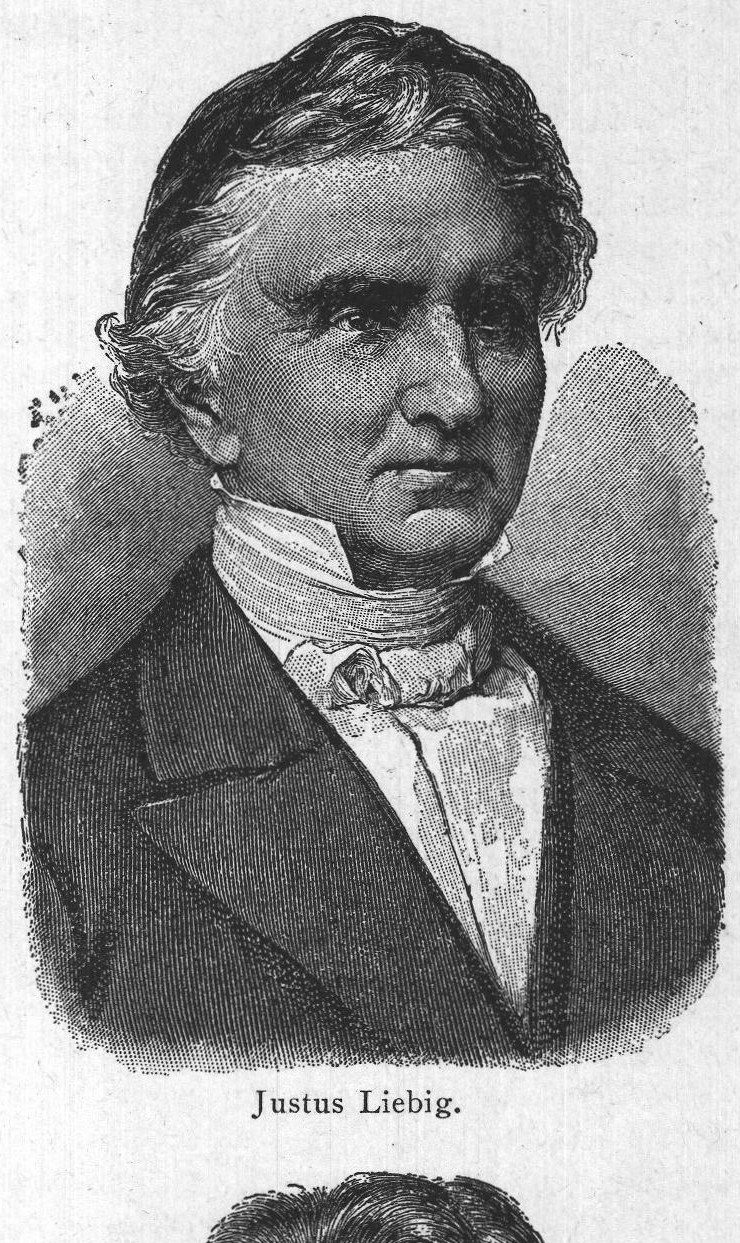
Separate articles on the principal elements may be found elsewhere. See also articles on various chemists, as BERZELIUS; LAVOISIER; LIEBIG; BUNSEN; DAVY; PRIESTLEY; DALTON.