Grass
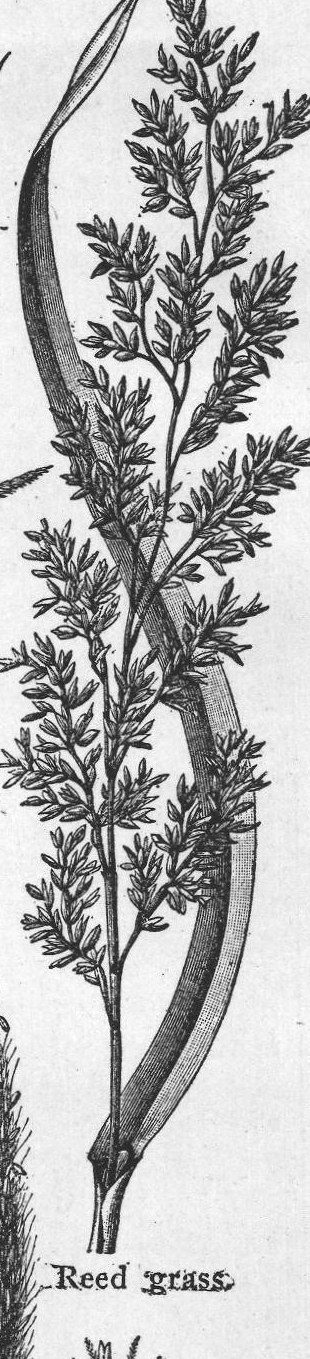
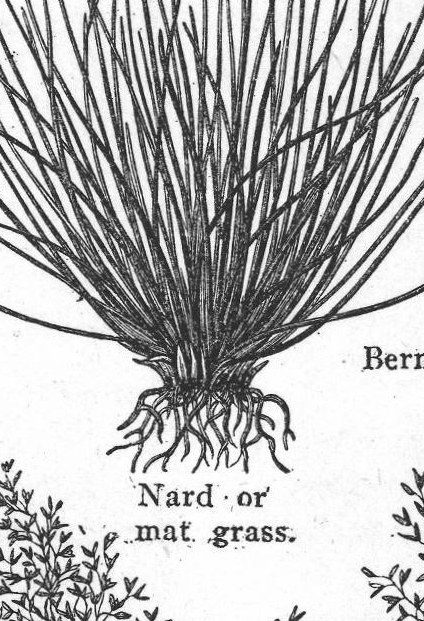
the most useful family of plants. While it is true that in a torrid climate people could exist on breadfruit and water, it is still true that the family of grasses does more to support human life and is more nearly indispensable than any other family of plants within or without the tropics. Wild grasses, timothy, redtop, blue grass, wheat, oats, rye, barley, rice, Indian corn, broom corn, sorghum, reeds, cane, and bamboo are grasses. Grasses may be told from sedges by their stems. Grass stems are usually round, hollow, and jointed, with leaves or blades growing on two sides. Sedge stems are usually three-angled, solid, without joints, and with leaves or blades on three sides. Sedges resemble grasses and are cut for hay, but they are not considered valuable.
Timothy and redtop are the most valuable of the forage grasses. Kentucky blue grass, which extends its range far into Canada, is the best American pasture and lawn grass. A running, underground, fleshy root-stock enables it to extend in hard ground and to withstand drought. When dry weather has killed the plant proper and the pasture is to all appearances dead, these thread-like fleshy rootstocks lie quiet like potatoes in a cellar, only to send up a carpet of green with marvellous quickness after a refreshing rain. So far as withstanding drought is concerned, it is better not to sprinkle often. Frequent surface sprinkling induces the root-stocks to lie near the surface where they may be killed by the hot sun of a few days neglect. Blue grass grows early and grows late. It is a boon to cattle and to dairy interests. Bermuda grass is the best in the South.
See also separate articles on the chief members of the family as OATS; BAMBOO; EXPORTS; TIMOTHY; BLUE GRASS.