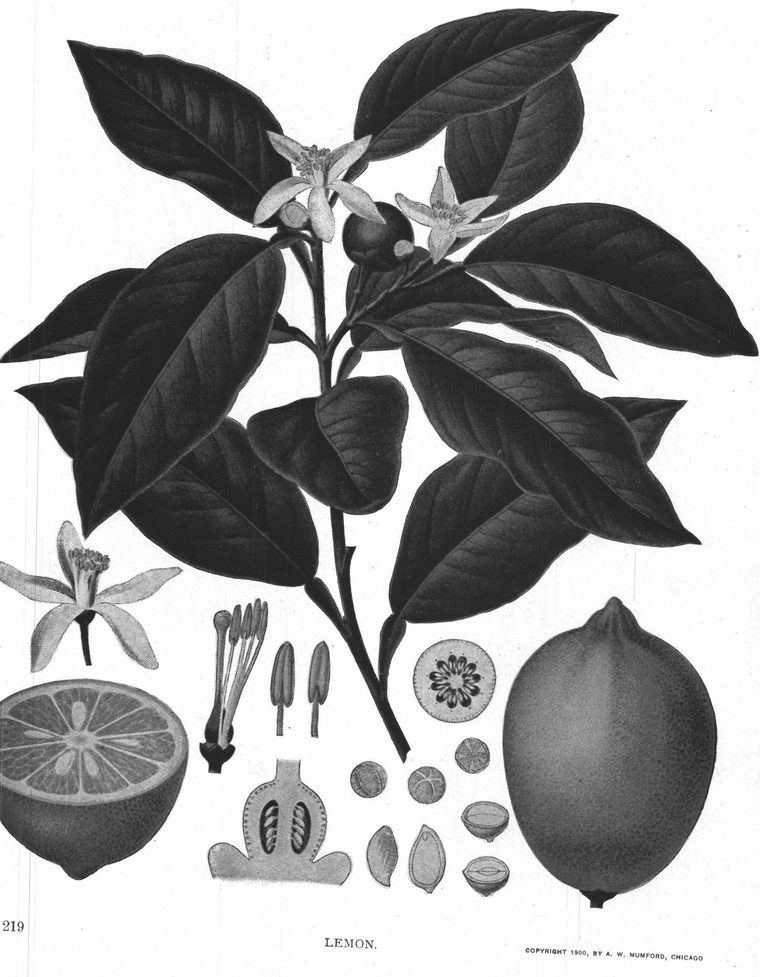
Lemon
a citrous fruit related to the orange. Like the orange, the lemon is a native of India but is less hardy and requires a situation with slight if any frost. The fine lemons of Europe are from Mediterranean countries. The best are from Sicily. Our lemon districts are Florida and California. The lemon groves of Florida were injured by the heavy frosts of 1894-1895, but are recovering. California shipped 5,378 carloads of lemons eastward in 1905, but we still import heavily from Italy.
Lemons grow on small, spreading trees or shrubs about ten or fifteen feet high. The flowers hang in whitish clusters. Their fragrance is less heavy than that of orange flowers. Botanically, a lemon is a large berry. It resembles the gooseberry and the tomato in structure. The juice is used in cooling drinks and for flavoring. Oil of lemon, or lemon extract, is pressed from the rind. It is used for flavoring and as the basis of perfumes. As compared with a lemon, the citron has a thicker, more tender skin and less juice. The lime grows on a smaller tree, and is smaller than a lemon. Its sourness is tempered by a dash of bitterness.
The lemon is more acid than the orange. A good lemon is about one-fourth rind, one-fourth pulp, and one-fourth juice. From two to four per cent of the whole is sugar; from six to nine per cent is citric acid.
In Sicily the lemon crop is gathered by hand with ladder and basket. The pickers, boys, women, and men, earn from eight to forty cents a day. The harvest costs about seven cents a thousand.
See Orange