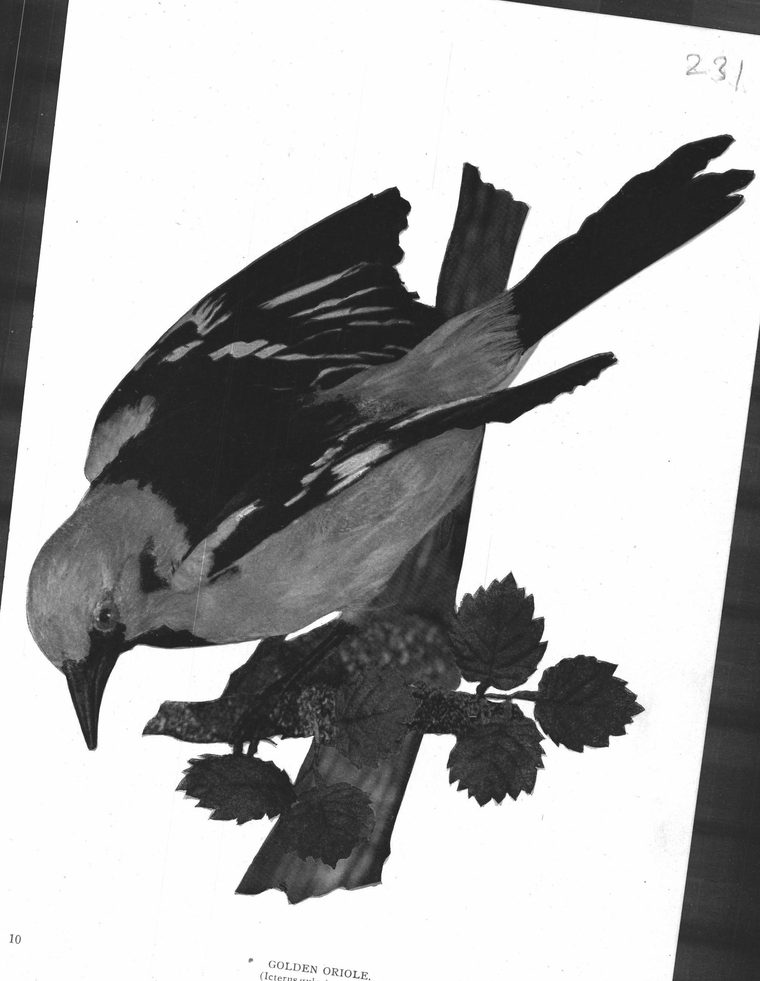
Oriole
o'ri-ol, a bird giving its name to a large family, including the bobolink, meadow lark, and blackbird. The orioles feed chiefly on insects, as caterpillars and beetles. The orchard oriole with black head, neck, breast, and back, and chestnut under parts, and his olive colored mate are familiar birds in the orchards and lawns of eastern North America. A deep pocket-shaped nest of woven threads and grasses is hung from the tip of a limb twice a person's height from the ground. It receives from three to five bluish white eggs with dark spots. Chapman says, "There is an air of refinement about this bird which seems to pervade his whole life history. He dresses quietly but with excellent taste, his nest is of the choicest materials. Words cannot describe his song, but no lover of bird music will be long in the vicinity of a singing orchard oriole without learning the distinguished songster's name." The Baltimore oriole occupies the same range, going likewise to Central America for the winter, but it is a shyer bird and swings its nest from higher twigs, up to sixty feet in the cottonwoods of the West. This is the species of which Whittier writes,
His hair-swing cradle straining.
The male is clad in shining black and deep, rich orange,-the colors of Lord Baltimore, whence the name. The female wears the same colors but duller and less striking in effect. The oriole is a favorite bird with American writers. Mrs. Olive Thorne Miller has written entertainingly of orioles and their young.
The fire-plumed oriole,
says Holmes, and we may add this word from Bradford Torrey: "Whist! there goes an oriole, a gorgeous creature, flashing from one elm to another and piping in his happiest manner as he flies."