Seed
in botany, the matured ovule of a flowering plant. A seed, or a group of seeds, with the parts that contain it, is a fruit. A bean pod, with its contents, is the fruit; the beans are seeds. The hard, shelly pit of a plum is not the seed; the seed is the meaty, almond-shaped portion within. It is difficult sometimes to distinguish the seed from the dry fruit. The seed of the lettuce, the dandelion, and the little yellow seeds on strawberries are really dry fruits. The seed proper is within. The same may be said of grains of wheat and corn. The bran surrounds the real seed. In the case of acorns, walnuts, butternuts, and chestnuts, the true seed is surrounded by a shell. Beans, peas, turnip seeds, flax-seed, apple seeds, and the seeds of pears are true seeds. The cocoanut is one of the largest seeds known. Some seeds are so small it is impractical to count them without the aid of a microscope.
There are 100,000 known species of plants that produce seeds. Some plants produce a very few seeds. Others bear many thousands. A radish plant produces 12,000 seeds; the shepherd's purse, 64,000; the tobacco plant, 360,000. The size of a seed is no indication of the size of a plant it will produce. The hazelnut produces a shrub. The seed of the basswood produces a forest tree. The seed of the cottonwood is smaller than that of the lettuce plant.
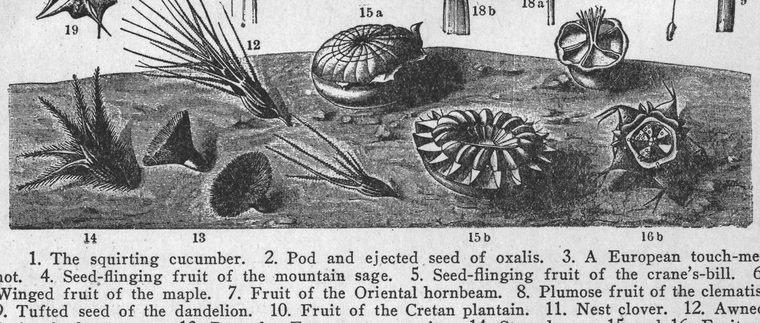
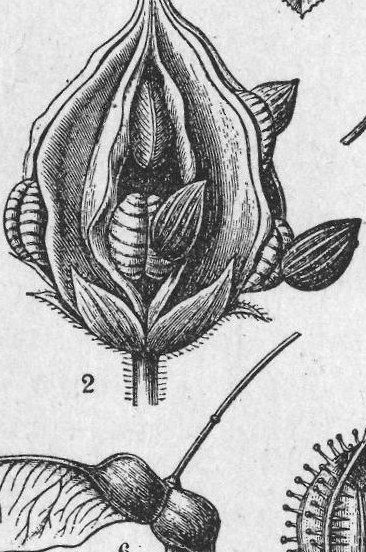
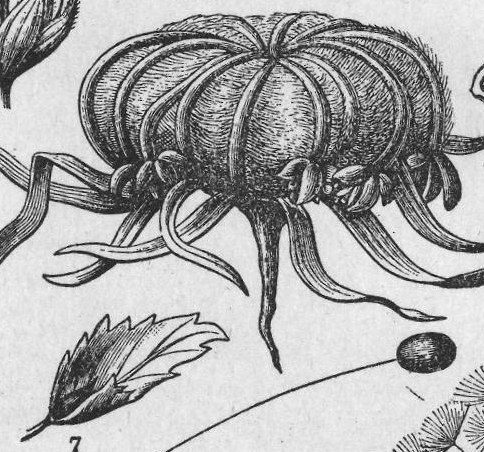
Nature has arranged for the distribution of seeds in many ways. Many seeds are wrapped in burs, or furnished with barbs, with which they adhere to the hair of animals and the clothing of man. Some plants, like the tumble-weed, break off near the ground and go racing across the country before the wind, scattering their seeds at every bound. The seeds of the dandelion, the thistle, the cottonwood tree, the cotton plant, the milkweed, the goldenrod, the aster, and many others are furnished with a tuft or clothed with fibers, enabling them to sail away in the wind. The seeds of the maple and the box-elder, the elm and the basswood, are furnished with wings, which cause them to whirl and sail to quite a distance in falling. The cocoanut falls into the surf and dances along the coast, until it finds a suitable place to take root. The water hyacinth of the southern bayous has no root. It travels about with wind and wave and knows where to drop its seed. Some pods, like those of the snapdragon and touch-me-not, spring open with a snap, flinging the seeds to a considerable distance. Animals carry seeds. A migrating duck may carry seeds a thousand miles in mud on its feet.
Seeds play a large part in providing food for man, as well as for the animals on which he is dependent. They contain valuable oils and starch. Beans, peas, flour, meal, bread, breakfast foods, coffee, rice, pepper, and nuts are either seeds or seed products. Nine-tenths of the human race live chiefly on seeds.
Most seeds grow best soon after they are ripe. Some hard seeds, including many of the nuts, require the action of moisture and frost to crack the shells. Some seeds require to lie in the earth for several months or even two years before they are ready to grow. Others, with a proper degree of heat and moisture, send out a green shoot within forty-eight hours after they are planted.
The matter of seed is one of importance to every farmer. If wise, he chooses the largest and plumpest kernels of wheat, oats, rye, and barley. It is well, frequently, to obtain seed from a different sort of soil. The farmer having a heavy, cool soil prefers to obtain seed from a neighbor whose soil is sandy and warm. In a region having a short growing season, it is best to plant northern-grown seeds.
The business of raising and marketing flower and vegetable seeds has become an occupation by itself. It does not pay the florist or the gardener to raise his own seeds. In the United States the business has become centralized. It has been found, for instance, that beet seed can be imported from France more cheaply than it can be raised at home. Cauliflower seed is imported generally from Denmark and Italy. Celery seed, lima beans, onion seed, and lettuce are raised to advantage in California. Seed dealers depend largely on Nebraska for squash and cucumber seeds. Connecticut excels in the production of turnip, tomato, onion, and cabbage seed.
Congress allows seed to be sent through the mails at the low rate of one cent for each two ounces or fraction thereof. Flower seeds may be imported free. Garden seeds are subject to a tariff of thirty per cent of their value. American dealers export about $33,000,000 worth of seeds annually. San Francisco, Philadelphia, Rochester, Detroit, and New York may be named as centers of the seed trade. There are over 150 American firms engaged in distributing seeds. Seed firms purchase usually from growers. American seed growers receive about $4,000,000 a year. The largest item reported by growers is garden peas, $1,000,000. The wholesale value of flower seeds is about $150,000 a year. The retail value of bulk and packet seeds is, of course, many times the sum received by growers.
Seeds vary in size and weight. Some seeds, as a cocoanut, may weigh several pounds. The number of seeds per pound for a number of the familiar trees is:
Trees. Seeds per pound. Birch.....400,000 White pine.....30,000 Box elder.....10,000 White ash.....10,000 Basswood.....8,000 Soft maple.....4,000 Hickory.....40 Black walnut.....20
The amount of seed required for planting varies greatly. A tablespoonful of tobacco seed is sufficient to start plants enough for six acres. There are 1,300,000 timothy seeds to the pound, and a pound of red top contains 6,000,000 seeds. A permanent meadow should receive from ten to twenty million seeds. Bailey recommends the following:
QUANTITY OF SEED TO THE ACRE.
Barley.....8 to 10 pks.
Bean.....2 to 6 pks.
Beet.....4 to 6 lbs.
Blue grass......25 lbs.
Broom corn.....3 pks.
Buckwheat.....3 to 5 pks.
Cabbage.....3/4 to 1 lb.
Carrots.....4 to 6 lbs.
Clover, red.....16 lbs.
Clover, white.....10 to 12 lbs.
Corn.....6 qts. to 1 bu.
Cotton.....1 to 3 bus.
Flax.....2 to 3 pks.
Hemp.....3 1/2 to 4 pks.
Millet, German.....1 pk.
Oats.....2 to 3 bus.
Parsnips.....4 to 8 lbs.
Popcorn.....3 lbs.
Potato.....6 to 14 bus.
Red-top.....12 to 15 lbs.
Rice.....1 to 3 bus.
Rutabaga.....3 to 5 lbs.
Rye.....3 to 8 pks.
Sorghum.....2 to 5 lbs.
Sugar beets.....15 to 20 lbs.
Sugar-cane.....4 tons cane.
Sweet potato.....1 1/2 to 4 bus.
Timothy.....15 to 25 lbs.
Timothy and Clover:
Clover.....4 lbs.
Timothy.....10 lbs.
Turnip.....2 to 4 lbs.
Wheat.....6 to 9 pks.
See Floriculture; Vegetables