Vesuvius
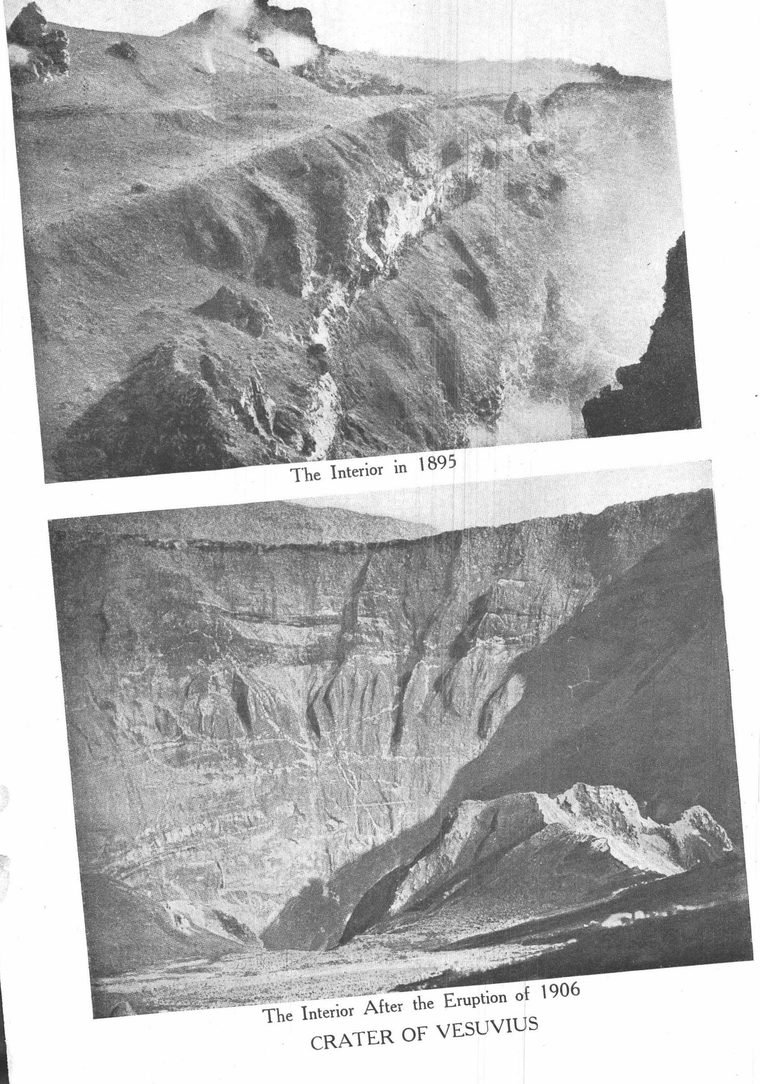
a noted volcano. It is situated near the east shore of the Bay of Naples, about ten miles from the city of that name. It is the best known volcano in the world. It stands alone in the plain. It has a conical shape and is about 4,000 feet high. Prior to 79 it was not active. Its slopes and even its whole crater were covered with vineyards. In that year, however, a tremendous eruption of volcanic dust, stones, and pumice took place, overwhelming the cities of Herculaneum and Pompeii at the foot. The elder Pliny, who commanded the Roman fleet in that vicinity, sailed near to aid the inhabitants, and was suffocated by fumes of sulphur. No less than sixty considerable explosions and many small ones have taken place since. At times it has been feared that the entire mountain would fall in. In 472 ashes from Vesuvius were wafted as far as Constantinople. In 1779 enormous masses of rock were thrown out. One block is said to be 108 feet in circumference. In 1822 three-fourths of the crater was broken off, but it has been built up again by subsequent eruptions. A violent eruption took place in 1904. Vesuvius is the most visited of all volcanoes. During times of comparative rest it is reached from Naples. The ascent is rendered easy by a combination of rack-and-pinion and cable road that leads almost to the top. Tourists are guided to the summit and even to a considerable depth within the crater. See Pliny; Pompeii; Volcano; Etna; Stromboli