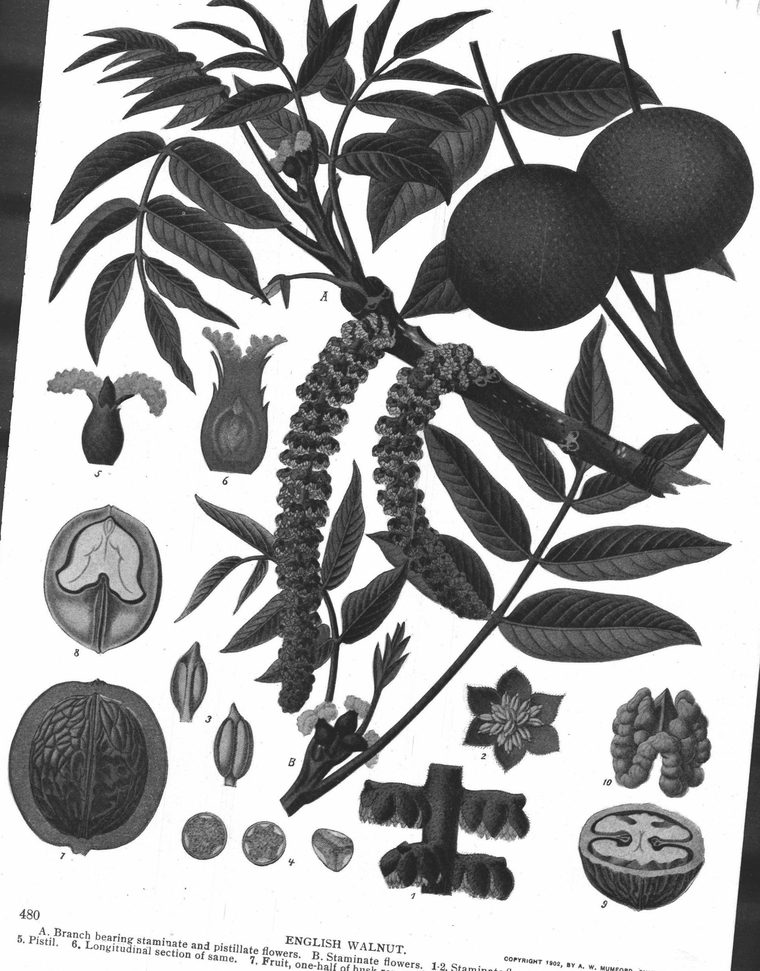
Walnut
a small family of important trees. There are about eight, some say ten, species, all confined to the temperate regions of the northern hemisphere. The black walnut, or walnut, as it is called, is a handsome tree growing to 100 or even 150 feet in height. It is the pride of American forests. Walnut timber was at one time used for fences and was even burned in huge log heaps to get it out of the way. It is a rich, dark wood, now commanding prohibitive prices for furniture, gunstocks, and the like. The butternut is a smaller tree, thirty to one hundred feet high. Its wood is less valuable, but is used for similar purposes. Both woods contain preservative oil and resist decay. The black walnut is found from Minnesota to Texas and eastward. The butternut is more hardy. Both trees bear oily nuts. The walnut is shorter, darker, and rougher than the butternut. How the red squirrel knows which end of the nut to gnaw a hole in, and how he can get the curiously branched meat out through one small hole are questions which puzzle boys. The bark of the butternut is used for tanning, and the husks of its nuts are used to dye homespun a yellowish brown. Northern men who sympathized with the South during the Civil War were often nicknamed "butternuts." English walnuts are a thin shelled nut, less oily, and more generally desired for table use. The English or European walnut is raised extensively in southern Europe and, of late, in California, also in the Middle Atlantic States. The California crop is worth a million dollars a year. Hickory nuts and walnuts are related closely. See Nuts; California