Home › Bronzing › Chemical Drying
Chemical Drying
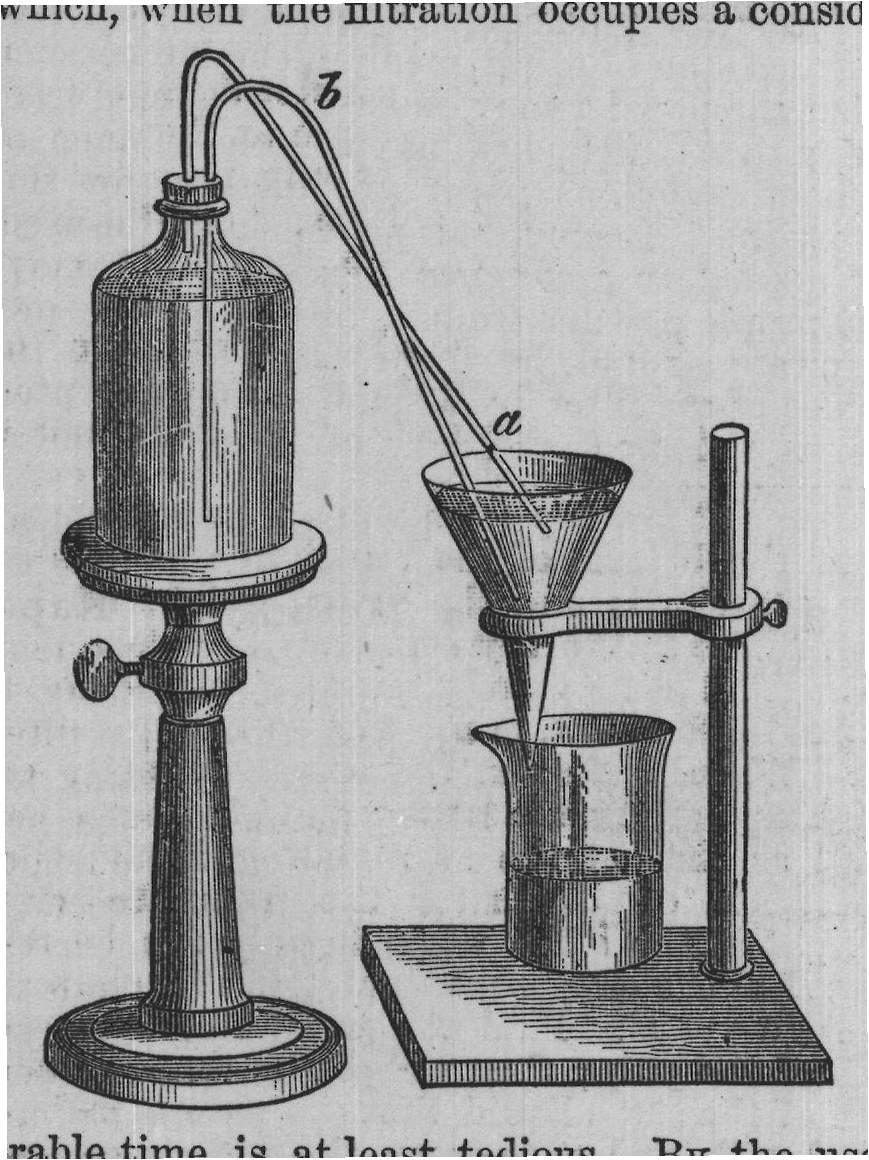
In order to deprive chemical substances of water or moisture, the simplest means is evaporation. This may be performed either by merely exposure in open shallow vessels to the natural action of a dry atmosphere, called spontaneous evaporation; or by the application of heat, either directly or by a water-bath, &c. (see No. 12); this is not always advisable or necessary, as some substances undergo change by heat, and must be dried by other means. By enclosing the substance to be dried in a box or dryingchamber in which is placed an open vessel containing strong sulphuric acid or chlorico of calcium, the strong affinity for water that these substances possess, keeps the air perfectly dry, and absorbs the moisture from it as fast as the water evaporates from the material which is being dried. The water of crystalline bodies is usually driven out by exposing the crystals in a capsule or evaporating dish to heat, only just sufficient being applied to effect the purpose. Some crystals part with their water of crystallization spontaneously by exposure to the air, crumbling into powder; such crystals are called efflorescent, to distinguish them from those deliquescent crystalline bodies which spontaneously liquefy or dissolve in their own water of crystallization.
Others will yield their water in an artificially dried atmosphere, as above stated; while erable time, is at least tedious. By the use of a simple apparatus, this is avoided, and filtration will continue, without any personal many have sufficient affinity for water to reattention, until the operation is complete. A tain it until driven off by heat, more or less bottle or jar, of sufficient capacity to contain intense. Crystalline substances which have the liquid to be filtered, is placed in a conve- been deprived of the water of crystallization, nient position, above the level of the filter that is, have undergone desiccation, are said (see illustration); through the cork, which to be dry. must fit air-tight, are inserted two bent tubes; one end of the tube b must reach nearly to the bottom of the jar, the other end descending deep into the filter; the tube a terminates