Home › Bronzing › Decoloration
Decoloration
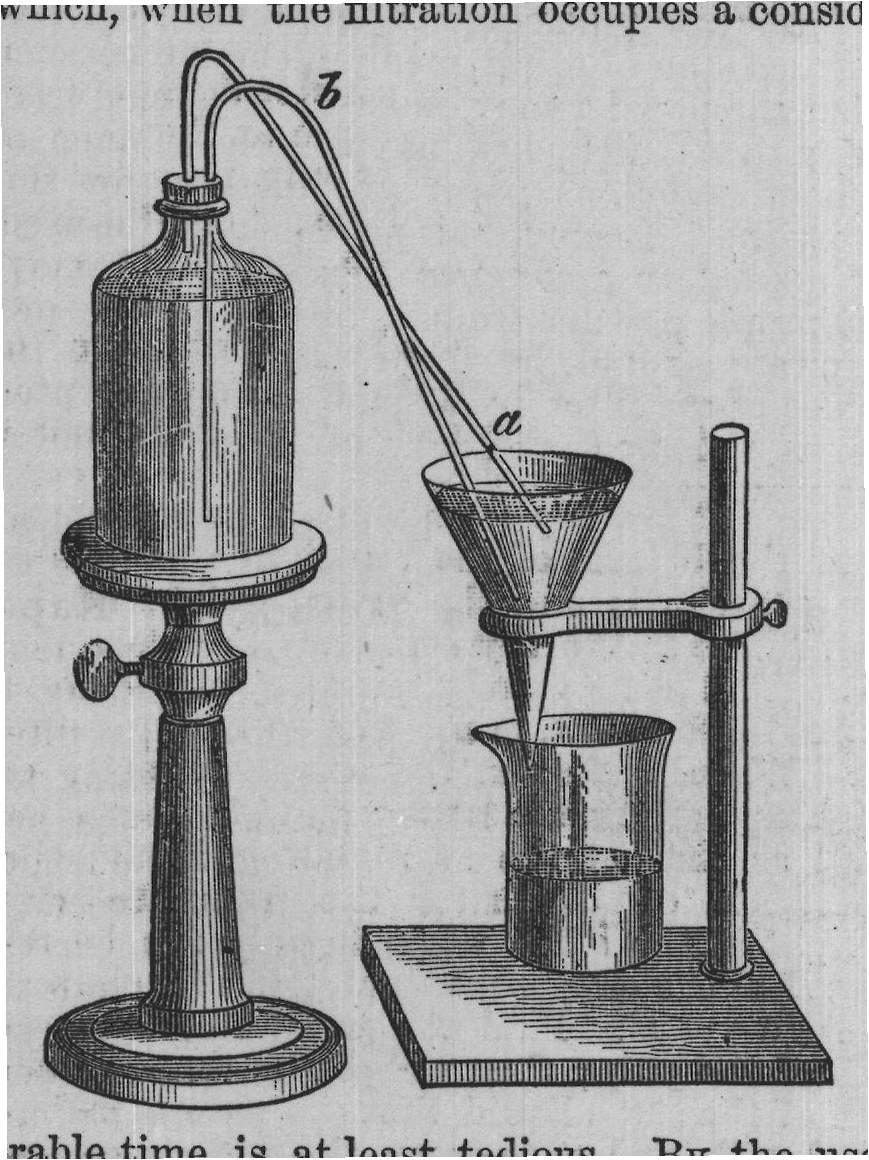
The blanching cr rises sufficiently to reach to and close the end loss of the natural color of any substance. of the tube a, cutting off the ingress of air Syrups, and many animal, vegetable, and into the bottle, and thus stopping the further saline solutions, are decolored or whitened by flow, until, by the falling of the filtrate into agitation with animal charcoal, and subrethe vessel placed to receive it, the liquid in quent subsidence or filtration. Many fluids rapidly lose their natural color by exposure 3850. Ignition. The heating of a subto light, especially the direct rays of the sun. stance to redness. It is especially resorted In this way, castor, nut, poppy, and several to for the calcination of a substance at a other oils are whitened. Fish Fish oils are par- high degree of heat. (See No. 3849.) tially deodorized and decolored by filtration 3851. Το Bend Glass Tubes. Small through animal charcoal. (See No. 3839.) glass tubes may be bent over the flame of a By the joint action of light, air, and moisture, spirit lamp; for larger tubes, the heat of a cottons and linens are commonly bleached.
The peculiar way in which light produces this effect has never been satisfactorily explained. The decoloration of textile fabrics and solid bodies, generally, is called bleaching.