Furniture
the movables required for use or ornament in a house, office, or place of assembly. In an older sense the term was applied to almost any outfit, as the trappings of a war-horse, the rigging of a ship, or the appliances of a printing office.
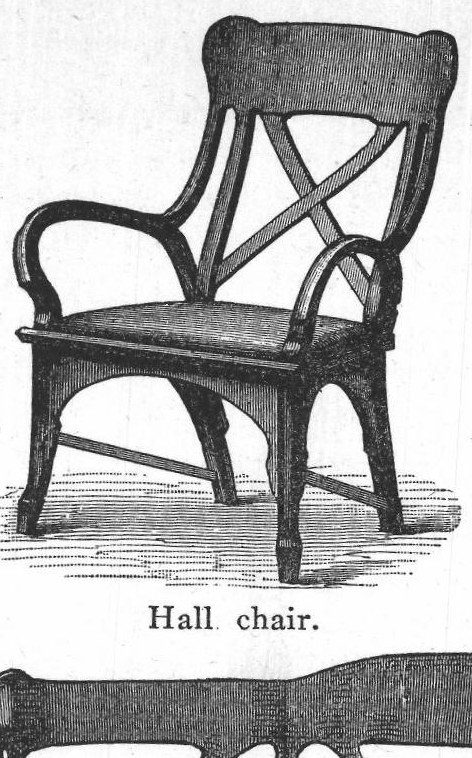
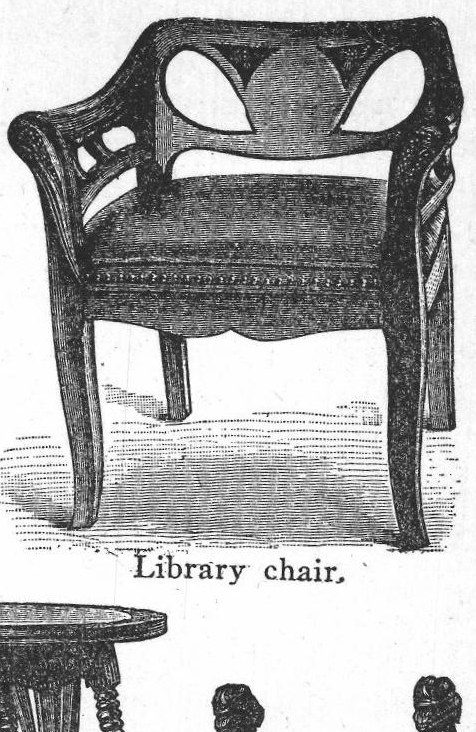
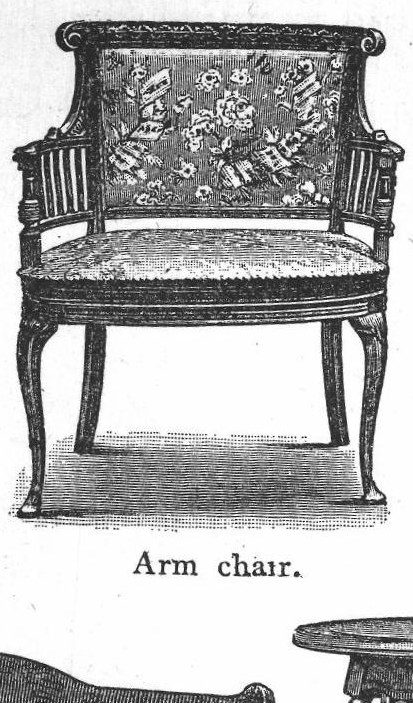
Aside from stoves, utensils, and furnishings, such as bedding, curtains, and rugs, the most conspicuous articles of furniture are chairs, tables, and bedsteads. No doubt, stools preceded chairs. For tables our Anglo-Saxon forefathers laid rough plank on trestles. Benches and chests and boxes may have suggested couches and sofas. Very likely the first bedstead may have been a heap of boughs, or more likely a platform of poles. The early settler in Kentucky built a bedstead of poles in one corner of his shanty. His table was made of hewn planks set on poles for legs. To make a chair, he set a two-foot block on end, or, if he had an augur, he split his round block in two and gave it four legs. The pelt of a coon, deer, or black bear served well by way of upholstery.
Judging from sculpture, paintings, and names, the ancients gave no little attention to furniture. The Assyrian artificers were skillful in metal work. The wealthy Egyptian prince had furniture of polished woods inlaid with gold and ivory, and draped with expensive cloths and skins. Couches, rugs, stools, sofas, and bedsteads of wicker work and bronze added to the pleasure and comfort of the pharaohs. Couches, chairs, tables, and huge ornamental candlesticks were known to the Greeks and Romans. The wealthy had furniture richly inwrought with gold and ivory and tortoise shell. Their couches consisted of frames strung with cords and covered with mattresses.
The furniture store with a stock of readymade goods is a modern idea. Furniture-making, like the making of shoes and of clothing, has passed through several stages. It is only within a century that dealers began to make up furniture in advance of orders. The noted makers of France, Germany, and England of colonial times filled orders from individual persons of wealth. Ordinarily people had their furniture made by the village joiner.
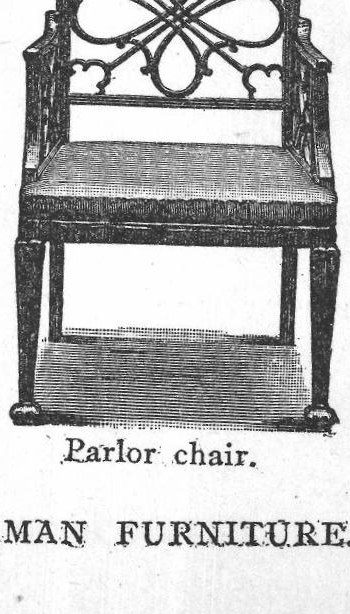
One of the most celebrated English furniture makers was Thomas Chippendale of London, who flourished about the middle of the eighteenth century. His designs were based on French and Chinese models. His chairs have curved or slender legs. The sides and back are formed of carved ribbon or lattice work. About this time, mahogany became a favorite wood.
Well-to-do colonists brought furniture to America with them. The Pilgrims brought chairs from Holland. In colonial days men like John Adams and John Hancock of Boston and the planters of Virginia sent orders to England for new furniture. In that day of leisurely hand work and slow sailing vessels, months or even years passed before some incoming ship brought the articles desired.
The earlier furniture factories in the United States were hand shops. Steam, that is to say, power machinery, was introduced about the close of the War of 1812. The excellence of American woods has given our manufacturers an advantage. Several articles are recognized as American in design. The bureau is an American combination of two European articles known as a chest of drawers and a dressing table. The upright folding bed is American. The most distinctive contribution, however, is the American rocking-chair. This and the American roll-top office desk are our most popular specialties abroad. The present American centers of furniture making are New York, Chicago, Grand Rapids, Philadelphia, Cincinnati, St. Louis, and Boston. There are indications that Grand Rapids, Michigan, may become the national center of the trade. Two annual fairs or trade sales are held here in January and July. The last census placed the total annual product for the United States at $153,168,309.
As to woods, the mahogany and walnut of earlier days have been succeeded by oak, ash, maple, and other light-colored woods. Designs are shifting in the direction of plainness and strength. Manufacturers seek beauty of shape and of wood, rather than dust-gathering ornaments and gilding. Of late enameled iron with brass trimmings has become popular for bedsteads.