Howells, William Dean
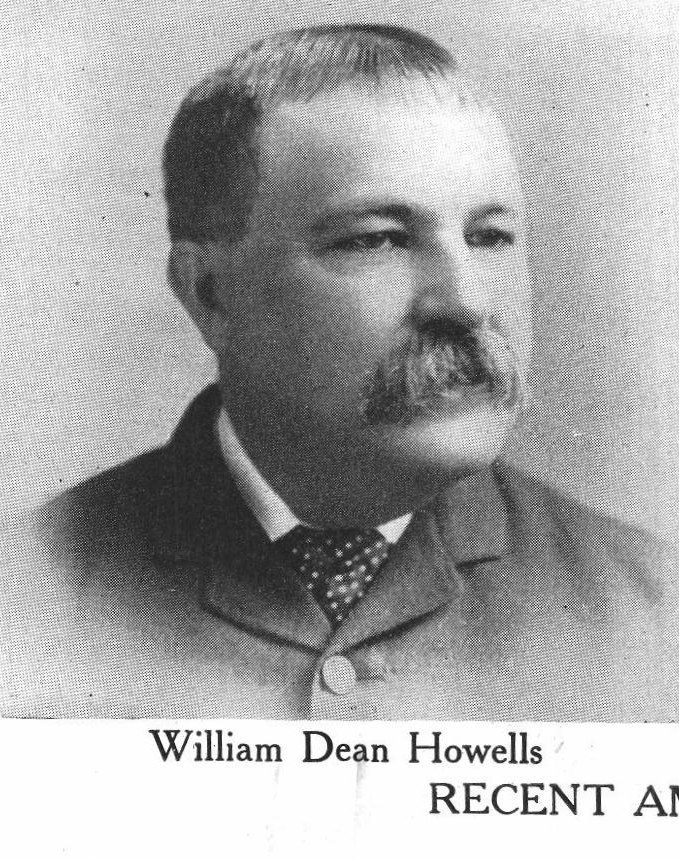
William Dean (1837-), an American poet, novelist, and literary critic. He was born at Martin's Ferry, Ohio. The son of a newspaper man, young Howells was a compositor at fourteen, a correspondent of the Cincinnati Gazette at nineteen, and news editor of the Ohio State Journal at twenty-two. He published poems now and then in the Atlantic Monthly, brought out a small volume of poetry, and, on Lincoln's nomination to the presidency, wrote his life. In 1861 Howells was appointed United States consul to Venice, where he remained for four years. He has since been connected with the New York Times, the Tribune, and the Nation; has filled the position of editor-in-chief of the Atlantic Monthly; conducted the critical department of Harper's Monthly; and has written more than twenty novels, several farces, and two or three volumes of poetry, besides critical essays on literary subjects.
His best novels include A Chance Acquaintance, The Lady of the Aroostook, A Modern Instance, The Rise of Silas Lapham, Indian Summer, April Hopes, Their Wedding Journey, The Quality of Mercy, A Hazard of New Fortunes, A Foregone Conclusion. His farces, The Parlor Car, The Mouse Trap, The Elevator, and The Albany Depot, are amusing and pleasing. Venetian Life and Italian Journeys record the impressions of his life in Europe. Howells' first novel, Their Wedding Journey, possessed an almost idyllic charm; but Howells soon became a realist, bent on presenting life as he saw it. He claims that neither plot nor action, neither hero nor heroine, are necessary to a story. His novels are not exciting, and his characters are commonplace. They are natural, however, and the conversations which crowd his pages are for the most part bright and entertaining. The moral tone is always pure and elevating, and the vein of irony which runs through most of his stories adds spice to what might otherwise grow monotonous.
Howells is regarded as the founder of the realistic school of writers in America. The influence of his theories has been wide and powerful. His novels, however, have appealed to the popular taste as some one says through "qualities quite independent of his theories."