Hudson River
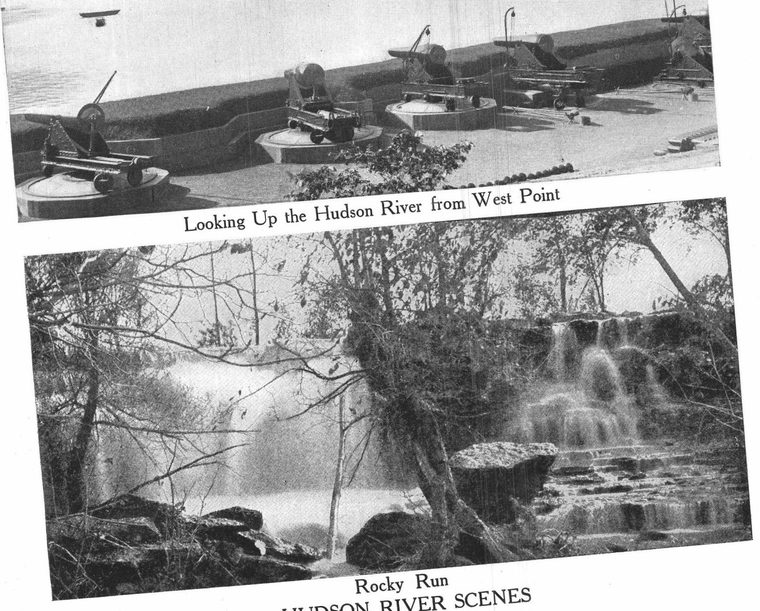
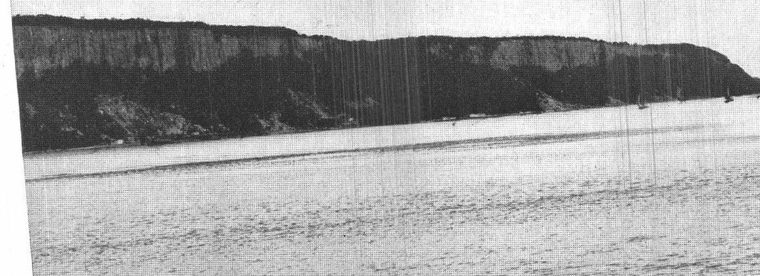
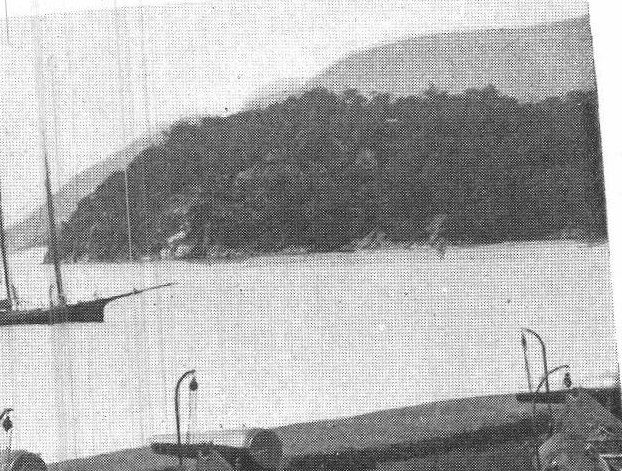
one of the noblest rivers of the United States. It rises in the Adirondack Mountains. As soon as it has been joined by several small headwaters, it takes a course nearly due south to New York Bay. At Troy it receives the Mohawk, a larger river than itself. Above Troy the current is rapid. At Glen's Falls there is a cataract fifty feet in height. The lower part of the Hudson occupies a drowned valley. The tide ascends almost as far as Troy. From Troy to New York Bay, a distance of 145 miles, the descent is but five feet. The lower 100 miles of the river is noted for impressive scenery. It has been compared with that of the Rhine. At Haverstraw the Hudson expands into Tappan Bay, about twelve miles in length and four or five in width. The Catskill Mountains, well described by Washington Irving, rise on the west. Below Tappan Bay the western shore rises precipitously from 300 to 500 feet. This wall extends for about twenty miles. It is known as the Palisades. The opposite shore is low and level. It is dotted with beautiful suburban residences occupied by New Yorkers. The river has valuable fisheries and is a highway of commerce. The Erie Canal, running by way of the Mohawk Valley, connects Troy with Lake Erie at Buffalo. The West Shore Railway follows the western bank, clinging to the foot of the Palisades. The New York Central keeps the eastern shore. The river was visited by Henry Hudson in 1609. The first European craft to navigate its waters was his ship, called the Half Moon. The Hudson was the first American river navigated by a steamboat. Fulton's boat, the Clermont, made regular trips from New York to Albany and return. See West Point; Catskill Mountains; Irving