Insects
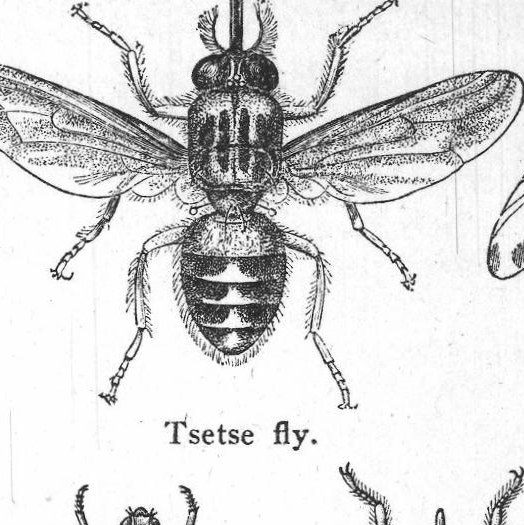
an extensive order of the animal world. The word is Latin, having reference to the fact that an insect is cut into. An insect is divided into three regions: the head, the thorax, and the abdomen. The head bears a pair of feelers, or antennae; the thorax bears three pairs of legs and one or two pairs of wings. Insects can see, hear, feel, taste, and smell. They breathe and have a circulatory system. Their muscles are something wonderful. A single caterpillar has 4,000 different muscles. A flea is able to jump several hundred times its own length.
The compound eye, one on each side of the head, is made of many--50 to 5,000--small eyes, called facets, though some insects have simple eyes instead. It is thought that compound eyes enable insects to detect the slightest motion, but that no insect can see distinctly at a distance greater than six feet. The bright colors prevalent in the insect and flower world are supposed to be so many signal flags to help out the eye of the insect. The skin is not sensitive like that of a person, but the insect feels by means of hairs connected with nerves at their base.
From the fact that insects are given to producing sounds apparently intended to attract their mates, it is argued that they hear. Some brown grasshoppers have what appear to be eardrums on the sides of the first segment of the abdomen. Katydids, crickets, and long-horned green grass-hoppers have "ears" on their front legs. When the female mosquito "sings" the antennae of the male quiver, whence it is concluded that he is not deaf.
Insects have no tongue, but are thought to taste with the mouth parts. Insect powders must be flavored to their liking or sprinkled on attractive food, or else they will be rejected. The antennae, or feelers, are the organs of smell, rather than of feeling. It is thought that when an insect waves its antennae this way and that it is smelling, not feeling its way,--smelling the honey in the flower, not feeling its way to the cavity.
The growth and changes in the life of an insect are interesting, and are only beginning to be understood. The first stage is the egg placed by the adult where food is likely to be found. The young worm-like animal hatched from the egg is called a larva, plural larvae. The larvae of butterflies, moths, and millers are called caterpillars. The eggs of flies produce maggots, and grubs are the larvae of beetles, bees, and wasps. In its growth a larva sheds its skin repeatedly and grows a larger one. When full size has been attained, a matter of days or years according to the kind, the larva enters a third stage, usually of rest, called the pupa, either in the last skin of the larva or in a cocoon or mummy case of its own making. From the pupa stage, the full grown adult insect emerges and spreads its wings. In some cases, the process is abridged or condensed. In the case of the grasshopper, for instance, the young hopper hatches from the egg,--a miniature edition of the parent. It does not pass through the larva and pupa stages at all. Such an insect is said to undergo incomplete metamorphosis, and the young is called a nymph. The destructiveness of insects and the dread' they inspire is due chiefly to the enormous capacity of maggots, grubs, and nymphs for green stuff, said in the case of some larvae to be 200 times their own weight each day. At that rate a fifty pound colt or calf would require five tons of hay every day of its existence.
Four-fifths of all animals are insects. Some 40,000 North American insects have been named and described. Perhaps a quarter of a million species are known to science, and it is estimated or conjectured that there are no less than 2,000,000 species of insects in the world. Small as insects are, their total bulk is greater than that of all other animals put together.
A few insects, as the bee, cochineal, and lac insect, have commercial importance. Many are indispensable to the fertilization of flowers; some, as the lady-bug and the ichneumon fly, render noble service in killing off other insects. Many flies, gnats, jiggers, hornets, and mosquitoes are exceedingly annoying to man and beast. Many animals die from bots. Other insects, moths, weevils, beetles, bugs, scale insects, plant lice--about 600 species in all--are pests in the conservatory, garden, field, and orchard. It is claimed that insects destroy $797,000,000 worth of property, counting timber, fruits, grain, and stock, in the United States alone, each year.
See Mosquito; Fly; Butterfly; Moth; Weevil; Tick; Bedbug; Chinch-Bug; Hessian Fly; Cutworm; Louse; Ant; Bee; Locust; Cricket; Katydid; Grasshopper; Amber; Botfly