President
in governmental matters the highest officer of the state in a modern republic. The president of the French Republic is elected for seven years by the National Assembly. The president of the United States is chosen once in four years by a college of presidential electors. These electors are elected by the voters of the respective states in November of each leap year. Though charged with the legal duty of electing the president, they vote invariably for candidates named in a nominating convention held prior to the presidential campaign.
The president of the United States is commander-in-chief of the army and of the navy and of the militia of the several states when in the service of the nation. He has power to grant reprieves and pardons for offenses against the laws of the United States. With the consent of two-thirds of the Senate, the president makes treaties and appoints cabinet officers, heads of bureaus, foreign ministers, consular agents, federal judges, territorial officials, postmasters, and the principal officers of the navy and the army. He may be impeached by the House of Representatives and be removed from office by a two-thirds vote of the Senate. His salary is $100,000 a year. He is provided with an official residence at Washington, known as the White House. A large appropriation is made annually for the maintenance of the residence, for secretaries, traveling expenses, and other necessary outlay.
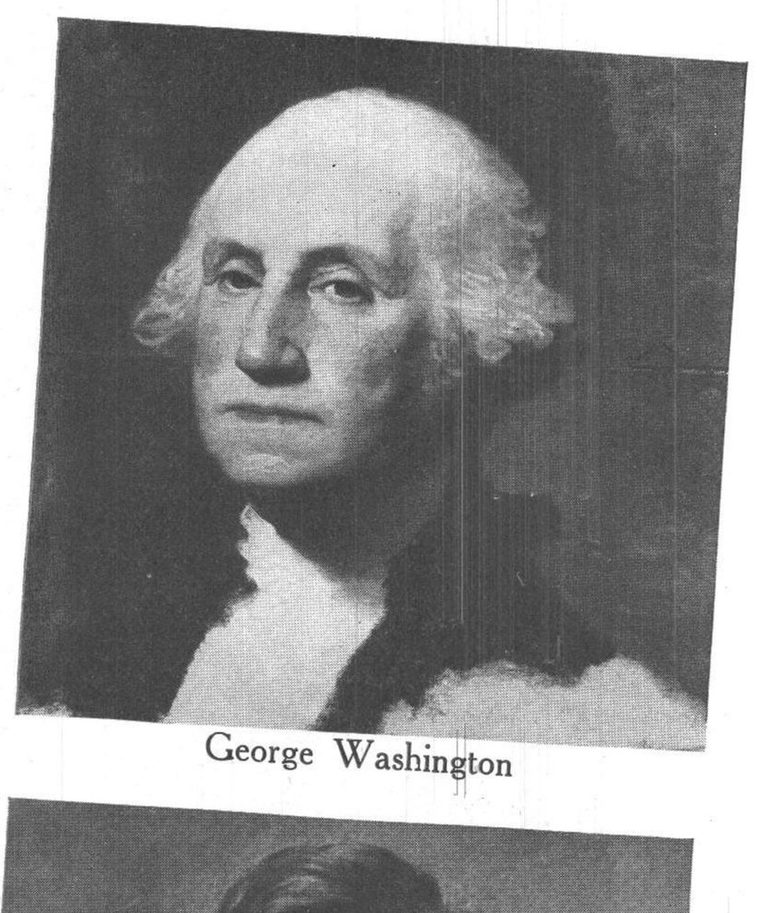
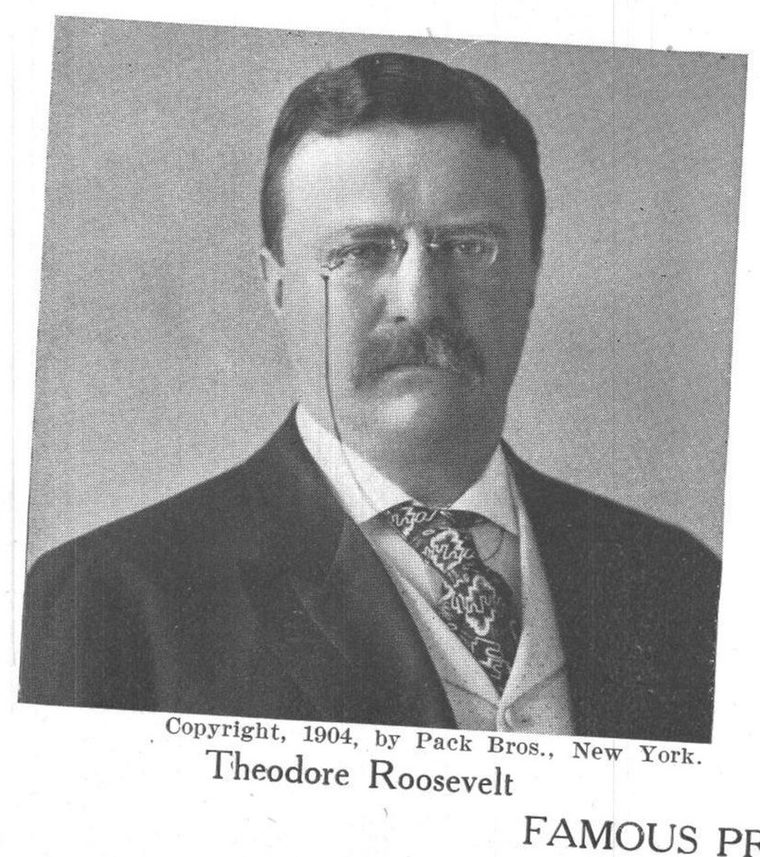
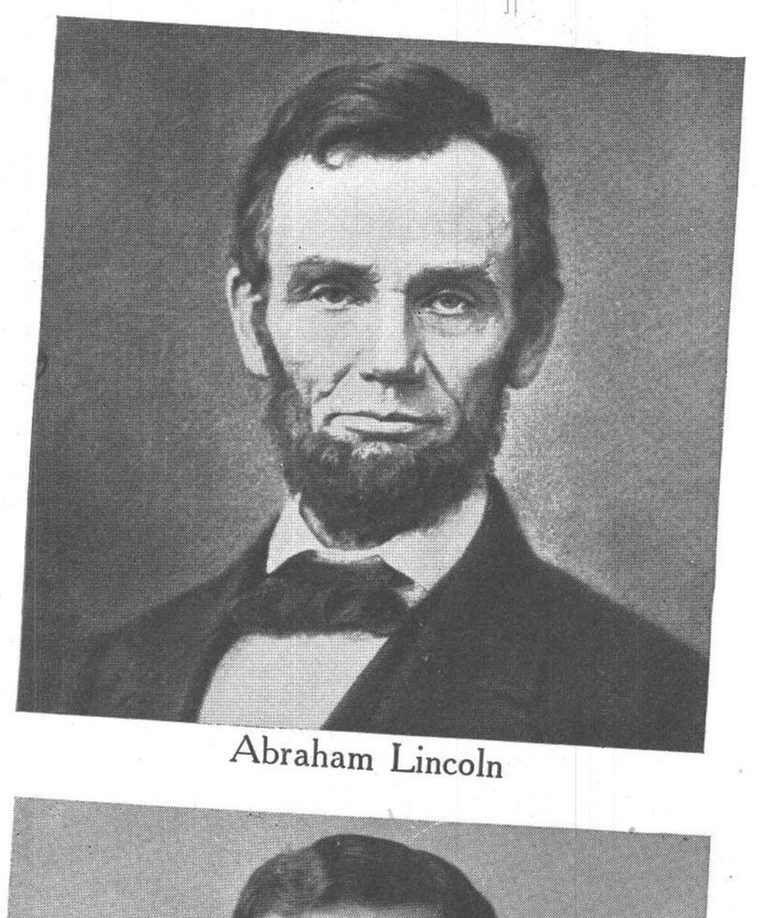
Twenty-six different persons have been presidents of the United States. George Washington was the first president. William Henry Harrison was the oldest; Theodore Roosevelt, the youngest. William Henry Harrison, Zachary Taylor, Abraham Lincoln, James A. Garfield, and William McKinley died in office. As vice-presidents, Tyler, Fillmore, Johnson, and Arthur succeeded Presidents Harrison, Taylor, Lincoln, and Garfield, respectively, and were not reelected to the office. Vice-President Roosevelt succeeded President McKinley and was subsequently elected for four years. Presidents Washington, Jefferson, Madison, Monroe, Jackson, Grant, and Cleveland served two terms each. The two terms of President Cleveland were separated by an interval of four years. Roosevelt is considered usually as having served two terms. Lincoln, Garfield, and McKinley were re-elected, but died before they had completed their second terms. Washington set the example of declining to run for a third term. This precedent has all the force of an unwritten law. John Quincy Adams and Benjamin Harrison were the sons of President John Adams and William H. Harrison respectively. With the exception of Theodore Roosevelt and Martin Van Buren who are of Dutch descent, the paternal ancestry of all the presidents may be traced to the British Isles, being either English, Welsh, Scotch, or Irish.
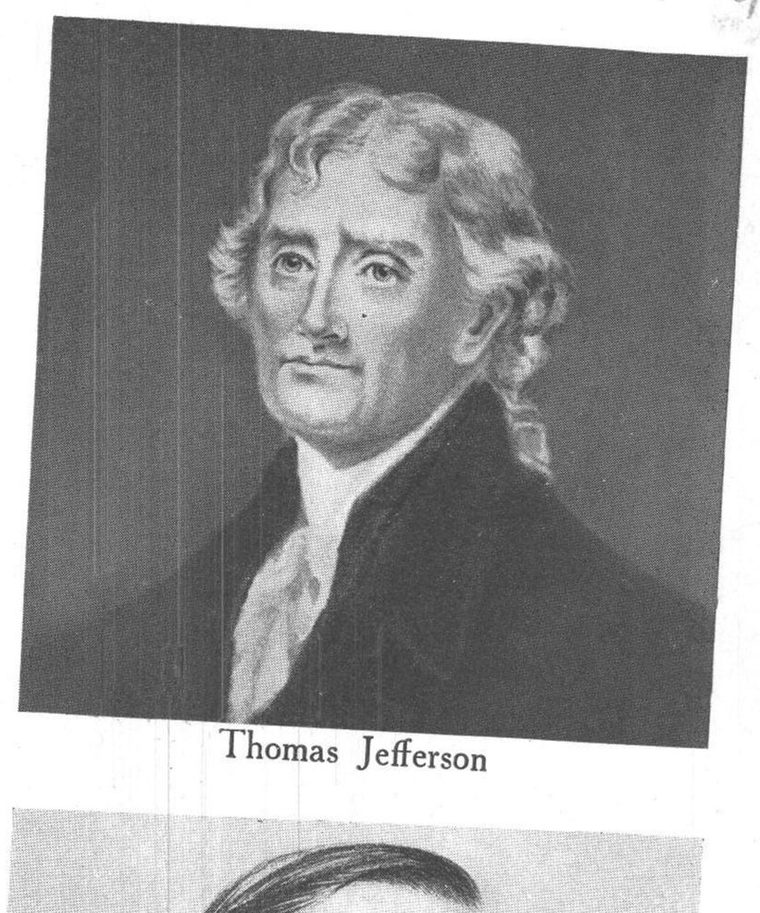
The office of president, like any other position, is largely what the holder makes it. It is probable that George Washington, the first president, looked upon the office as one rather of dignity than of activity. He is credited with having maintained a carriage and having upheld social usages savoring of European royalty and with having refrained from direct attempts to shape legislation and guide the movements of the nation. Thomas Jefferson, on the contrary, is said to have ridden into Washington unconcernedly on horseback and to have hitched his horse to a post like any other plain American citizen. He was full of plans such as the Lewis and Clark Expedition, the Louisiana Purchase, and other measures for the national welfare.
Among the presidents who have been distinguished for force of character are Jefferson, Jackson, Lincoln, Cleveland, and Roosevelt. The last named in particular threw himself energetically into all departments of the government. He cannot be said to have pleased the older officials, but what the chiefs of the various departments were inclined to term presidential interference, the public, having little admiration for mossback methods and red tape, regarded rather as administrative efficiency. There is a recent tendency to look to the president to insist on congressional activity.
The presidential succession is fixed by chapter four of the acts of the forty-ninth Congress, first session. In case of the removal, death, resignation, or inability of both the president and vice-president, then the secretary of state shall act as president until the disability of the president or vice-president is removed or a president is elected. If there be no secretary of state, then the secretary of the treasury will act; and the remainder of the order of succession is as follows: The secretary of war, attorney-general, postmaster-general, secretary of the navy, and secretary of the interior. The acting president must, upon taking office, convene Congress, if not at the time in session, in extraordinary session, giving twenty days' notice. This act applies only to such cabinet officers as shall have been confirmed by the Senate and are eligible under the Constitution to the presidency.
See Constitution; Vice President; Electoral Commission; Electoral College; Cabinet; White House; and separate articles on the presidents.
| PRESIDENTS OF THE UNITED STATES. | |||||||||
| Name. | Birthplace. | Year. | Paternal Ancestry. | Residence. | Inaugurated. | Politics | Place of Death. | Year. | Age. |
| Year. | Age. |
| 1 | George Washington | Westmoreland Co., Va | 1732 | English | Va. | 1789 | 57 | Fed | Mt. Vernon, Va | 1799 | 67 |
| 2 | John Adams | Quincy, Mass. | 1735 | English | Mass. | 1797 | 62 | Fed | Quincy, Mass. | 1826 | 90 |
| 3 | Thomas Jefferson | Shadwell, Va. | 1743 | Welsh | Va. | 1801 | 58 | Rep | Monticello, Va. | 1826 | 83 |
| 4 | James Madison | Port Conway, Va. | 1751 | English | Va. | 1809 | 58 | Rep | Montpelier, Va. | 1836 | 85 |
| 5 | James Monroe | Westmoreland Co., Va. | 1758 | Scotch | Va. | 1817 | 59 | Rep | New York City | 1831 | 73 |
| 6 | John Quincy Adams | Quincy, Mass. | 1767 | English | Mass. | 1825 | 58 | Rep. | Washington, D.C. | 1848 | 80 |
| 7 | Andrew Jackson | Union Co., N.C. | 1767 | Scotch-Irish | Tenn. | 1829 | 62 | Dem | Hermitage, Tenn | 1845 | 78 |
| 8 | Martin Van Buren | Kinderhook, N. Y. | 1782 | Dutch | N. Y. | 1837 | 55 | Dem | Lindenwold, N. Y. | 1862 | 79 |
| 9 | William H. Harrison | Berkeley, Va. | 1773 | English | O. | 1841 | 68 | Whig | Washington, D. C. | 1841 | 68 |
| 10 | John Tyler | Greenway, Va. | 1790 | English | Va. | 1841 | 51 | Dem | Richmond, Va. | 1862 | 72 |
| 11 | James K. Polk | Mecklenburg Co., N. C. | 1795 | Scotch-Irish | Tenn. | 1845 | 50 | Dem | Nashville, Tenn. | 1849 | 53 |
| 12 | Zachary Taylor | Orange Co., Va | 1784 | English | La. | 1849 | 65 | Whig | Washington, D. C. | 1850 | 65 |
| 13 | Millard Fillmore | Summerhill, N. Y. | 1800 | English | N. Y. | 1850 | 50 | Whig | Buffalo, N. Y | 1874 | 74 |
| 14 | Franklin Pierce | Hillsboro, N. H. | 1804 | English | N. H. | 1853 | 49 | Dem | Concord, N. H. | 1869 | 64 |
| 15 | James Buchanan | Cove Gap, Pa | 1791 | Scotch-Irish | Pa | 1857 | 66 | Dem | Wheatland, Pa. | 1868 | 77 |
| 16 | Abraham Lincoln | Larue Co., Ky | 1809 | English | Ill. | 1861 | 52 | Rep | Washington, D. C. | 1865 | 56 |
| 17 | Andrew Johnson | Raleigh, N.C. | 1808 | English | Tenn. | 1865 | 57 | Rep | Carter's Depot, Tenn. | 1875 | 66 |
| 18 | Ulysses S. Grant | Point Pleasant, O | 1822 | Scotch | D. C. | 1869 | 47 | Rep | Mt. McGregor, N.Y. | 1885 | 63 |
| 19 | Rutherford B. Hayes | Delaware, O. | 1822 | Scotch | O. | 1877 | 54 | Rep | Fremont, O. | 1893 | 70 |
| 20 | James A. Garfield | Cuyahoga Co., O | 1831 | English | O. | 1881 | 49 | Rep | Long Branch, N. J. | 1881 | 49 |
| 21 | Chester A. Arthur | Fairfield, Vt. | 1830 | Scotch-Irish | N. Y. | 1881 | 51 | Rep | New York City | 1886 | 56 |
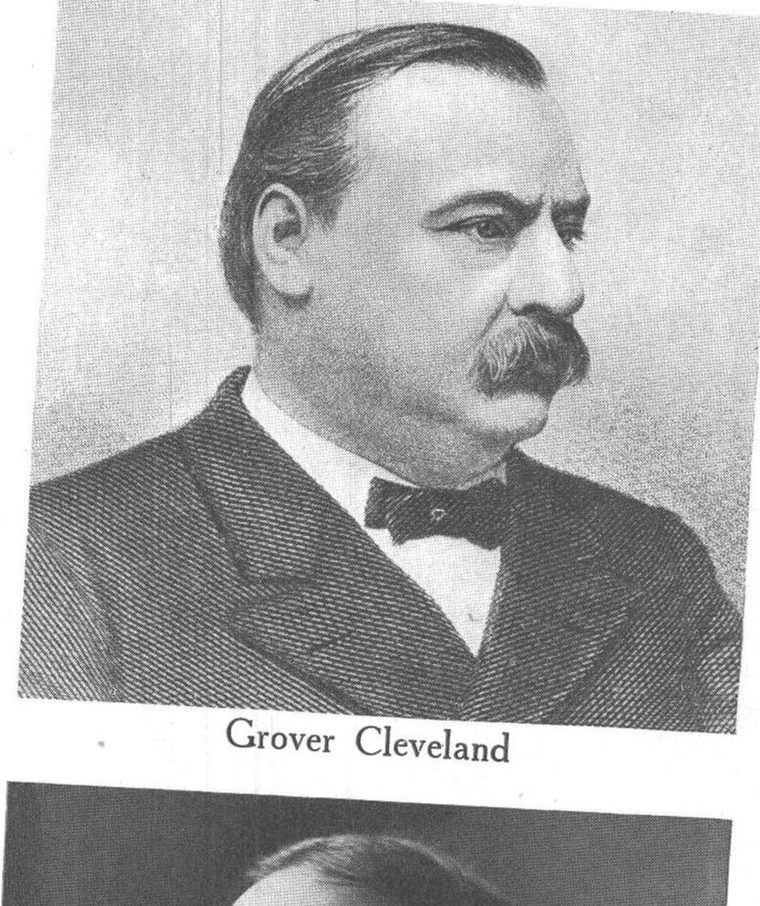
| 22 | Grover Cleveland | Caldwell, N.J. | 1837 | English | N. Y. | 1885 | 48 | Dem | Princeton, N.J. | 1908 | 71 |
| 23 | Benjamin Harrison | North Bend, O | 1833 | English | Ind. | 1889 | 55 | Rep | Indianapolis, Ind. | 1901 | 67 |
| 24 | Grover Cleveland | Caldwell, N.J. | 1837 | English | N.Y. | 1893 | 56 | Dem | Princeton, N.J. | 1908 | 71 |
| 25 | William McKinley | Niles, O | 1843 | Scotch-Irish | O. | 1897 | 54 | Rep | Buffalo, N.Y. | 1901 | 58 |
| 26 | Theodore Roosevelt | New York City | 1858 | Dutch | N.Y. | 1901 | 43 | Rep | |||
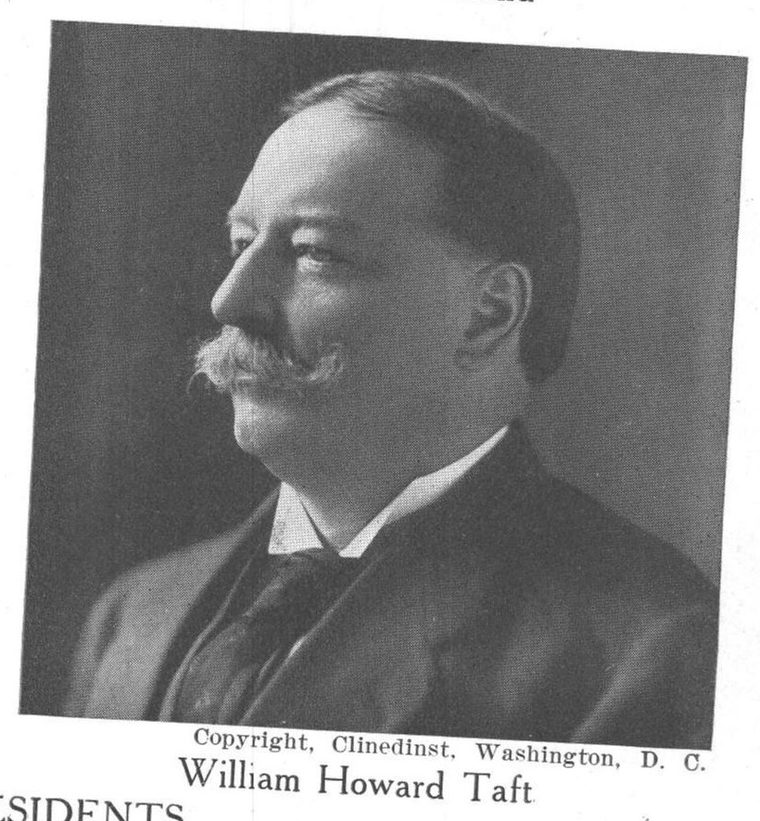
| 27 | William H. Taft | Cincinnati, O. | 1857 | English | O. | 1909 | 52 | Rep |
Presidential Election. The following table, compiled from the official reports of the various secretaries of state, gives the popular vote of 1908 by states and parties:
| States. | Rep. | Dem. | Soc. | Pro. |
| Alabama. . . . . 25,305 | 74,374 | 1,399 | 665 | |
| Arkansas. . . . . 56,760 | 87,015 | 5,842 | 1,194 | |
| California. . . . . 214,398 | 127,492 | 28,659 | 11,770 | |
| Colorado. . . . . 123,700 | 126,644 | 7,974 | 5,559 | |
| Connecticut. . . . . 112,815 | 68,255 | 5,113 | 2,380 | |
| Delaware. . . . . 25,014 | 22,071 | 239 | 670 | |
| Florida. . . . . 10,654 | 31,104 | 3,747 | 1,356 | |
| Georgia. . . . . 41,692 | 72,413 | 584 | 1,059 | |
| Idaho. . . . . 52,621 | 36,162 | 6,400 | 1,986 | |
| Illinois. . . . . 629,932 | 450,810 | 34,711 | 29,364 | |
| Indiana. . . . . 348,993 | 338,262 | 13,476 | 18,045 | |
| Iowa. . . . . 275,210 | 200,771 | 8,287 | 9,837 | |
| Kansas. . . . . 197,219 | 161,209 | 12,420 | 5,033 | |
| Kentucky. . . . . 235,711 | 244,092 | 4,060 | 5,887 | |
| Louisiana. . . . . 8,958 | 63,568 | 2,538 | . . . . . | |
| Maine. . . . . 66,987 | 35,403 | 1,758 | 1,487 | |
| Maryland. . . . . 116,513 | 115,908 | 2,323 | 3,302 | |
| Massachusetts. . . . . 265,966 | 155,543 | 10,779 | 4,373 | |
| Michigan. . . . . 335,580 | 175,771 | 11,586 | 16,974 | |
| Minnesota. . . . . 195,835 | 109,401 | 14,471 | 10,114 | |
| Mississippi. . . . . 4,463 | 64,250 | 1,048 | . . . . . | |
| Missouri. . . . . 346,915 | 345,889 | 15,398 | 4,212 | |
| Montana. . . . . 32,375 | 29,431 | 6,000 | 1,500 | |
| Nebraska. . . . . 126,997 | 131,099 | 3,524 | 5,179 | |
| Nevada. . . . . 10,214 | 10,655 | 2,029 | . . . . . | |
| New Hampshire. . . . . 53,144 | 33,655 | 1,299 | 905 | |
| New Jersey. . . . . 265,326 | 182,567 | 10,253 | 4,934 | |
| New York. . . . . 870,070 | 667,468 | 38,451 | 22,667 | |
| North Carolina. . . . . 114,084 | 136,927 | 345 | . . . . . | |
| North Dakota. . . . . 57,680 | 32,885 | 2,465 | 1,453 | |
| Ohio. . . . . 572,312 | 502,721 | 33,795 | 11,402 | |
| Oklahoma. . . . . 110,558 | 122,406 | 21,779 | . . . . . | |
| Oregon. . . . . 62,530 | 38,049 | 7,339 | 2,682 | |
| Pennsylvania. . . . . 745,779 | 448,785 | 33,913 | 36,694 | |
| Rhode Island. . . . . 43,942 | 24,706 | 1,365 | 1,016 | |
| South Carolina. . . . . 3,963 | 62,288 | 100 | . . . . . | |
| South Dakota. . . . . 67,675 | 40,266 | 2,846 | 4,039 | |
| Tennessee. . . . . 118,195 | 135,608 | 1,870 | 360 | |
| Texas. . . . . 65,666 | 217,167 | 7,870 | 1,634 | |
| Utah. . . . . 61,028 | 42,601 | 4,895 | . . . . . | |
| Vermont. . . . . 39,552 | 11,496 | 802 | 799 | |
| Virginia. . . . . 52,579 | 82,948 | 254 | 1,111 | |
| Washington. . . . . 106,062 | 58,691 | 14,177 | 4,700 | |
| West Virginia. . . . . 137,868 | 111,418 | 3,679 | 5,139 | |
| Wisconsin. . . . . 247,747 | 166,632 | 28,168 | 11,572 | |
| Wyoming. . . . . 20,846 | 14,918 | 1,715 | 66 | |
| Totals. . . . . 7,677.433 | 6,411,794 | 421,745 | 253,119 |