Important: Safety Warning
This page describes trade processes that use dangerously toxic materials such as cyanide solutions, mercury amalgams, or strong acids. These processes require training, equipment, and precautions far beyond what the text describes.
This information has been left in for historical purposes but should not be acted upon.
Home › Steel › To Purify Bismuth
To Purify Bismuth
Dissolve crude bismuth in nitric acid, and concentrate the solution by evaporation. Then pour the clear solution into a large bulk of distilled water, and a white powder (sub-nitrate of bismuth) will be precipitated. Collect the precipitate and digest it for a time in a little caustic potash, to dissolve away any arsenious acids that may be present; next wash and dry the sub-nitrate; heat it with about to its weight of charcoal in an earthen crucible, and the pure bismuth will be found at the bottom of the crucible. (Makins.) 3346. To Separate Bismuth from Lead. Dissolve the mixed metal in nitric ier very generally subsides, and the lower part of the mass thus differs in composition from the upper. This may be in a great it solidifies, but this is not always convenient.
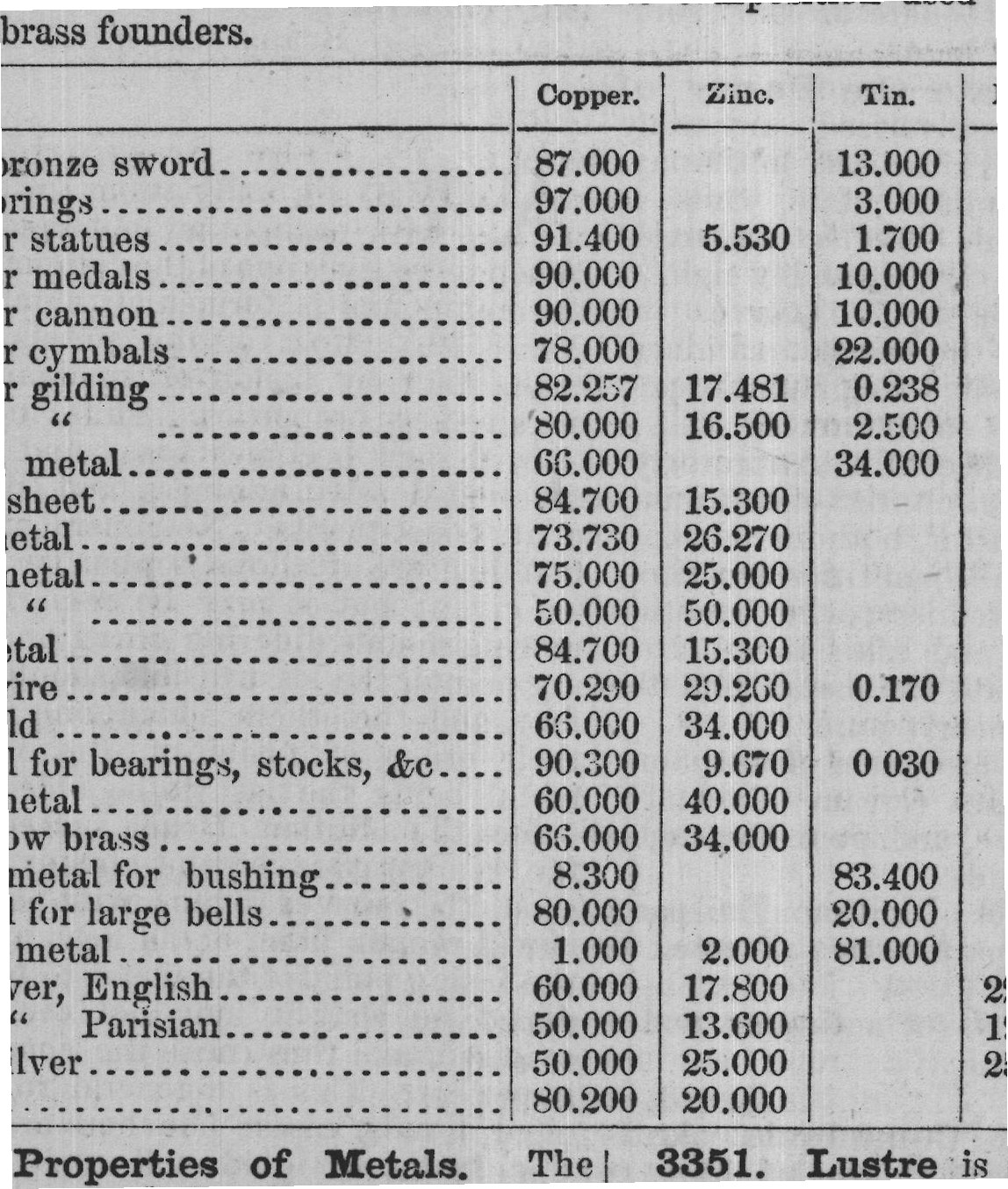
Thus, in stereotype plates, which are cast vertically, the upper side usually contains more antimony than the other. As a general rule, the substances (elements) of nature unite together in fixed and definite atomic proportions, thereby forming new compounds. Metals unite with non-metallic bodies, and obey the same general law; but metals, when united with metals, appear to form an exception, though much doubt exists on the subject. They seem to mix in any proportion, and are thereby modified, possessing thereafter properties which fit them for many purposes in commerce and art. These compounds, being considered at present non-chemical bodies, are 87.000 97.000 ...
ALLOYS. classed together under the French term of al- hardest and most brittle of the component loys. Alloys are generally more fusible than metals. With some exceptions, the ductility the least fusible of the component metals; and tenacity of an alloy is less than that of its but are often harder and more brittle than the metals.