Hercules
Known to the Greeks as Heracles.
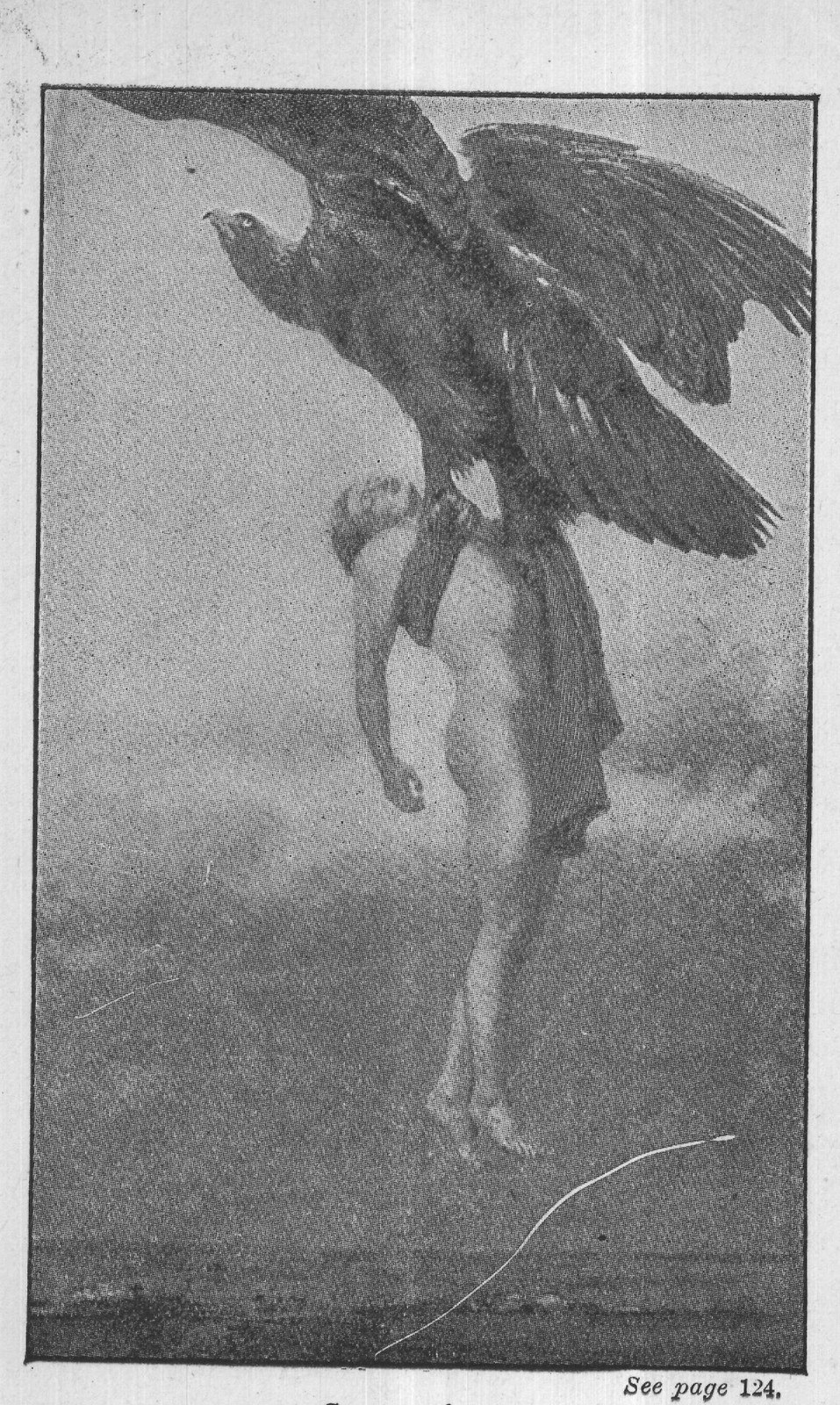
A celebrated hero who, after death, was ranked among the gods. According to the ancients there were many persons of the same name, but the son of Jupiter and Alcmena, generally called the Theban, is the most celebrated. The birth of Hercules was attended with many miraculous events. Before he was eight months old Juno sent two snakes to devour him, which he seized and crushed to death. He achieved a series of enterprises known as the Twelve Labors of Hercules. These comprised the slaughter of the Nemaean lion, the destruction of the Lernaean hydra, the catching of a stag having golden horns and remarkable for his swiftness, the seizing alive a wild boar which committed great ravages, the cleansing of the stables of Augias, the killing of the carnivorous birds near the Lake Stymphalis, the taking captive a prodigious wild bull, the obtaining of the mares of Diomedes which fed on human flesh, the getting possession of the girdle of the queen of the Amazons, the destruction of the monster Geryon, the obtain- See page 124, Ganymedes, ing the apples from the garden of the Hesperides, and the bringing to the earth the threeheaded dog Cerberus. Besides these labors he aided the gods in their wars with the giants, and performed numerous difficult feats. He was conducted by Mercury to Omphale, queen of Lydia, whom he married, and whom he permitted to dress in his armor while he was sitting to spin with her female servants. He delivered Dejanira from the Centaur Nessus, whom he killed. The Centaur, as he expired, gave Dejanira a mystic tunic, which, in a jealous paroxysm, she gave to Hercules to put on, which he had no sooner done than he was seized with a desperate distemper which was incurable. He erected a burning pile on Mount Aeta, on which he cast himself. Jupiter surrounded the burning pile with smoke, amidst which Hercules, after his mortal parts were consumed, was carried to heaven in a chariot drawn by four horses.