Fire ToolsEngineering
Instruments used in working the fires under a boiler.
Page 434 of Patterson’s Illustrated Nautical Encyclopedia · 18 entries
Instruments used in working the fires under a boiler.
The strip along the edge of a boiler plate which is turned over at an angle, usually a right angle, with the plane of the plate. The ring of larger diameter about the end of a pipe or nozzle.
(See Bucket.)
Admitting too much injection water to a jet condenser.
A large tube; usually a flue is built up of plates bent and riveted together.
Violent ebullition in a steam boiler, due to which particles of water are detached from the main body and carried upward with the steam.
In a piston, the ring or plate which holds the packing rings in place.
The bolts which secure the follower to the piston-head.
A check valve in the suction passage to a pump; the valve in the channel way between condenser and air pump.
(See Draft.)
The resistance which is met when one piece slides on another.
A band encircling a drum which can be tightened at will to control the revolutions of that drum.
The side pipes, chests and valve gear attached to the cylinder of a beam engine.
The space into which the products of combustion are discharged when they leave the tubes. In a return fire-tube boiler the passage leading the gases from the front ends of the tubes to the base of the funnel.
Smoke-stack or smoke-pipe. (See Smoke Pipe.)
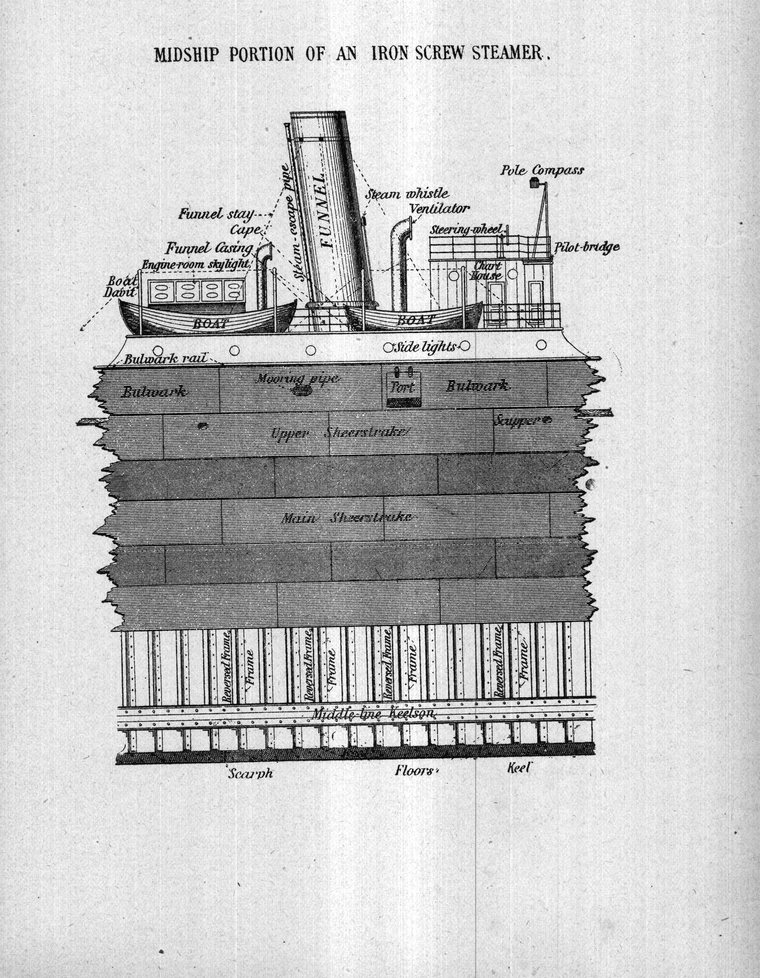
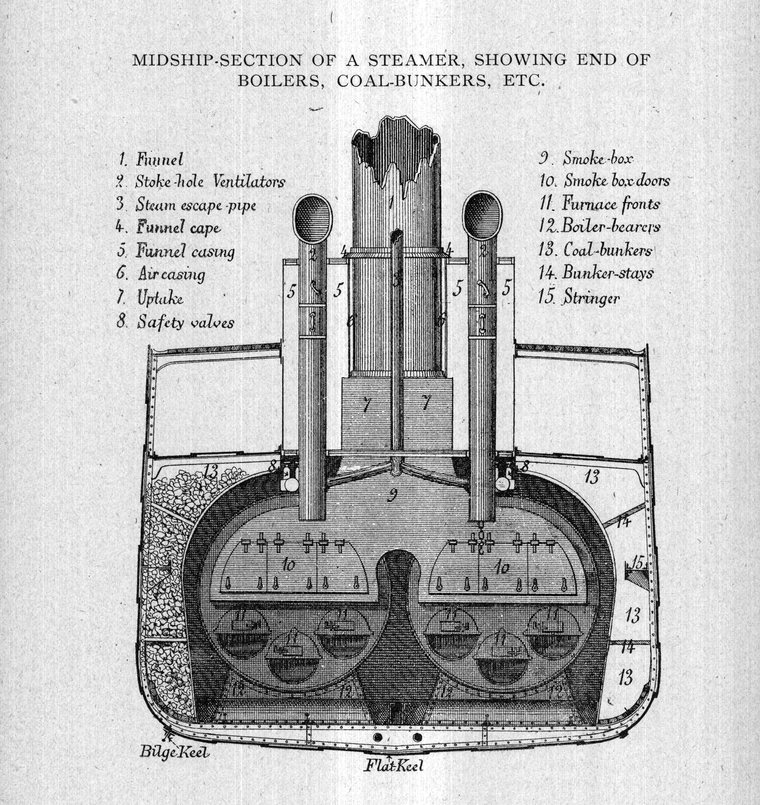
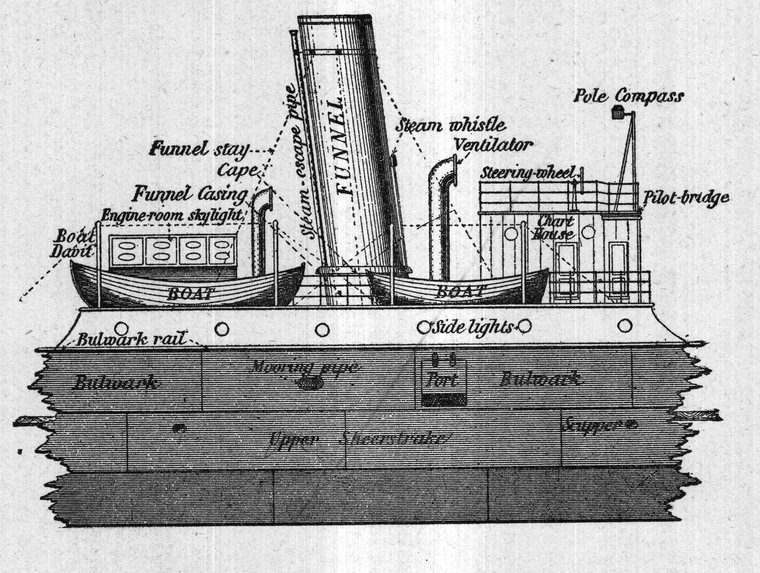
The space in or under a boiler where the fuel is burned.
The door closing the opening into a furnace through which the fuel is introduced.
A small metal plug through the centre of which is a hole filled with a metal that will fuse at a temperature a little higher than the temperature of steam. It is screwed into and through the plate at the highest heating surface of a boiler, one end being exposed to the heat, the other to the water or steam.