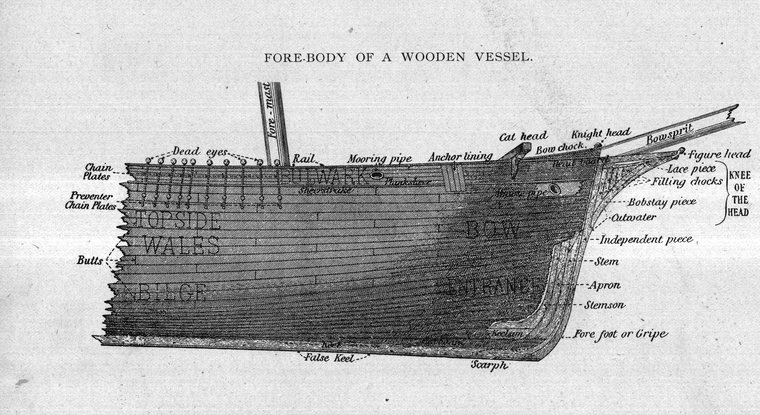
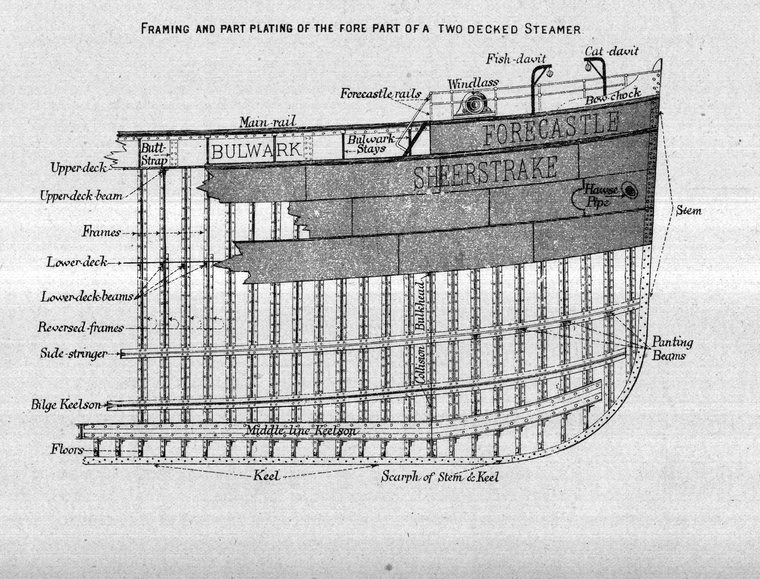
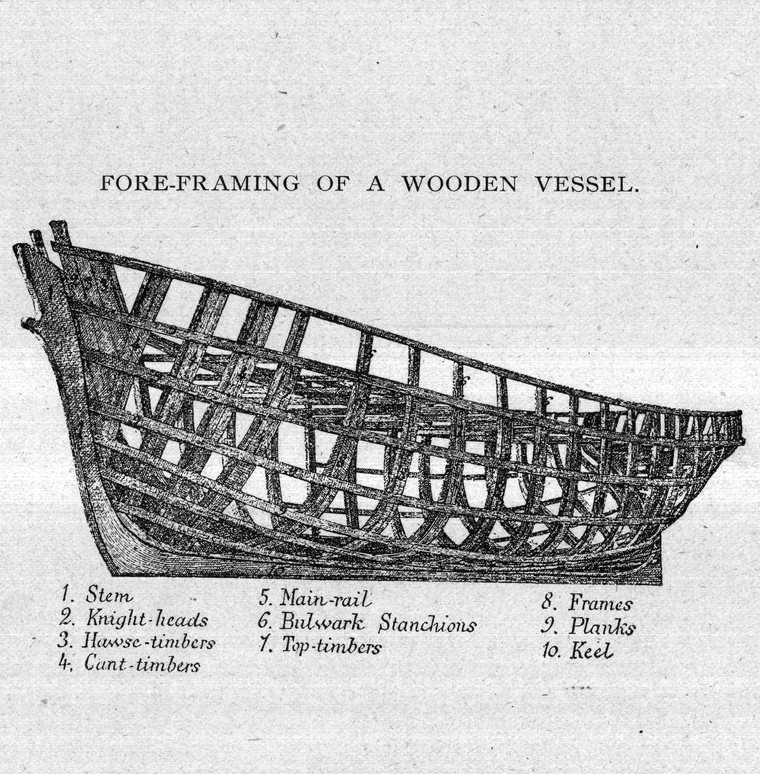
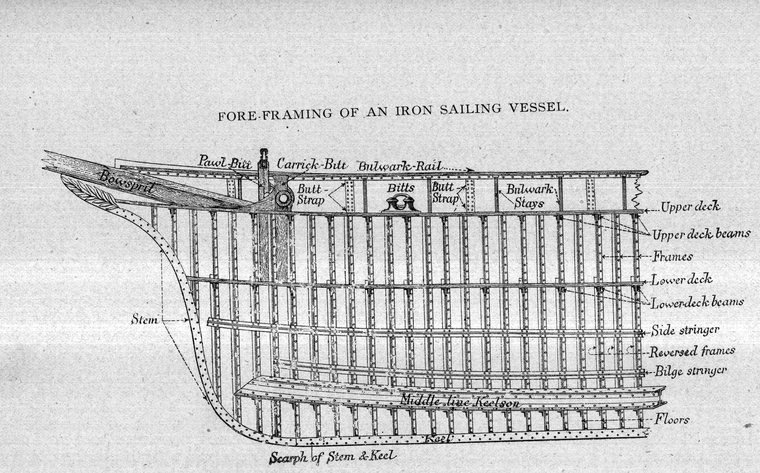
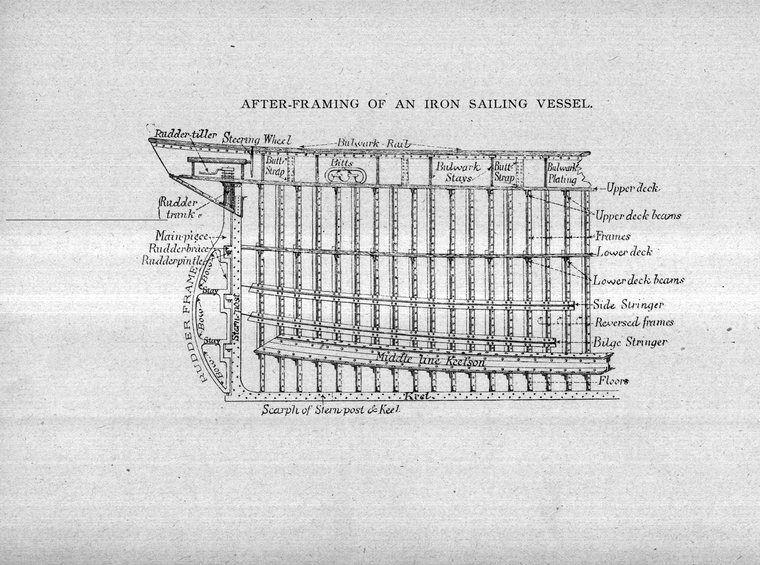
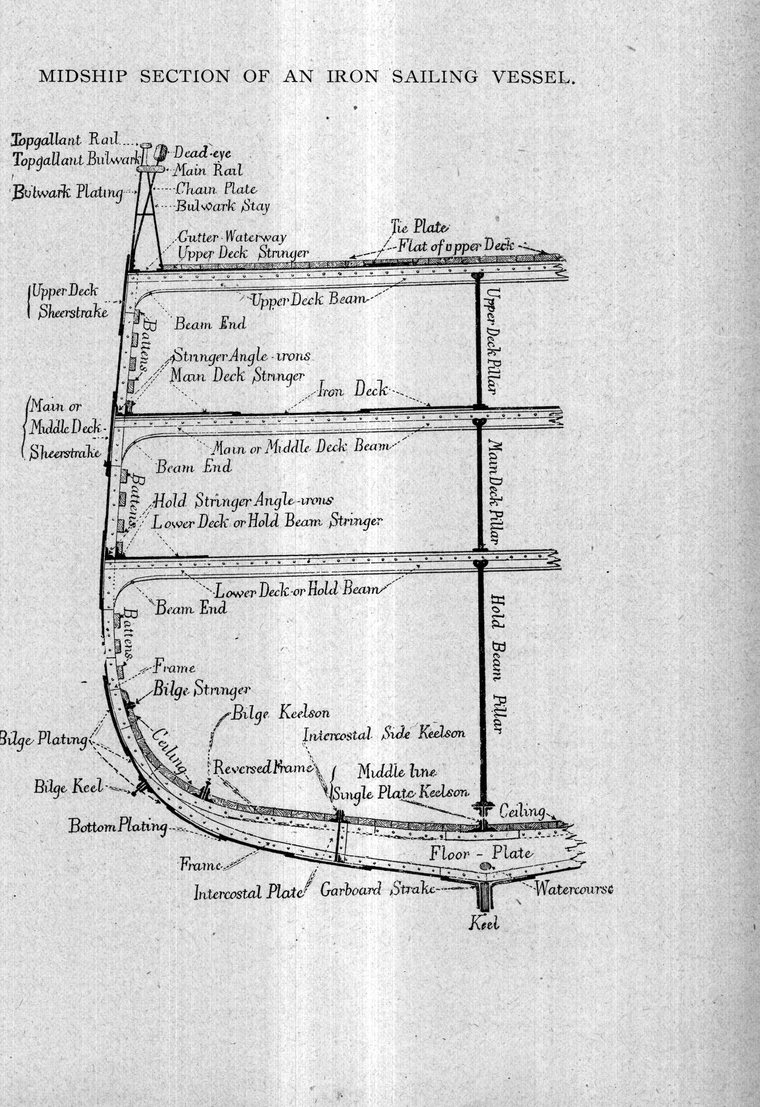
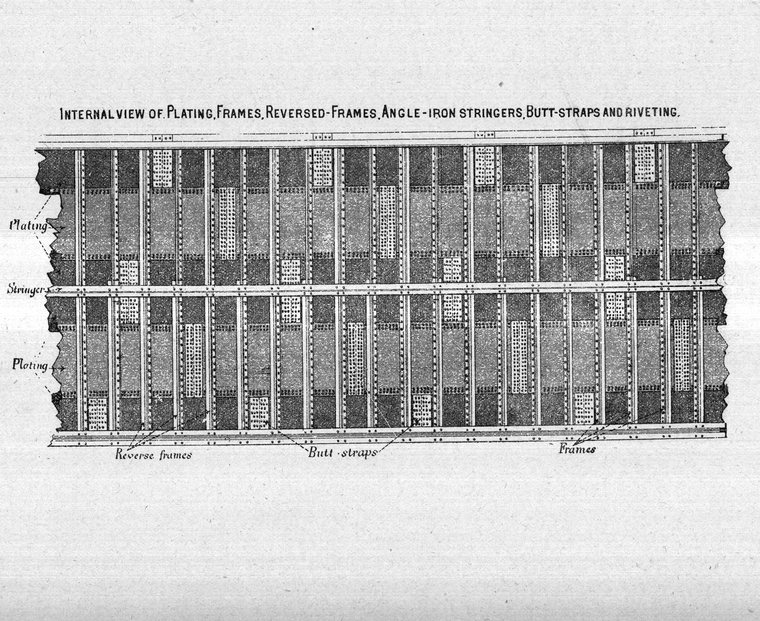
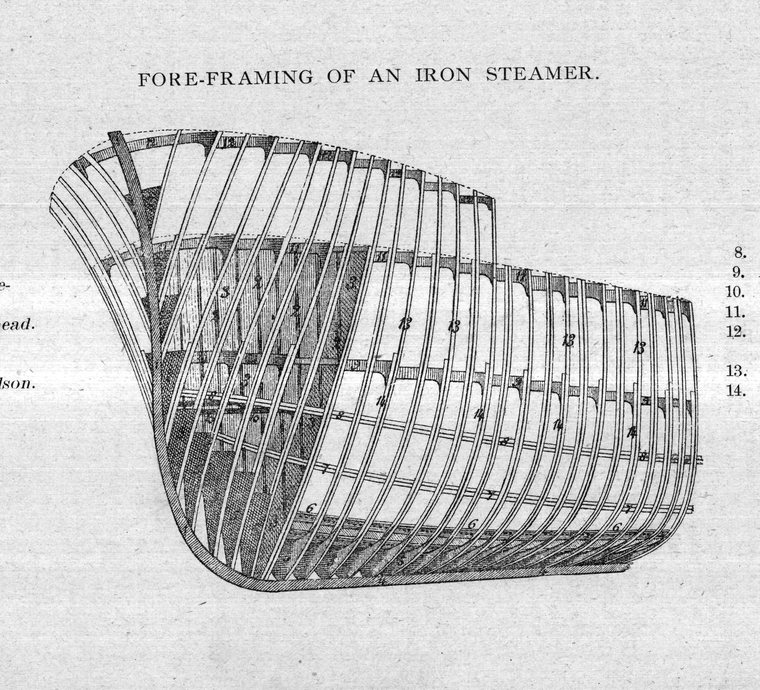
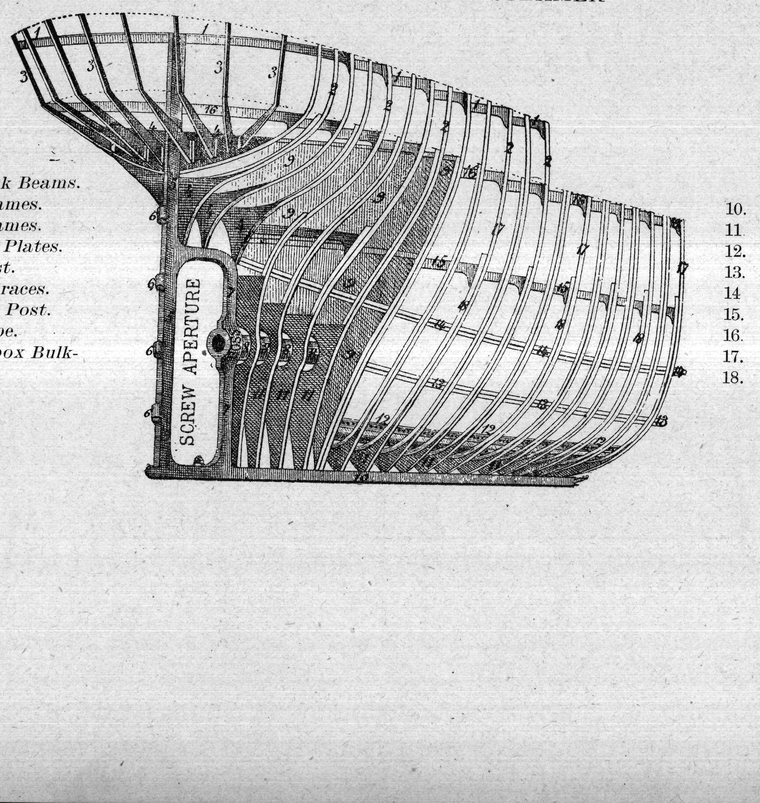
The bends of timber which form the body of the ship, each of which is composed of one floor-timber, two or three futtocks, and a top-timber on each side; which, being united together, form the frame. Of these frames, or bends, that which encloses the greatest space is called the midship or main frame or bend. The arms of the floor-timber form a very obtuse angle; and in the other frames this angle decreases or gradually becomes sharper fore-and-aft with the middle line of the ship. Those floors which form the acute angles afore and abaft are called the rising floors. A frame of timbers is commonly formed by arches of circles called sweeps, of which there are generally five. 1st. The floor sweep, which is limited by a line in the body plan perpendicular to the plane of elevation, a little above the keel; and the height of this line above the keel is called the dead rising. The upper part of this arch forms the head of the floor-timber. 2d. The lower breadth sweep, the centre of which is in the line representing the lower height of breadth. 3d. The reconciling sweep. This sweep joins the two former without intersecting either, and makes a fair curve from the lower height of breadth to the rising line. If a straight line be drawn from the upper edge of the keel to touch the back of the floor sweep, the form of the midship frame below the lower height of breadth will be obtained. 4th. The upper breadth sweep, the centre of which is in the line representing the upper height of breadth of the timber. This sweep described upwards forms the lower part of the top-timber. 5th. The top-timber sweep, or back sweep, is that which forms the hollow of the top-timber. This hollow is, however, very often formed by a mould, so placed as to touch the upper breadth sweep and pass through the point limiting the half-breadth of the top-timber.