Dead EyeSea Terms
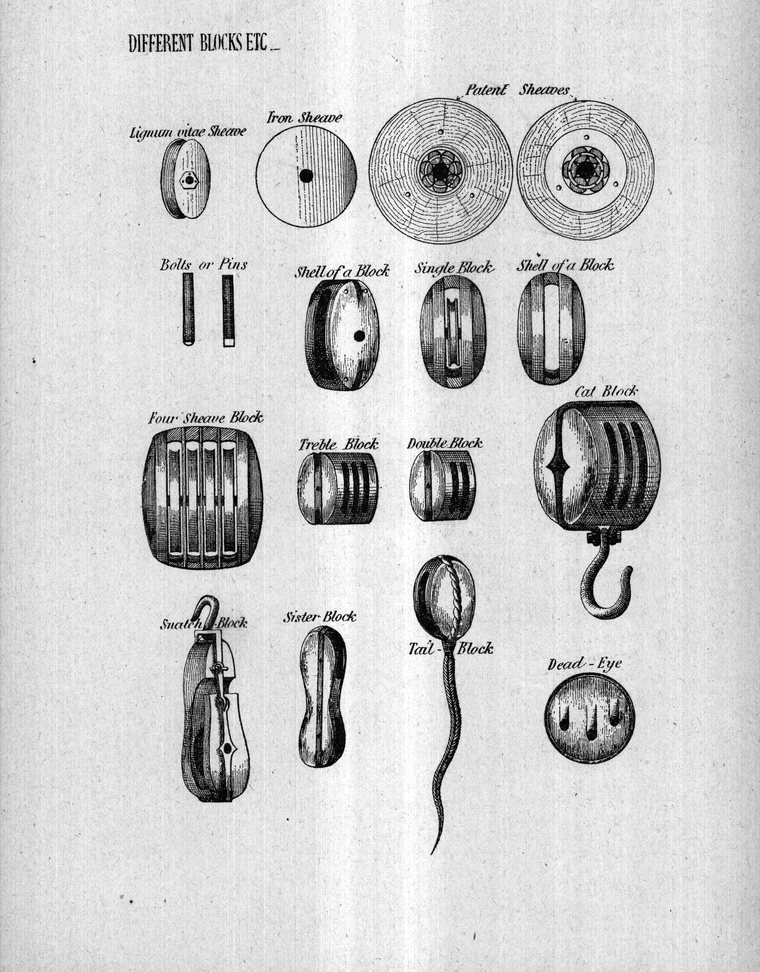
A solid circular block without sheaves, but containing three holes through the flat, and a score or groove cut round it for a strap. It is found on the ends of chain plates and shrouds and stays set up with lanyards.
Page 94 of Patterson’s Illustrated Nautical Encyclopedia · 20 entries
A solid circular block without sheaves, but containing three holes through the flat, and a score or groove cut round it for a strap. It is found on the ends of chain plates and shrouds and stays set up with lanyards.
The broadest part of the ship--the midship bend.
When a merchant agrees to supply a full cargo but is unable to do so, the unfilled space should be measured, the freight it could earn be calculated, and a claim made upon the merchant for so much "dead freight".
Round thick glass windows in the side of the vessel. These panes are generally framed in brass, and work upon hinges, so as to obtain air below when circumstances permit of them being opened. Also heavy wooden shutters to fit in to the stern ports when the glass sashes are taken out.
The rise of a ship's floor from a level.
A rope that does not reeve through any block or pass over any sheave.
The eddy of the wake under the vessel's counter.
A head wind. Wind dead ahead.
To impede a vessel's progress through the water. Dragging a sail or athwart-rigged spar after a vessel. An old trick resorted to to deceive pirates and the enemy. The idea was to show a great press of sail as though the vessel was endeavoring to escape and thus to bring the chasing vessel within reach of the former's guns, all unsuspicious of her intentions.
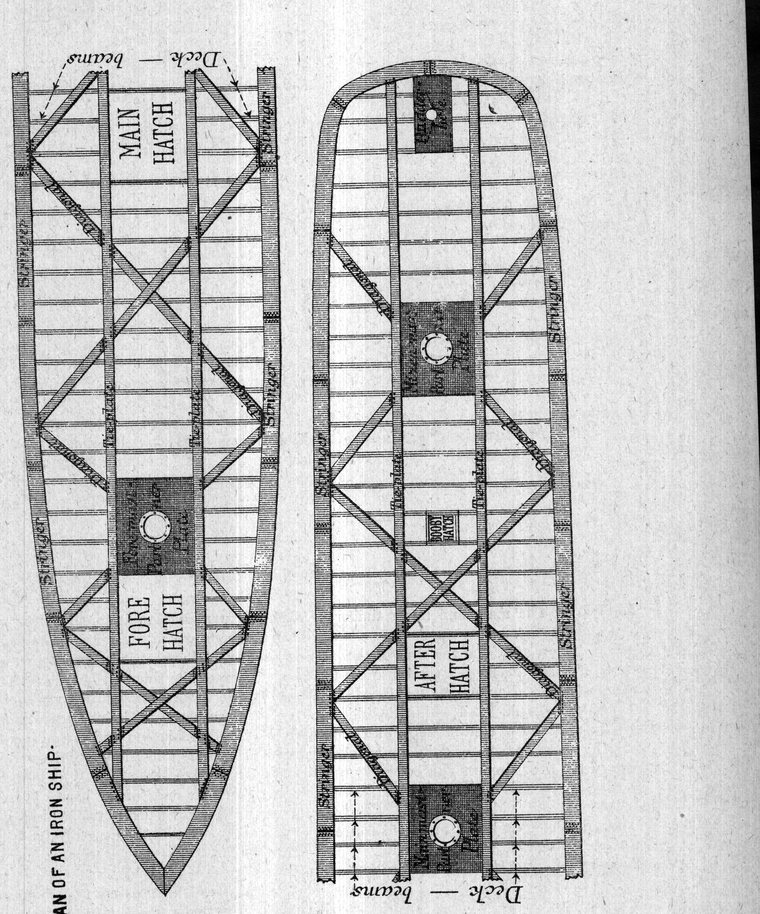
The platform laid upon the deck beams.
The upper, main or spar deck extends the entire length of the vessel.
The quarter deck extends from the mainmast aft.
The poop deck covers the poop cabin, which extends from the mizzen-mast aft.
The boiler deck is the one on river and harbor steamers on which the boilers are placed.
The hurricane deck is a light upper deck, generally covered with painted canvas, and to be found only on steam vessels.
The saloon deck and the hurricane deck are the same.
The promenade deck is another name for the hurricane deck.
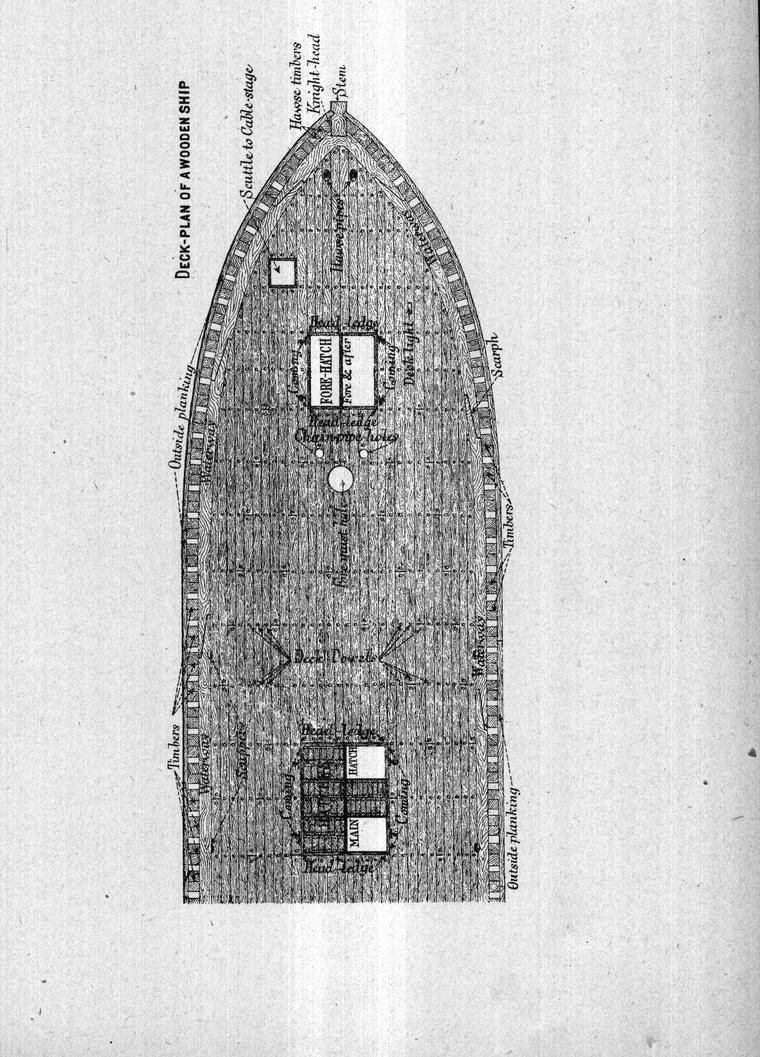
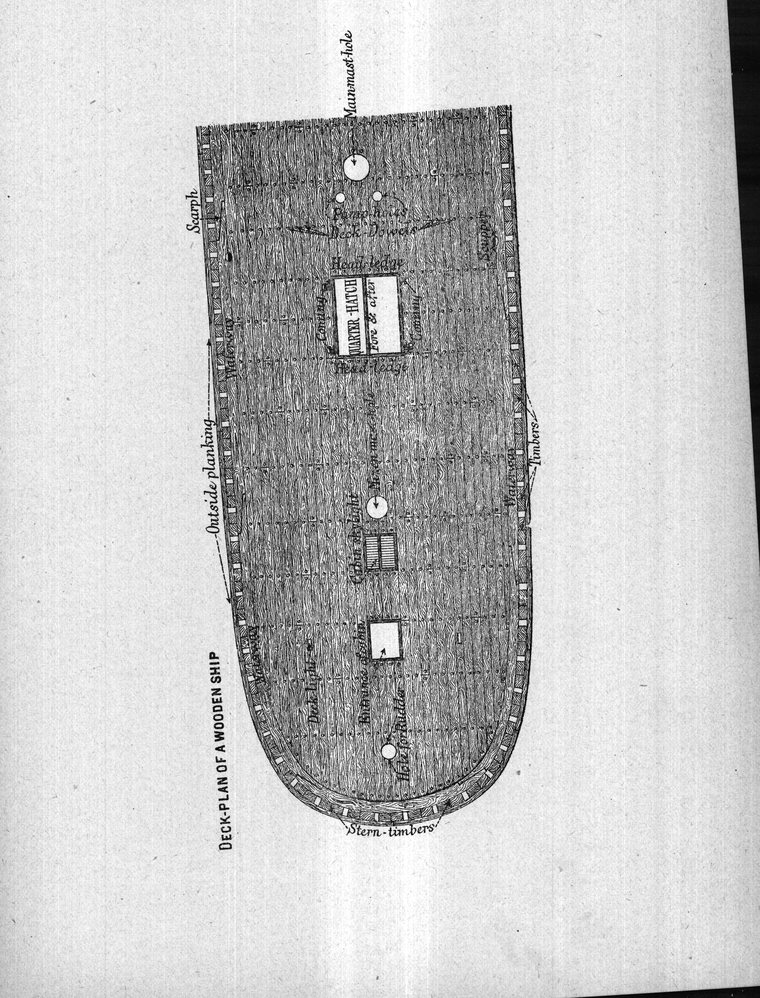
Thick shapes of glass let into a hole cut in the deck for giving light below.
That portion of the vessel's cargo which is carried on the upper deck.
(See Horse.)
Shapes of heavy glass let in the deck to give light to the various parts of the vessel below.
The hole in the deck through which the cable leads.
A hand-pump used for washing down decks.
(See Stopper.)
A heavy double purchase used about decks for heavy work.
The lead attached to the deep-sea lead line and weighting from forty to eighty pounds. It is armed in the same manner as the hand lead.
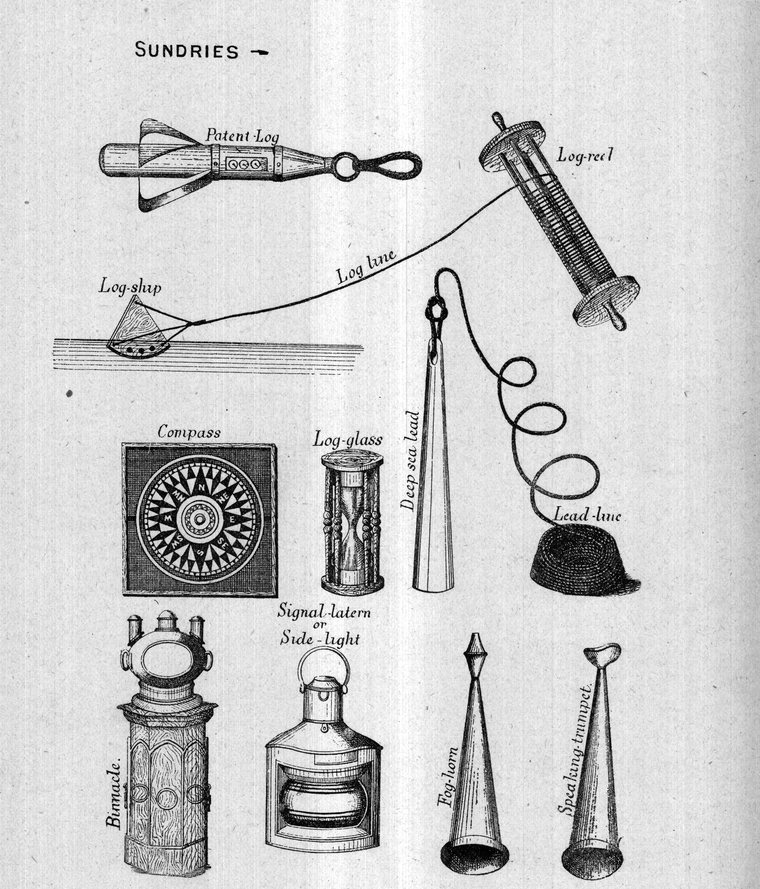
This line is 100 fathoms in length, and is marked as follows:
At 10 fathoms with a tucked strand having one knot.
At 20 fathoms with a tucked strand having two knots.
At 30 fathoms with a tucked strand having three knots.
And so on to 100 fathoms. Between these even ten-fathom marks a strip of leather may be used to represent 15 fathoms, 25 fathoms, 35 fathoms, etc.