Solstitial ColureNavigation
The hour circle passing through the solsitial points.
Page 403 of Patterson’s Illustrated Nautical Encyclopedia · 23 entries
The hour circle passing through the solsitial points.
The first pints of Cancer and Capricorn, or the pints of the ecliptic at which the sun arrives at the time of the solstices.
Ascertaining the depth of water by the hand or deep-sea lead and line, or by a sounding pole.
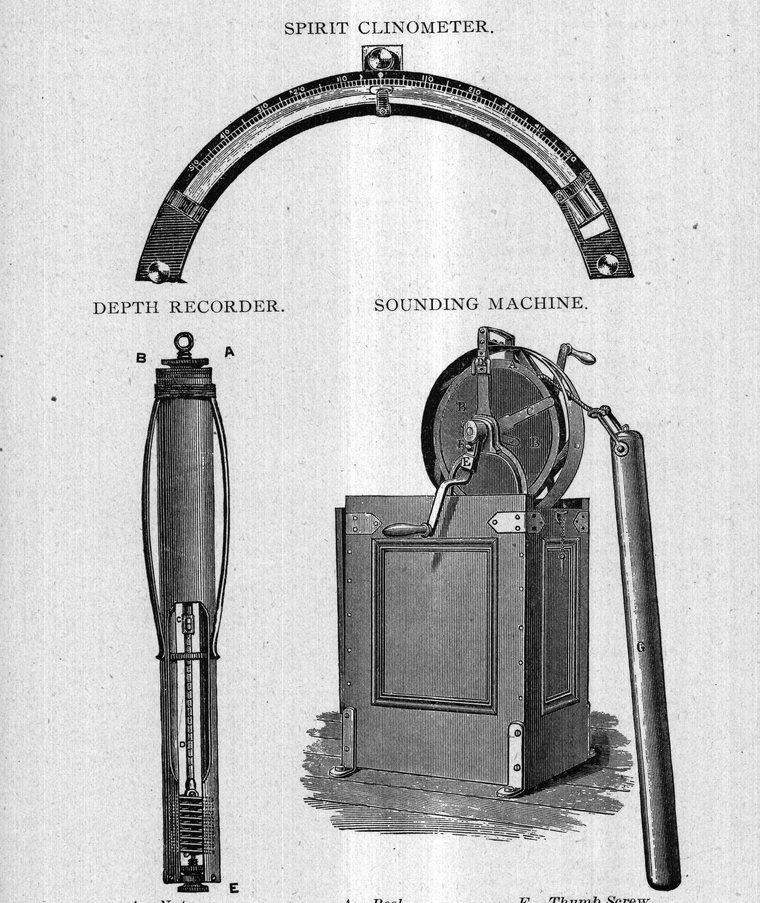
Contrivances for ascertaining the depth of water. There are various kinds in use, being known respectively as Massey's, Walker's, Ericsson's, Trowbridge's Electric, Sigsbee's and Sir William Thompson's Sounding Machines.
A name sometimes applied to a sounding machine.
A pole marked in feet and inches, and used for sounding in shallow rivers.
Any part of the coast or ocean where the depth of the water can be measured; also the act of measuring the depth of the water.
Off Soundings. Water that exceed 80 fathoms in depth.
On Soundings. Water that does not exceed 80 fathoms in depth.
A brilliant constellation in the southern hemisphere, its principal stars forming a well-defined cross.
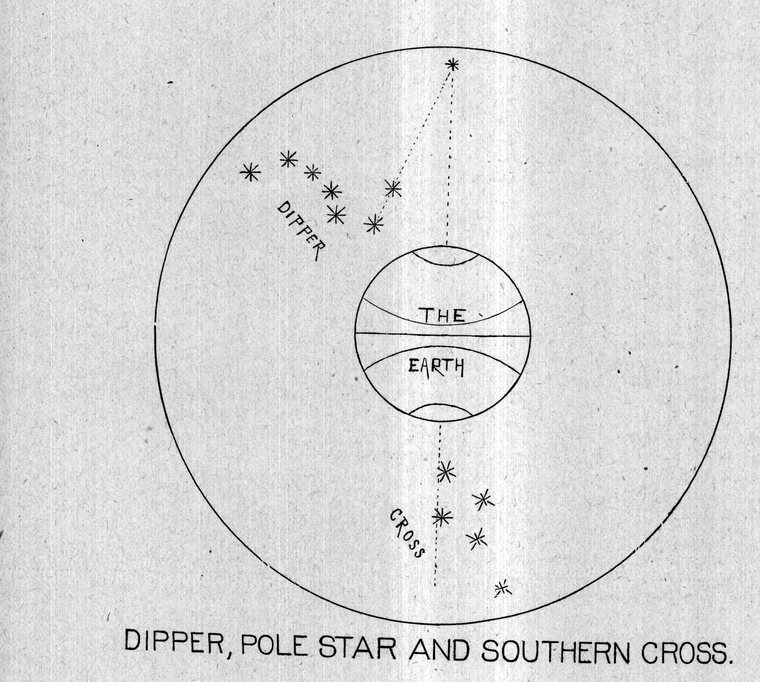
That half of the sphere which is south of the equator.
A log, either chip or patent.
A reflecting instrument f navigation used n 1570.
In geography, a representation of the surface of the earth. In astronomy, the concave expanse of the heavens.
In the from of a sphere; globular.
An angle on the surface of the sphere contained between two great circles at their point of intersection.
Parallel, middle latitude, Mercator's and great circle sailings.
A three-sided spherical polygon-a portion of the surface of a sphere bounded by the arcs of three great circles.
That branch of trigonometry which explains the method of solving spherical triangles.
(See Bubble Clinometer.)
Same as Vernal Equinox.
Also known as the Clark Russell Log. An instrument for measuring the velocity of a vessel, and consists a spring on the principle of an oridnary spring weighing-scale. This has attached to it a line and chip, and the pressure exerted upon the latter when being towed indicates the vessel's speed.
The highest tides, which occur at the time of the new and full moons; opposed to neap tides.
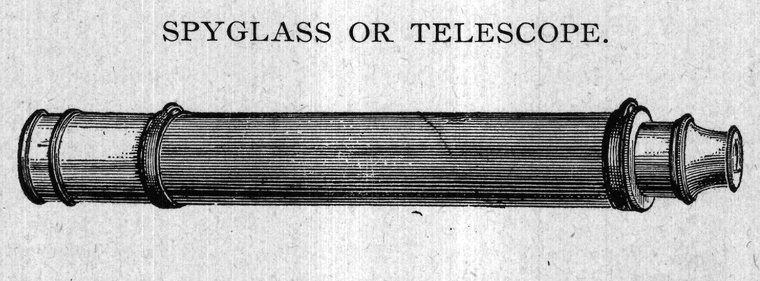
Another name of the marine telescope.
A staff graduated upwards in feet and tenths, and so placed that its zero will lie below the lowest tides; an instrument for measuring the range of tides.