Crusher Pressure GaugeNaval
A device attached to the mushroom of every breech-loading gun to ascertain the pressure on the interior of the gun exerted by the gas generated from the powder when the latter is exploded.
Page 468 of Patterson’s Illustrated Nautical Encyclopedia · 21 entries
A device attached to the mushroom of every breech-loading gun to ascertain the pressure on the interior of the gun exerted by the gas generated from the powder when the latter is exploded.
A long circular body of uniform diameter, used in connection with a piston on gun carriages to check the recoil of the gun.
When a fleet is cruising to and fro before an embargoed port it is said to be darning the water.
When a man is discharged from the service, or transferred from one vessel or station to another, a personal description of the man is furnished, together with his name, naval service, place of birth, rating, etc.
A swift vessel employed in carrying despatches between men-o'-war situated at a distance from one another, from one naval station to another, etc.
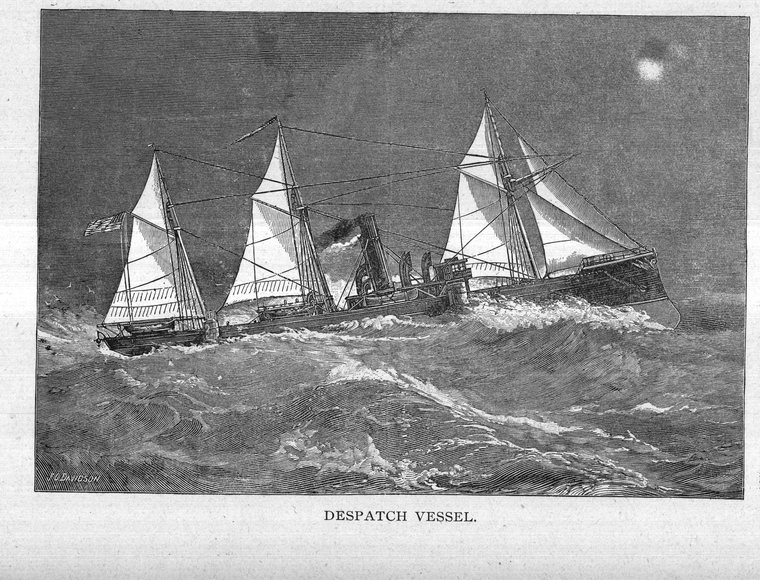
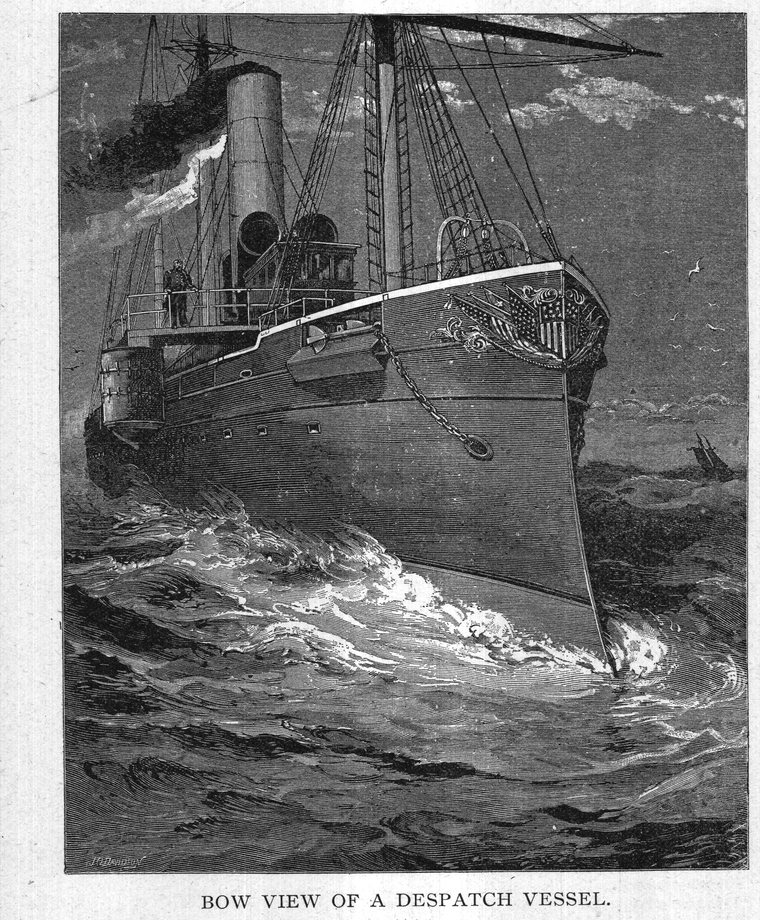
(See Uniform.)
Division. A number of vessels of war detached from the main fleet. A division is smaller than a squadron. A separation of the ship's company under the heads of powder division, gun divisions, etc.
When an officer is relieved permanently from a certain duty he is said to be detached.
(See Explosives.)
The removal of the cap.
To remove a gun from its carriage.
A fire by divisions.
A term applied to a man-o'-war having two gun decks.
Two balls connected by a short bar of metal.
When a double-deck ship is painted so as to show both rows of ports she is said to be double-sided.
A modification of the Hotchkiss rapid-fire gun, the difference resting entirely in the breech mechanism, which is a little more simple than the Hotchkiss.
A dummy shell of the same weight as the service shell.
(See Explosives.)
This term is somewhat of a misnomer, as the guns of these so-called dynamite vessels throw gun cotton instead of dynamite.
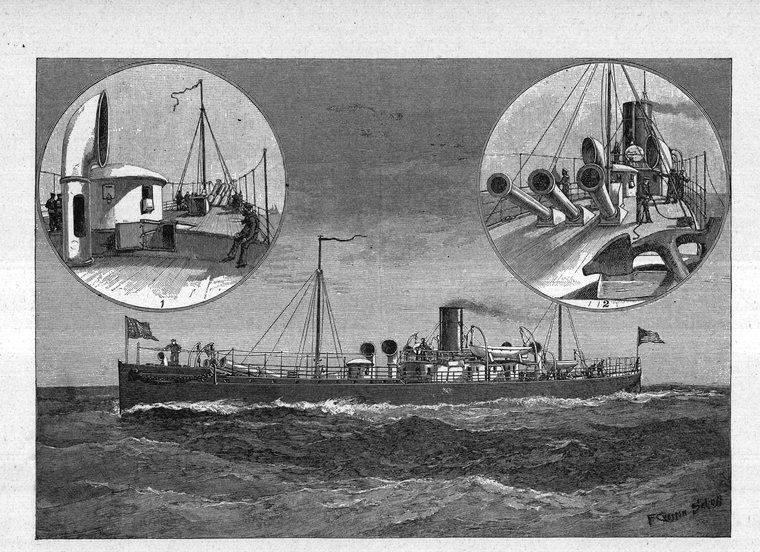
A high explosive, named after its inventor--Emmons.
The engineer corps of the U. S. Navy consists of one Engineer-in-chief with the relative rank of commodore; chief engineers with the relative rank of captain; chief engineers with the relative rank of commander; chief engineers with the relative rank of lieutenant-commander; passed-assistant engineers with the relative rank of lieutenant; passed-assistant engineers with the relative rank of lieutenant, junior grade; assistant engineers with the relative rank of ensign, and cadet engineers with the relative rank of cadet midshipman.
Fleet Engineer. The senior chief engineer attached to the flagship, who has jurisdiction over all the engineers of the fleet.
A first-class petty officer who has charge af all engineers' stores, keeps the accounts of his department, and writes up the engineer's log-book. The engineer's yeoman is under the direct orders of the chief engineer.