Balance Reef-bandSea Terms
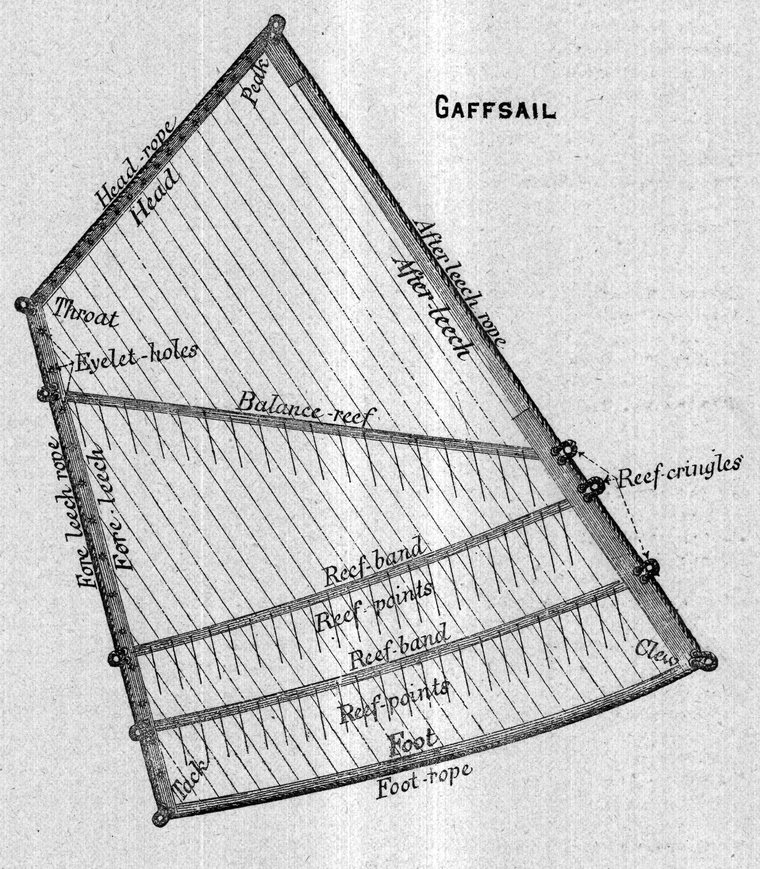
A reef-band on a gaff-sail which runs across it diagonally. It is used in bad weather, and makes the sail triangular.
Page 48 of Patterson’s Illustrated Nautical Encyclopedia · 26 entries
A reef-band on a gaff-sail which runs across it diagonally. It is used in bad weather, and makes the sail triangular.
A Spanish pleasure vessel.
A trading sloop of the Philippines.
The act of throwing water out of a boat.
A big shackle-shaped iron at the mast-head, supported by the capband, and to which the stan ling part of the flying jib-stay is bent on.
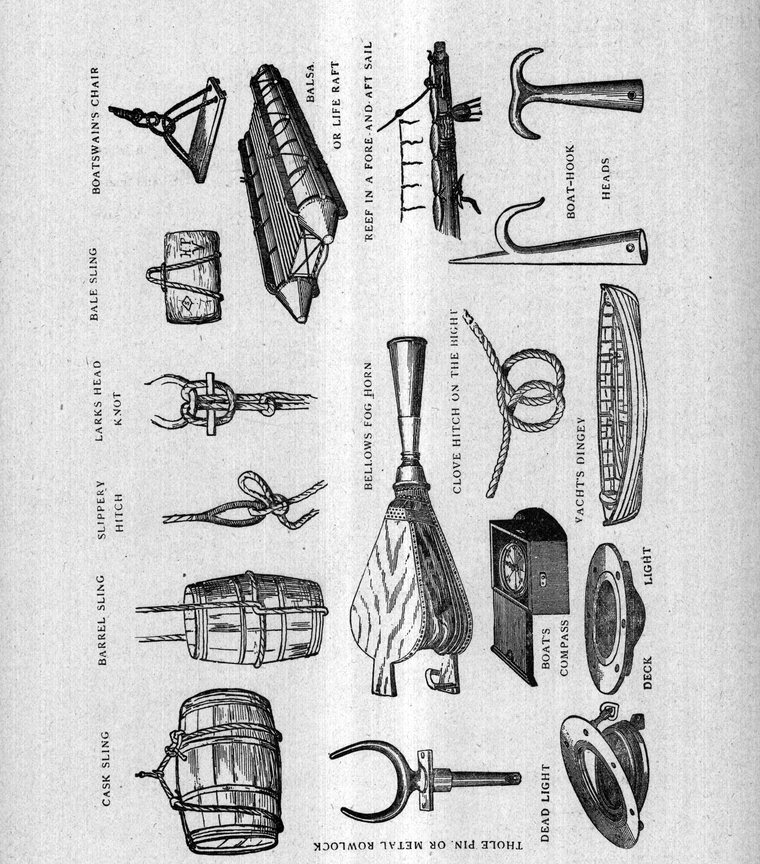
A simple strap passed around a bale or bag, the two ends meeting on top, one dipping under the other. The hook of the hoisting block is hooked into the loop, and the strap jams around the bale or bag when it is hoisted. (See engraving.)
A one-mast vessel of from 100 to 200 tons, seen in Muscat.
A fast sailing schooner of Bermuda.
Iron, lead, stone, gravel, or earth placed in the bottom of vessels to give them stability, and to prevent some crank merchant vessels from upsetting when they have no cargo in.
The ballast shoots when it shifts from one side of the hold to the other.
To freshen ballast is to shift it about.
Shingle ballast is coarse gravel.
Iron tanks placed in the holds of vessels which can be pumped full or free from water and which are used for trimming the vessel and giving her necessary draught when little or no cargo is on board.
A Simese state galley. It is built to imitate a sea monster, and is propelled by a great number of oars--sometimes as many as 100 to a side.
A Simese vessel brigantine rigged.
A sail made of light canvas and carried in place of the regular fore staysail.
A very large jib of light material used in moderate winds on board racing yachts.
A yacht sail made of light canvas, set upon the jib topsail stay, and sheeting to the quarter of the vessel. When this sail is set, it generally takes the place of all other head sails.
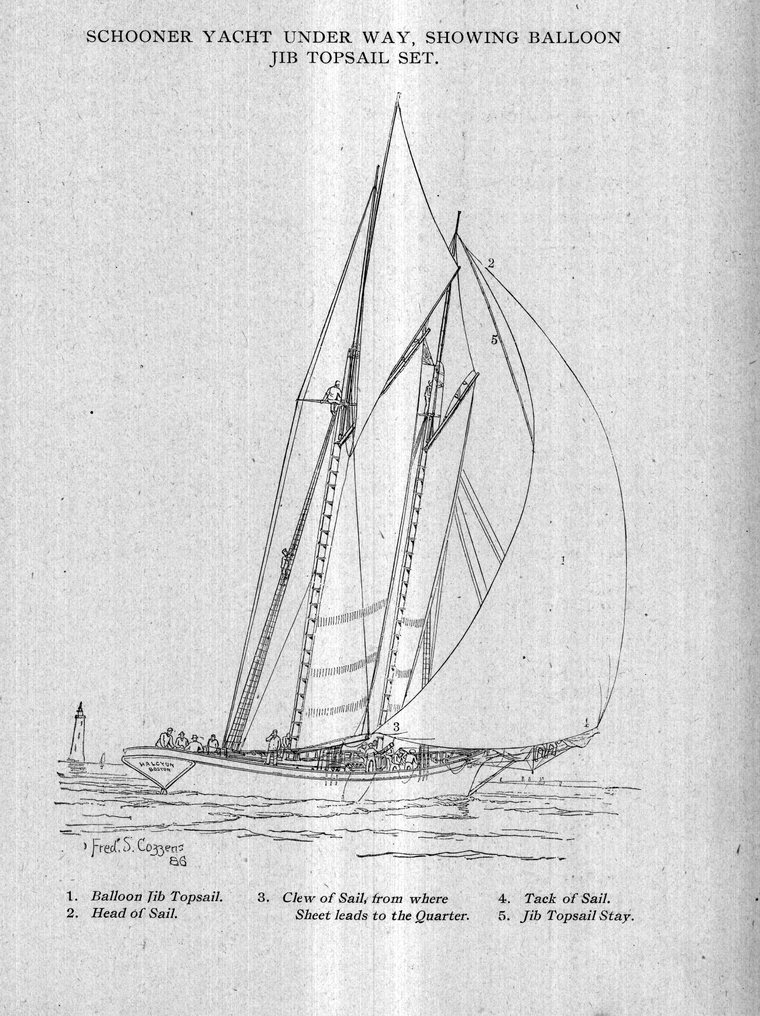
A large sail of light material which sets between the fore and mainmasts, and is used in moderate winds on board racing yachts.
(See Life Raft.)
The band of canvas sewed over the tabling on the head, luff, and foot, and on the leach, from the clew up above the reef cringles.
A boat is said to be double-banked when two men sitting on the same thwart pull separate oars, one a port and the other a starboard oar; single-banked when the thwarts are occupied by one man. Oars are double or single-banked, according to the number of men pulling the same oar.
A vessel engaged in the Bank of New Foundland fishing.
A shoal of sand or mud.
An East Indian vessel propelled by oars.
A Spanish coasting vessel having pole masts and lug sails. Sometimes this name applies to a certain class of Spanish gun-boats.
The name by which a Mediterranean lighter is known.
When a ship has no sail set whatever.
A large boat in which the thwarts are double-banked, such as the commodore's or admiral's barge in the navy.