BargeSea Terms
A vessel or boat of state, beautifully furnished; also applies to an excursion boat of broad beam, having two or more decks and possessing no motive power.
Page 50 of Patterson’s Illustrated Nautical Encyclopedia · 31 entries
A vessel or boat of state, beautifully furnished; also applies to an excursion boat of broad beam, having two or more decks and possessing no motive power.
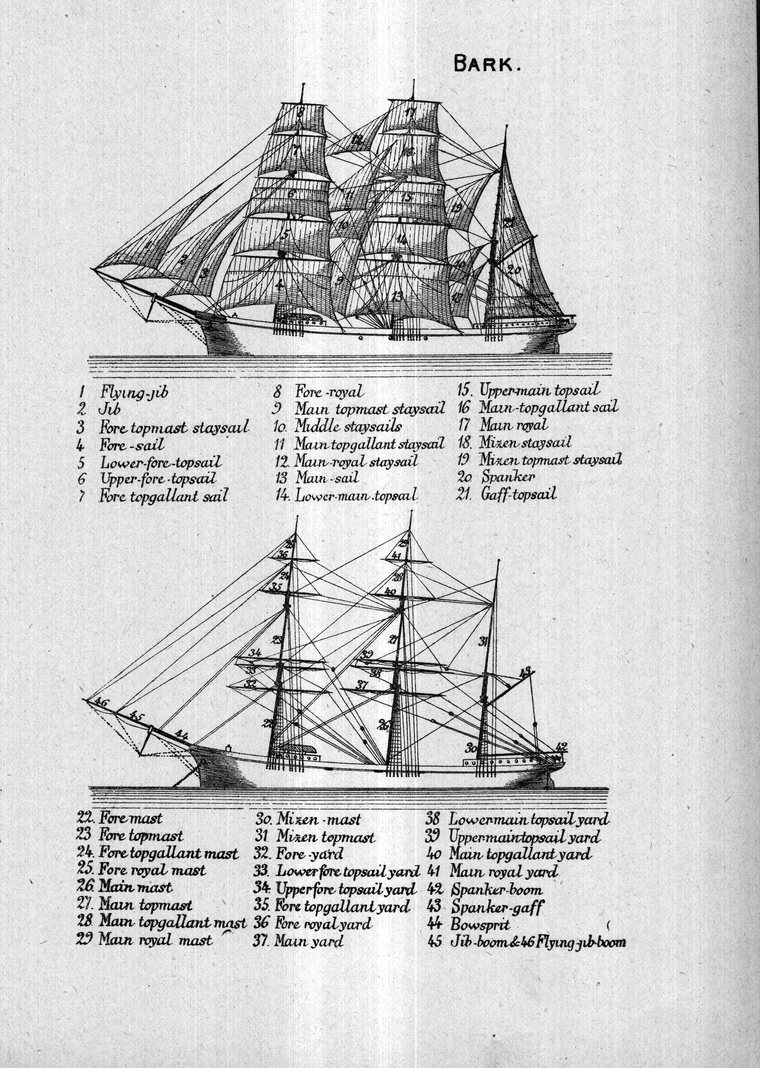
A vessel having three masts, the fore and main square-rigged, and the mizzen schooner-rigged. This name is sometimes written Barque.
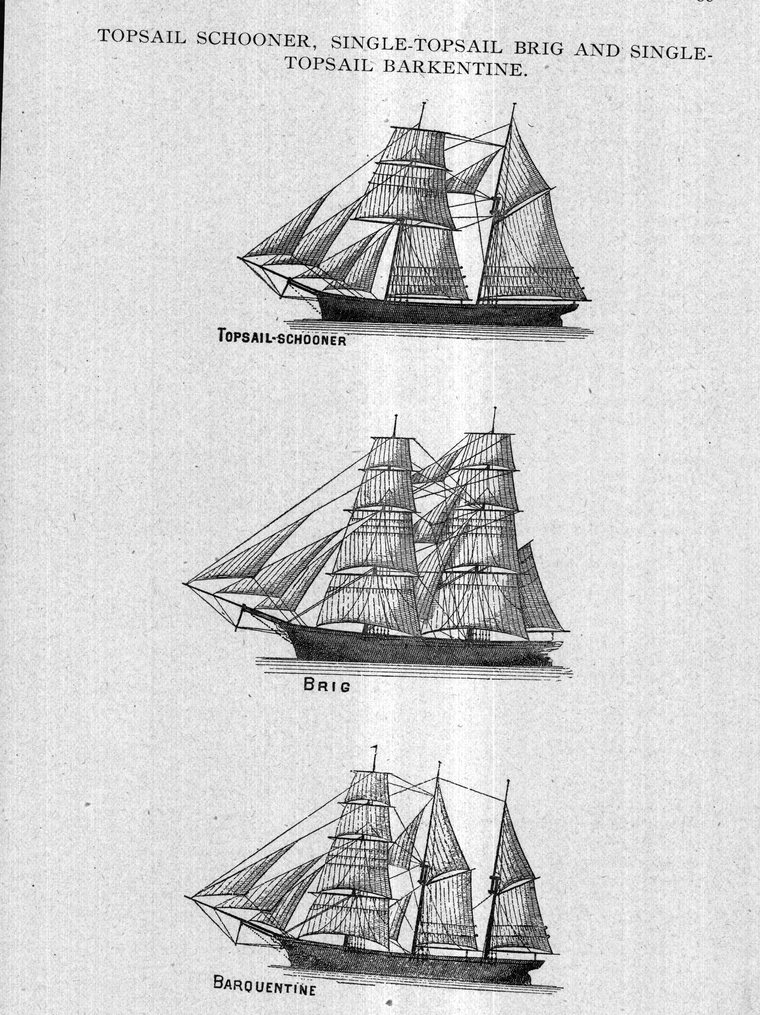
A vessel with three masts, the foremast square-rigged, and the main and mizzen schooner-rigged.
A sailor's term for a vessel he is fond of.
Shell-fish which adhere to a vessel's bottom, to logs of driftwood, etc.
A peculiar, but swift and safe boat of the west of Scotland, capable of carrying a dozen men.
Applied to the master of a vessel who commits fraud in the management of his vessel, whereby his owners are wronged.
Breaches of trust and dishonest actions on the part of a shipmaster.
The horizontal revolving part of a windlass, the main piece of a capstan, or the horizontal piece around which the tiller-ropes go, and which is turned by the steering-wheel of a vessel.
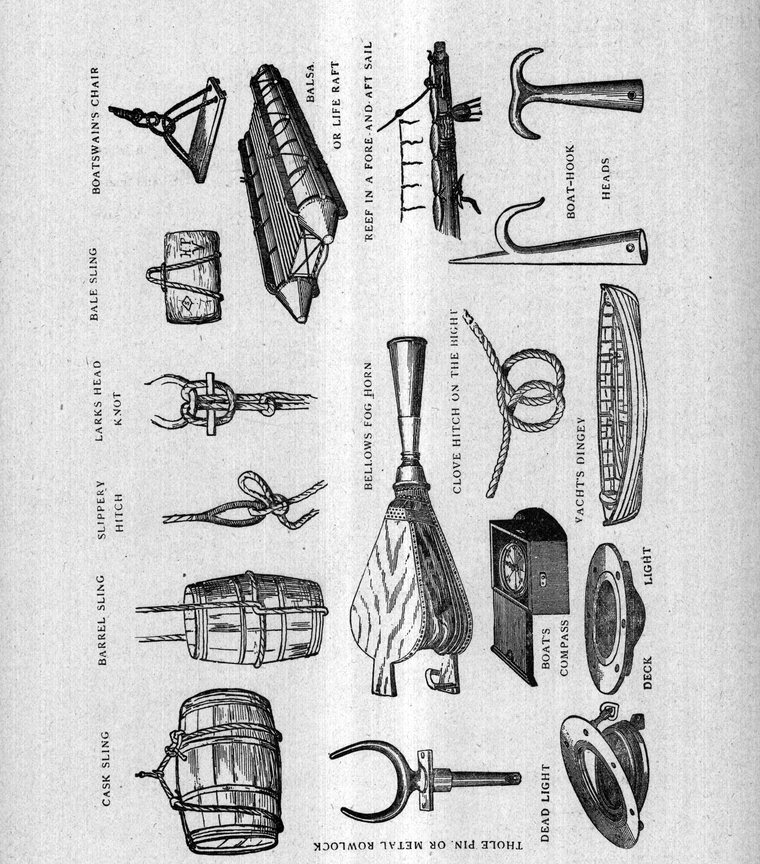
A simple sling made for hoisting a headless barrel. This is much employed on board ship for sending hold-sweepings up on deck in a barrel, etc. (See engraving.) It differs from a cask-sling, which see.
(See Dock.)
A rope made from a certain kind of soft rush. There is no difference between bass rope and coir rope. (See Coir Rope.)
A sharp-ended, flat-bottom boat of the Canadian Lakes.
A vessel of India, lateen rigged.
Strips of wood or iron placed around the outside of hatch comings after the hatches have been shipped and the tarpaulin spread over them. These battens are employed to jam the tarpaulin against the comings and make the hatches watertight. Battens are also placed upon rigging to prevent chafing. (See Scotchman.)
A pleasure boat of the Ganges, having both sails and oars.
A loafer about a sea port.
A stake placed over a shoal as a warning to mariners. Beacons are sometimes placed on prominent places on shore as a particular bearing or signal mark for vessels. There are perch, ball, and cage beacons, so named from the forms they take.
One of the timbers extending across the vessel for supporting the deck, and for keeping the sides of the vessel in shape. (See Abeam.)
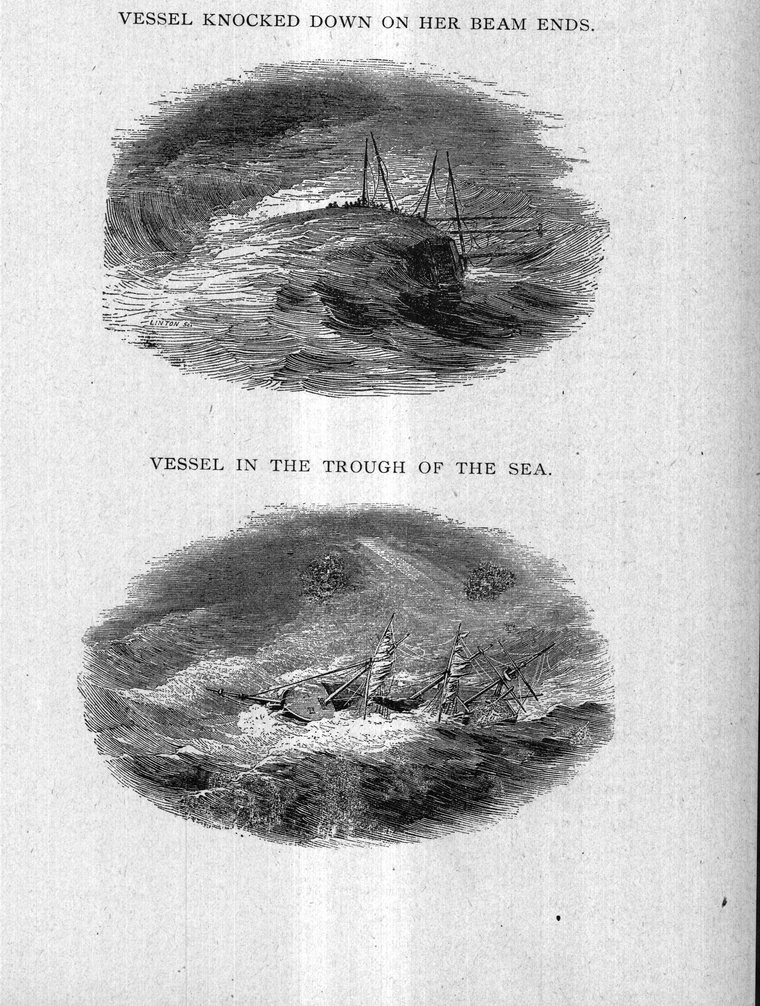
When a vessel is heeled over to such an extent that her beams approach the vertical she is said to be on her beam ends.
A sea that breaks against the vessel's beam.
A wind blowing at right angles to the vessel's course.
A fishing or pilot-boat found in Spain and Portugal.
The direction of an object in relation to a point of the compass.
To lend assistance; to hasten.
Meaning the same as bear up.
To approach a vessel from windward is to bear down upon her.
When a ship sails toward the shore she is said to bear in with the land.
To keep a boat clear of a vessel's side, or from a dock.
To approach a vessel by putting the helm up and running off to leeward, is to bear up to her.
The direction of an object in relation to a point of the compass.
The bearings of a vessel refer to the widest part of her below the covering board; also her line of flotation when she is in proper trim.