The Nautical Encyclopedia
Patterson’s Illustrated Nautical Encyclopedia — Howard Patterson, 1891

Frame Timbers to Hogging

Page 300 of Patterson’s Illustrated Nautical Encyclopedia · 18 entries

Frame TimbersShipbuilding

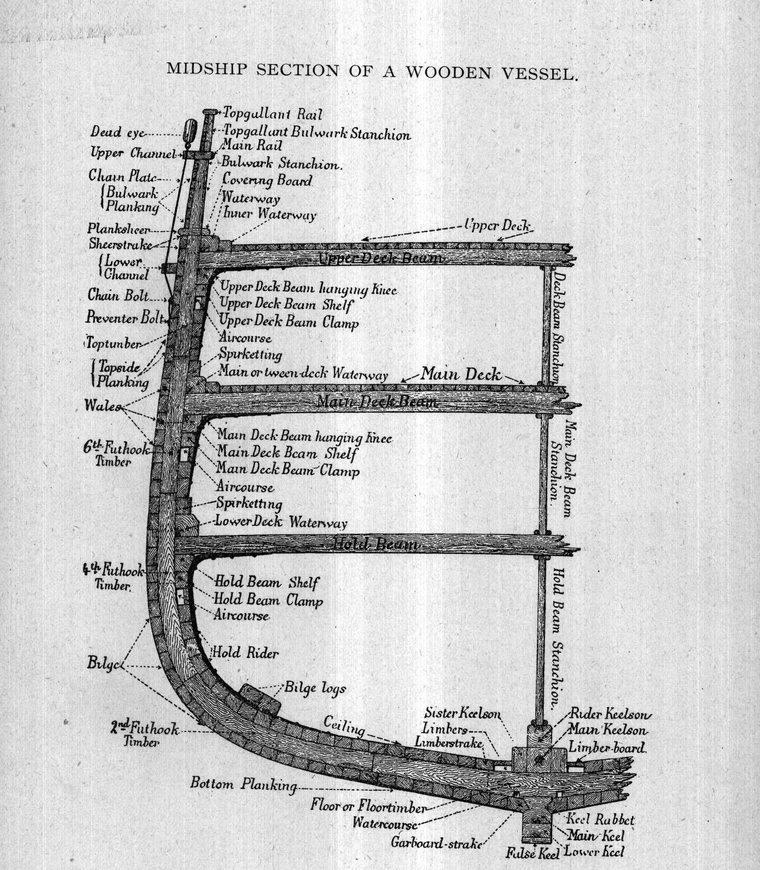
The various timbers that compose a frame bend, as the floor-timber, the first, second, third and fourth futtocks, and top-timber, which are united by a proper shift to each other, and bolted through each shift. They are often kept open for the advantage of the air, and fillings fayed between them in wake of the bolts. Some ships are composed of frames only, and are supposed to be of equal strength with others of larger scantling.
FreeboardShipbuilding

Height of side from water line to deck, or planksheer.

FuttocksShipbuilding

The separate pieces of timber of which the frame timbers are composed. They are named according to their situation, that nearest the keel being called the first futtock, the next above the second futtock, etc.

Midship section of a wooden vessel, every timber named

Garboard StrakeShipbuilding

That strake of the bottom which is wrought next the keel and rabbets therein.

Midship section of a wooden vessel, every timber named
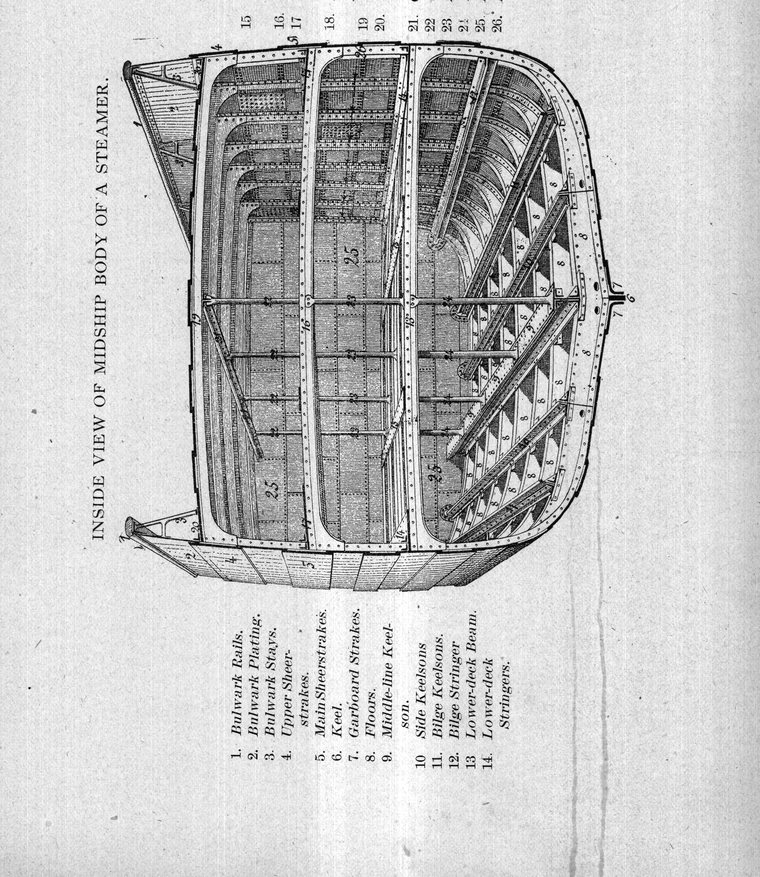
Inside view of the midship body of a steamer, with its parts named

GripeShipbuilding

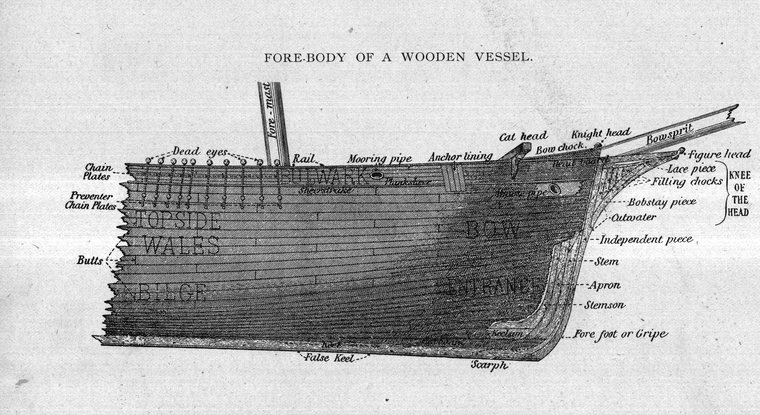
A piece of elm timber that completes the lower part of the knee of the head and makes a finish with the fore-foot. It bolts to the stem, and is further secured by two plates of copper in the form of a horse-shoe, and therefrom called by that name.

Fore-body of a wooden vessel — cut-water, figure-head, apron, stem and gripe

GroundwaysShipbuilding

Large pieces of timber, generally defective, which are laid upon piles driven in the ground, across the dock or slip, in order to make a good foundation to lay the blocks on upon which the ship is to rest.

GudgeonsShipbuilding

The braces on the stern post on which the rudder hangs.

GunwaleShipbuilding

That horizontal plank which covers the heads of the timbers between the main and fore-drifts.

Half-breadth PlanShipbuilding

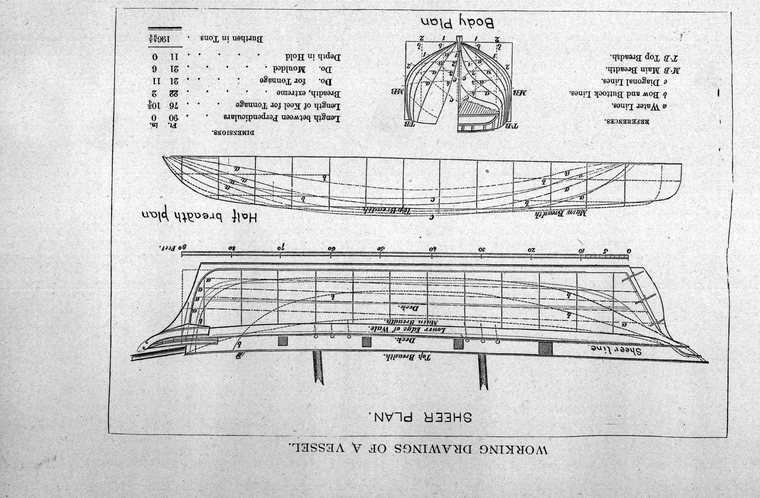
A ship-construction drawing showing the rail line, planksheer line and all water lines as curves and the ending of all lines in the sheer plan are squared down to their respective planes in the half-breadth plan.

Working drawings of a vessel — body plan, sheer plan and half-breadth plan

Half-timbersShipbuilding

The short timbers in the cant bodies which are answerable to the lower futtocks in the square body.

Hanging-KneeShipbuilding

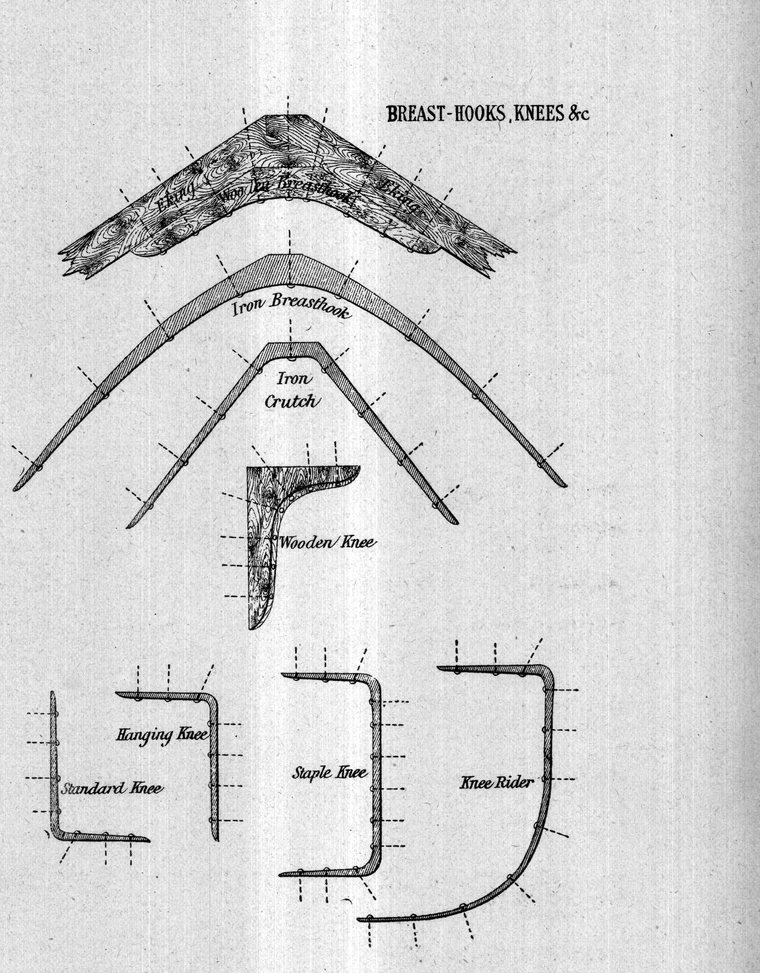
Those knees against the sides whose arms hang vertically or perpendicular.

Breast-hooks, knees, etc. — iron breasthook, iron crutch, wooden, hanging, standard and staple knees, and knee rider

HarpinsShipbuilding

Pieces of oak, similar to ribbands, but trimmed and beveled to the shape of the body of the ship, and holding the fore-and-aft cant bodies together until the ship is planked. But this term is mostly applicable to those at the bow; hence arises the phrase, "lean and full harpin," as the ship at this part is more or less acute.

HeadShipbuilding

The upper end of anything but more particularly applied to all the work fitted afore the stem, as the figure, the knee rails, etc. A "scroll head" signifies that there is no carved or ornamental figure at the head, but that the termination is formed and finished off by a volute, or scroll turning outwards. A "fiddle head" signifies a similar kind of finish, but with the scroll turning aft or inwards.

Head-ledgesShipbuilding

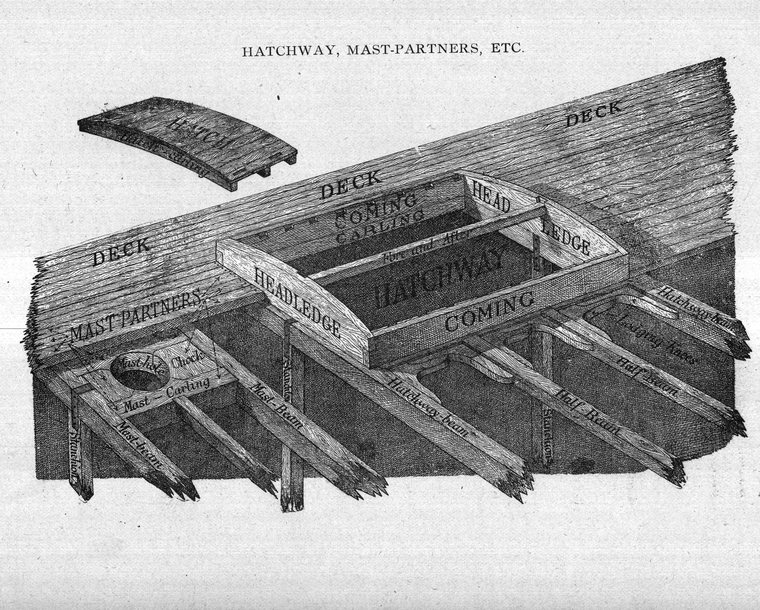
The 'thwartship pieces which frame the hatchways and ladderways.

Hatchway, mast-partners, head-ledges and coaming

Head-railsShipbuilding

Those rails in the head which extend from the back of the figure to the cathead and bows, which are not only ornamental to the frame but useful to that part of the ship.

HeelShipbuilding

The lower end of a tree, timber, etc. A ship is also said to heel when she is not upright but inclines under a side pressure.

Helm Port TransomShipbuilding

A piece of timber placed across the lower counter inside at the height of the helm port, and bolted through every timber for the security of that part.

HoggingShipbuilding

(See Broken-Backed.) A ship is said to hog when the middle part of her keel and bottom are so strained as to curve or arch upwards. This term is therefore opposed to sagging, which, applied in a similar manner, means, by a different sort of strain, to curve downwards.

← page 298The A–Z indexpage 302 →