False KeelSea Terms
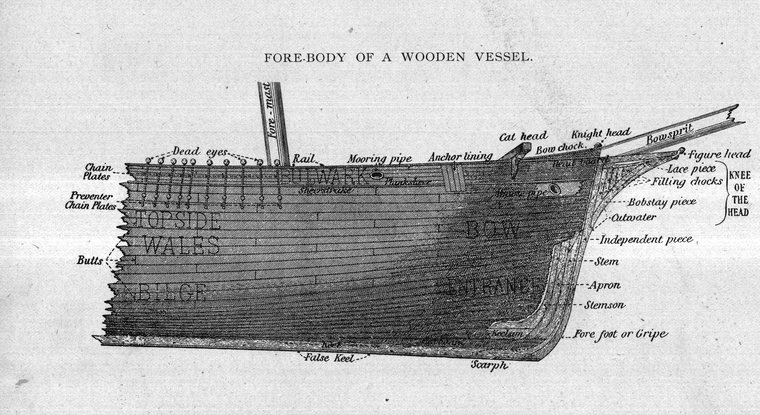
A timber bolted underneath the main keel of vessels in order to deepen the outside keel.
Page 108 of Patterson’s Illustrated Nautical Encyclopedia · 34 entries
A timber bolted underneath the main keel of vessels in order to deepen the outside keel.
A line for overhauling a lee topping lift; a line rove through a block seized on to the jaws of a gaff, and used as a downhaul for the spar.
A long, slender, overhanging stern.
A name sometimes applied to Scotch coasting vessel.
Secure. The rope used in securing a vessel to a wharf or to another vessel. There are bow, head, breast, quarter, and stern fasts.
Six feet.
To fit two pieces of wood close and fair together.
A Japanese rowing galley.
A thick woolen cloth coat. Sometimes called Dreadnaught.
An oar is feathered in rowing by turning the blade horizontal after it leaves the water.
Planks having one of their sides thinner than the other.
A ship is said to feel her helm when she is sensitive to the rudder.
Feeling her Way. Sounding with a hand lead as the vessel proceeds.
A vessel having lateen sails, and housed over only in part. It is of Arabic origin.
To keep off; to bear off from; to prevent touching.
A long fore-and-aft fender hung over a ship's side just above the water line midships to prevent chafing against a dock.
Piles driven into the bottom, their upper part extending a number of feet above the water, and forming the corners and ends of wharfs, ferry-slips, etc.
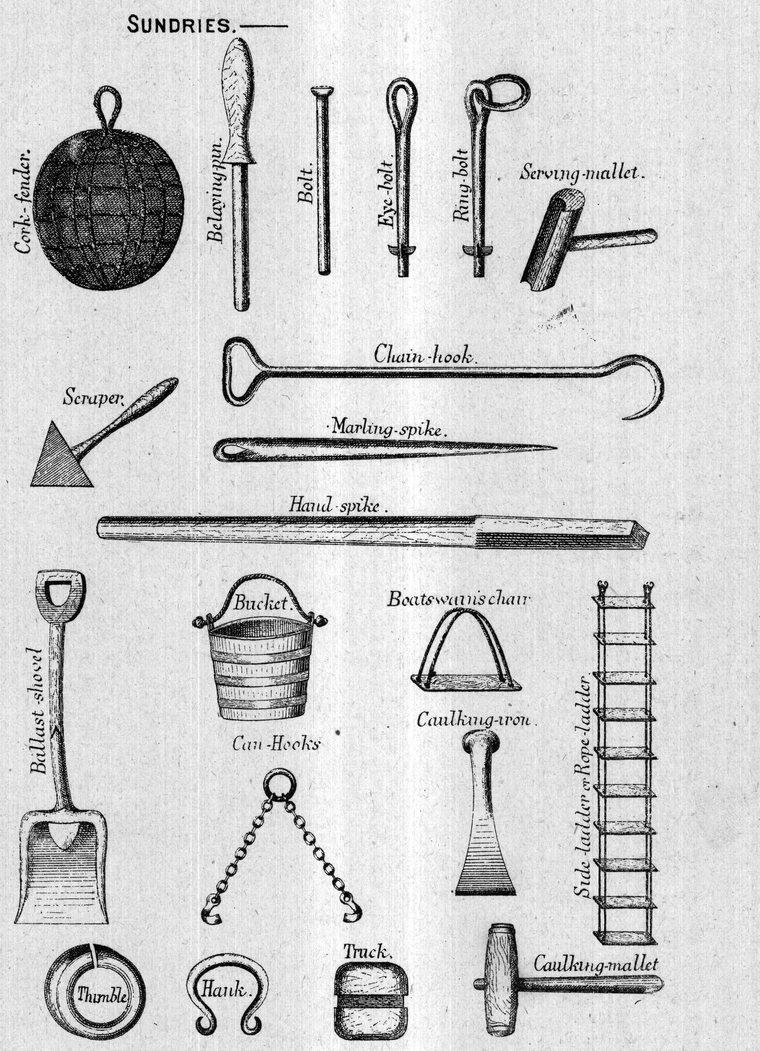
Shapes of wood, canvas or rope hung over a vessel's side to protect her from chafing against another vessel or dock. Boat fenders are small round shapes of canvas stuffed.
Meaning that a vessel will succeed in getting to a certain point without another tack when she is being beat to windward.
To carry away; to break; to part.
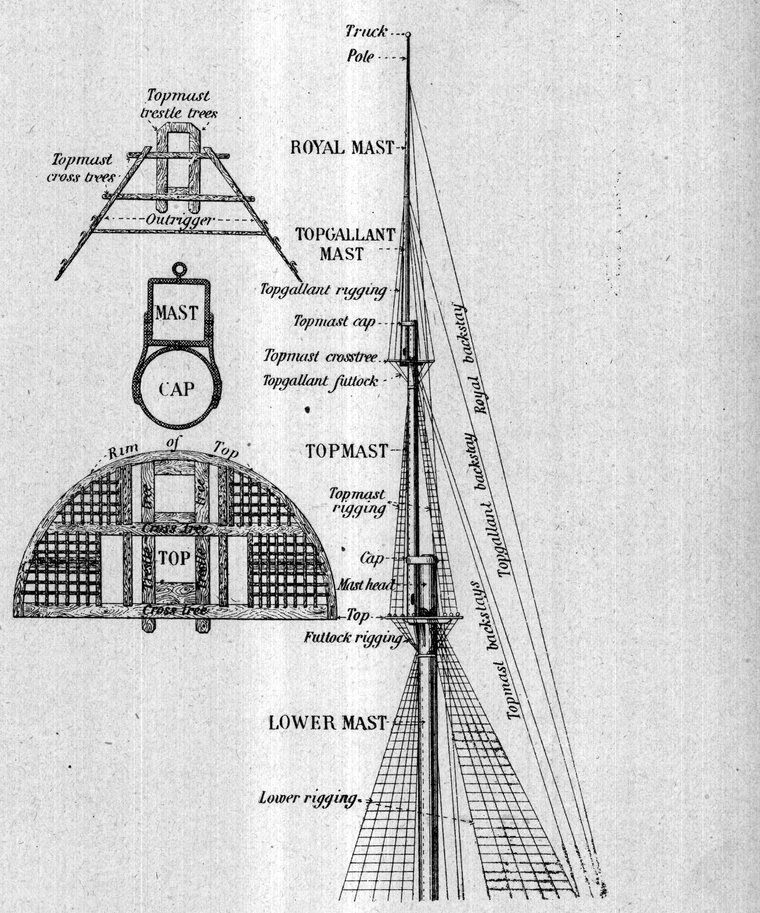
A block of wood or iron to support a topmast or topgallant mast by placing it through the fid hole in the heel of the mast and allowing it to rest on the trestle-trees. A conical-pointed piece of hard wood used as a marlinspike for splicing large ropes, opening the eyes of rigging, etc.
An elongated sheel containing two sheaves, the largest one on top. (See engraving.)
(See Head.)
A framework fastened to the table to prevent dishes from sliding off when in a seaway.
The pin rail surrounding a mast.
An East Indian vessel propelled by paddles, and having one mast.
A trading vessel of Smyrna.
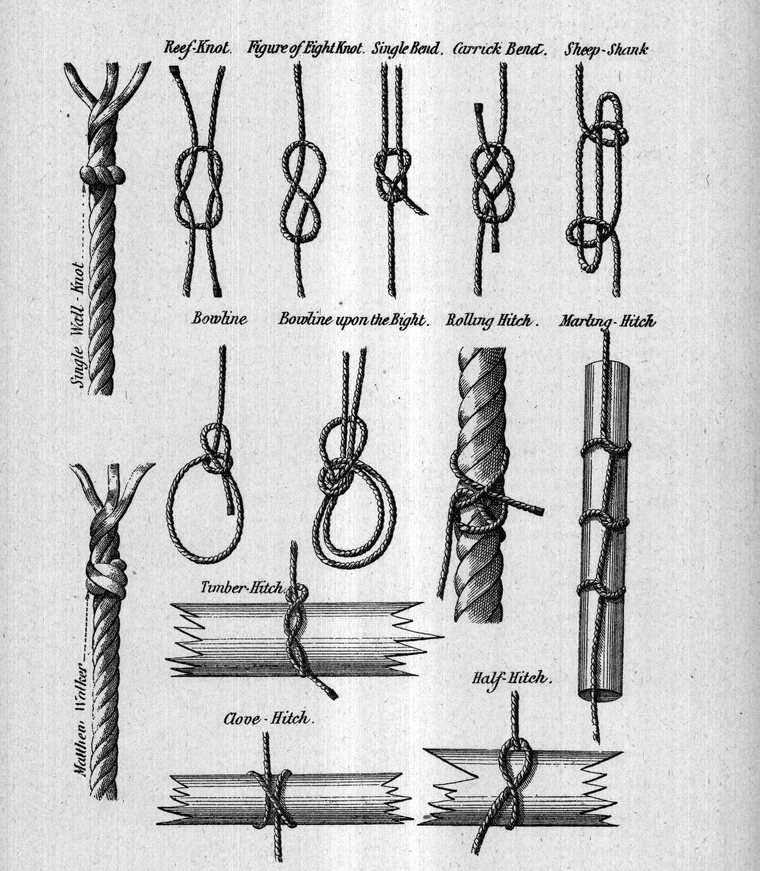
A knot made in the shape of figure 8. (See engraving.)
A carved figure carried under the bowsprit by being bolted to the stem. (See Head.)
A small boat of the Garonne having a very flat bottom.
Of the freebooter class.
The sails are said to fill when the wind blows into them so as to force the vessel ahead.
When the wind blows on the forward surface of the sails so as to prevent the vessel's progress through the water.
To brace the yards so as to receive the wind into the sails after the vessel has been braced aback.
A piece of wood inserted in a made mast to make good a deficiency. A composition used on spars as a priming coat before they are varnished.