FineSea Terms
A vessel has a fine entrance when she is sharp forward.
Page 110 of Patterson’s Illustrated Nautical Encyclopedia · 28 entries
A vessel has a fine entrance when she is sharp forward.
(See Fire Quarters.)
Stationing the crew in various parts of the vessel, and alloting to each man a certain task to be performed in the event of fire on board ship. When this is shown in writing and exhibited for the benefit of the crew it is called a Fire Bill.
To lift the flukes of the anchor on the rail so that the shank is horizontal; to strengthen or reunite a spar by bolting pieces of plank over the break, then heaving a strong lashing of rope around the spar over the fish pieces.
The davit employed in fishing the anchor.
The name of a strengthening slab on the front of a made mast.
The large iron hook used to catch the arm of the anchor, and by which the fluke is raised to the bill board on the rail.
The rope to which the fish hook is secured.
The ropes, blocks, hook, etc., used in fishing an anchor.
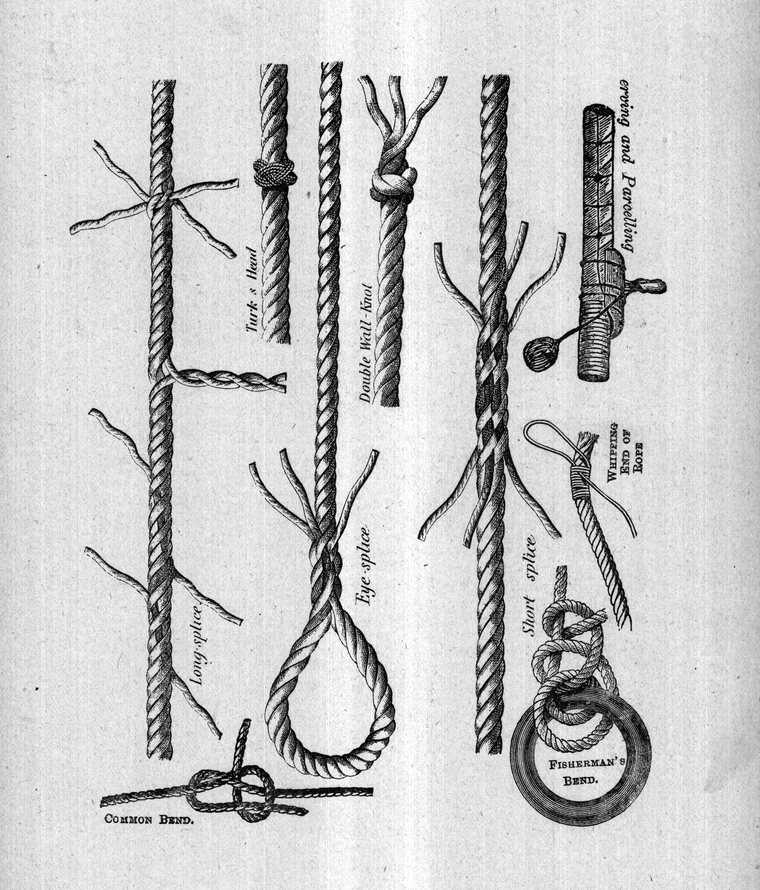
Sometimes used for bending on the gaff topsail halliards, or the topmast stunsail (studding-sail) halliards. (See engraving.)
To seize; to lay hold upon.
A design manufactured from bunting or silk, representing the national colors, standards, etc. (See engraving.)
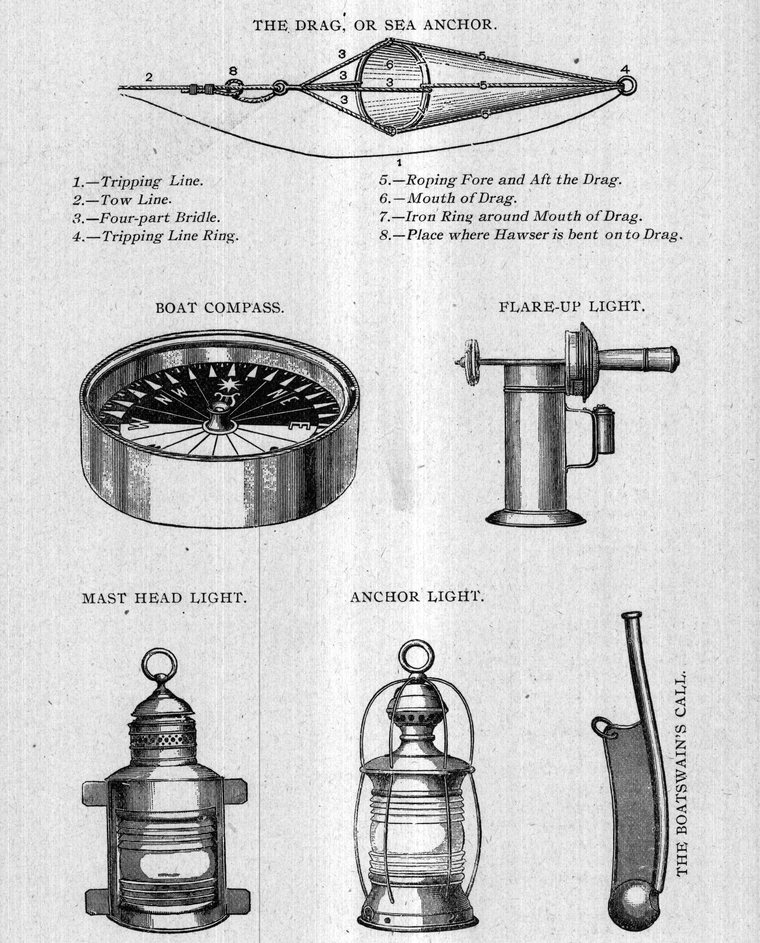
A distinguishing light carried by a pilot vessel, or exhibited by a vessel being overtaken by another.
Opposed to falling home. A vessel is said to have a flaring bow when the topside inclines outside from the perpendicular. A flaring bow keeps the anchor well clear of the vessel's side when it is hanging at the cat-head, and also makes the vessel very dry forward by preventing the seas from breaking over the bow.
A signal made for a pilot by flashing a white light above the bulwarks at short intervals. An alternate vanishing and appearing light in a lighthouse.
To haul a sheet flat is to haul it down or in as close as possible.
Said of a square sail when the wind is blowing on its forward side so as to press the after-surface against the mast.
Not a breath of air stirring.
Known also as a reef knot and a square knot. It is used in tying reef points, etc. (See engraving.)
A seizing put on anything without overlaying or riding turns.
Same as flatten in.
To haul in the head-sheets so that the head-sails will lie closer to the wind.
A sudden gust of wind.
A boat used in South America for carrying dispatches.
To shift anything from one place to another; to separate the blocks of a tackle.
Fleet-ho! The order given to shift.
To coil a rope down with each succeeding fake outside of and half-way covering the fake beneath it. This is also known as a French Fake.
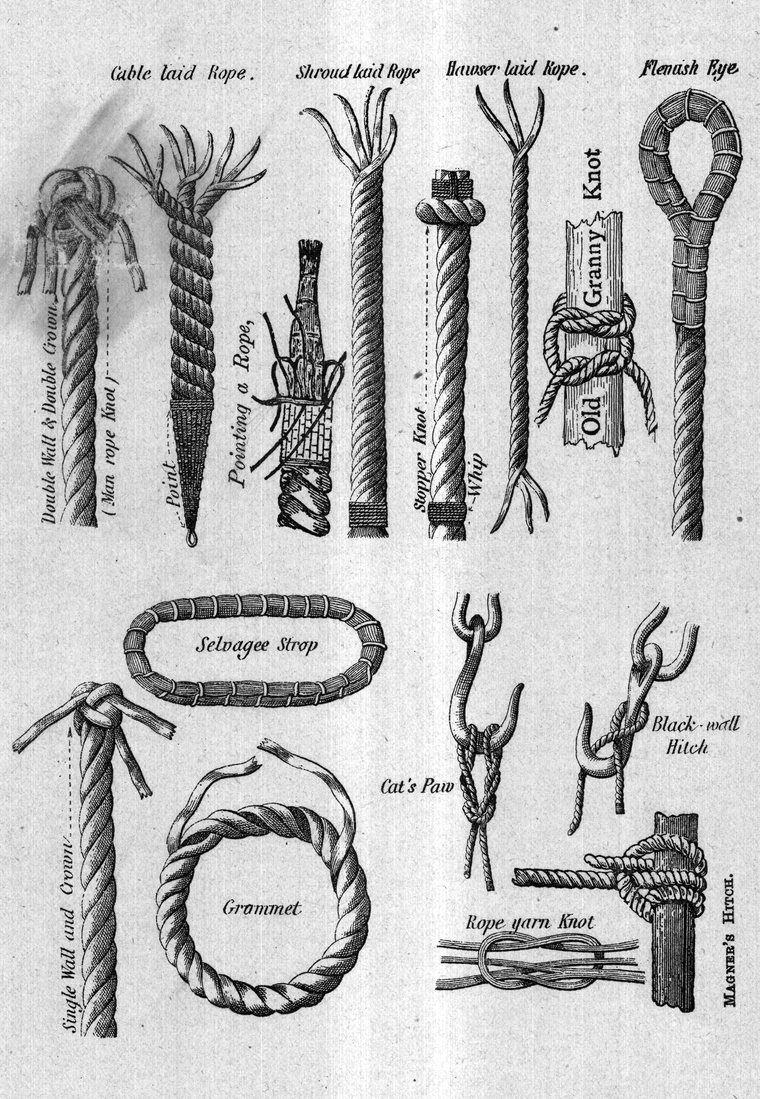
A kind of eye splice. (See engraving.)
A number of turns of rope being concentric, or having a common centre, and lying flat on the deck instead of riding over each other.