Jolly RogerSea Terms
A pirate's flag.
Page 154 of Patterson’s Illustrated Nautical Encyclopedia · 24 entries
A pirate's flag.
A pirate or pirate vessel; also a pirate flag, or device, bearing the traditional skull and cross-bones.
A member of the crew, or one of the passengers, who is accredited with bringing ill fortune to the vessel in the way of accidents, head gales, calms, etc. Parsons and women are considered the most perfect specimens of this order, and the superstitious Jack Tar of olden days deemed it a particularly unfortunate omen if he was obliged to sail in such dangerous company. The idea entertained was, that, as the Evil One was continually following up parsons and women in order to tempt them, his spirit presence could not fail to be attended with all kinds of misfortune for the vessel.
A short, quick sea.
A vessel is said to jump her masts out of her when, from the terrific nature of the sea, her masts go overboard.
A rope leading from the outboard ends of the whiskers to the martingale to prevent the former from steeving--from leaving a horizontal line by jumping upwards.
Extra stays leading from the lower mastheads to the sides of the vessel, where they are set up with tackles.
When seamen desert a ship they are said to jump it. (See Pier Head Jump.)
A Chinese vessel; also old rope, canvas, iron, etc.
When guns or other heavy weights are used as anchors they are termed jury anchors. This has been done on a lee shore to assist the anchors already down or to take the place of those lost.
A temporary mast rigged up at sea to the stump of a mast that has been carried away.
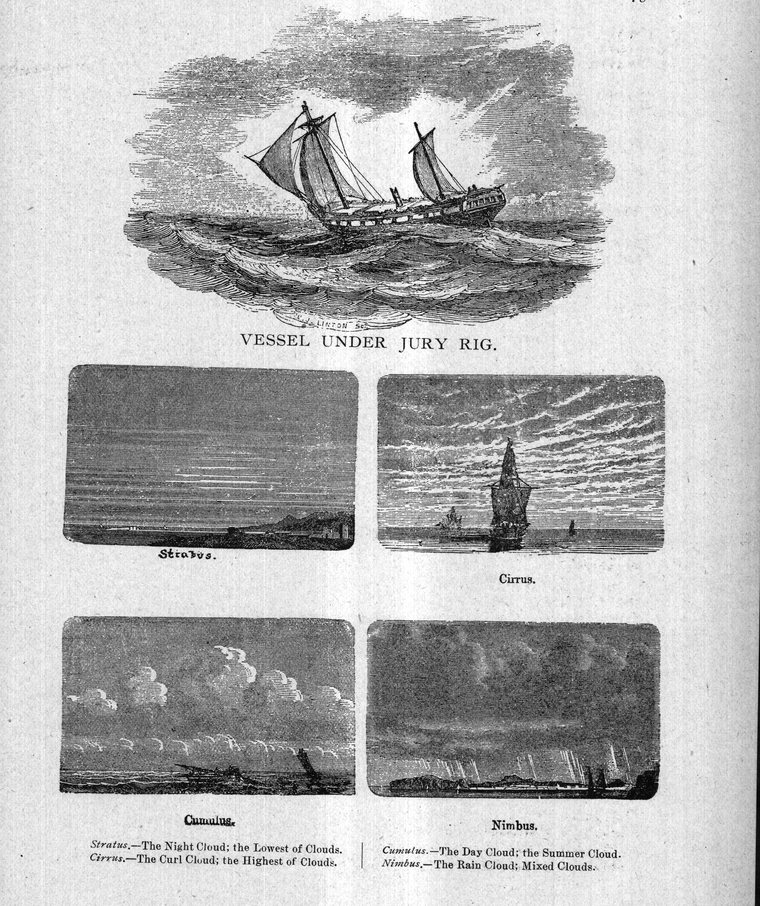
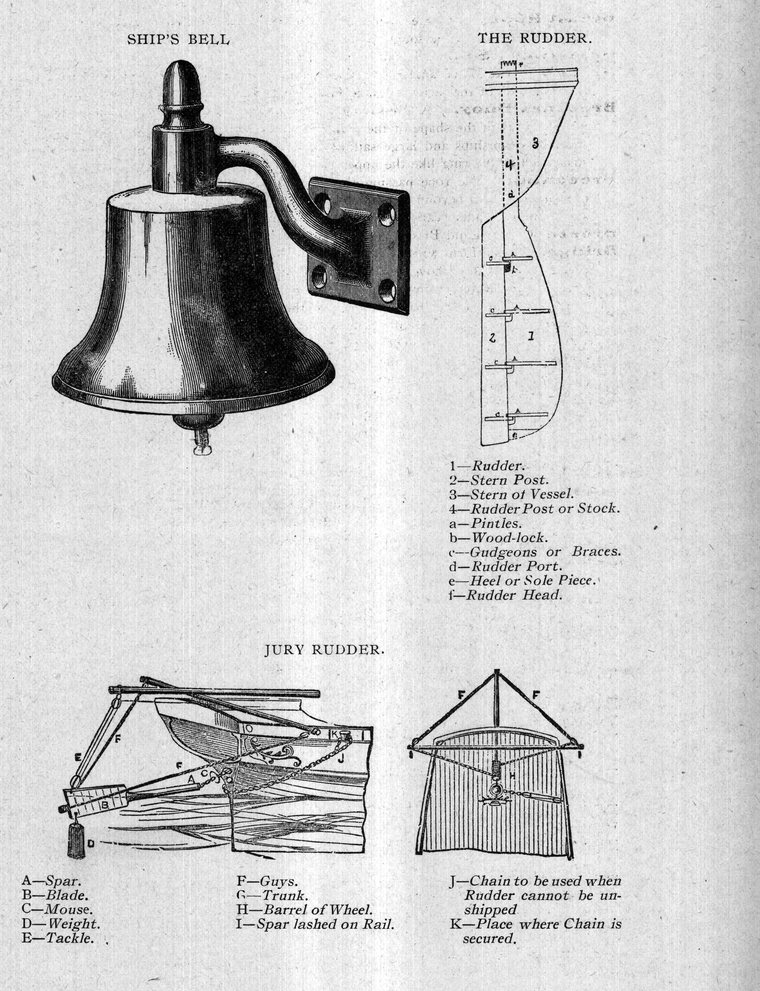
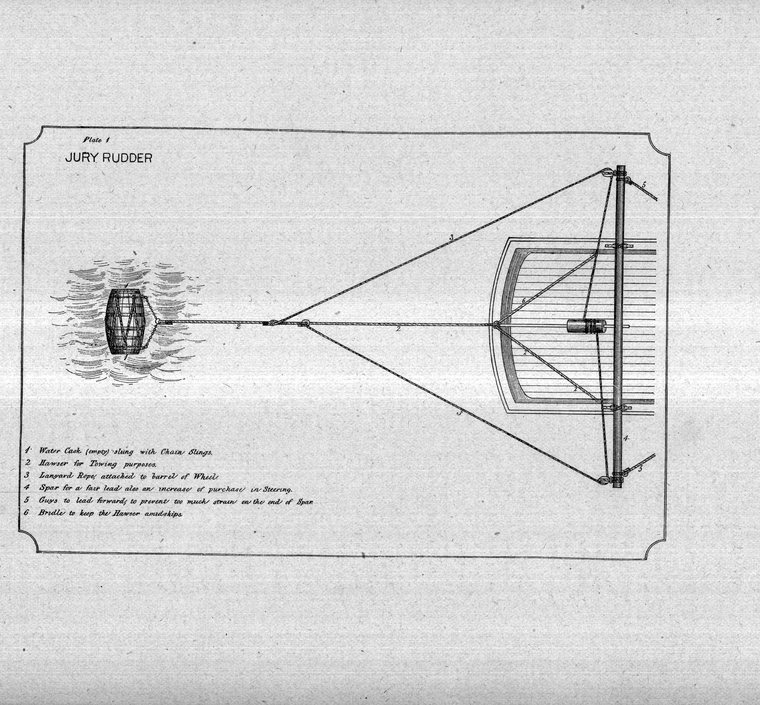
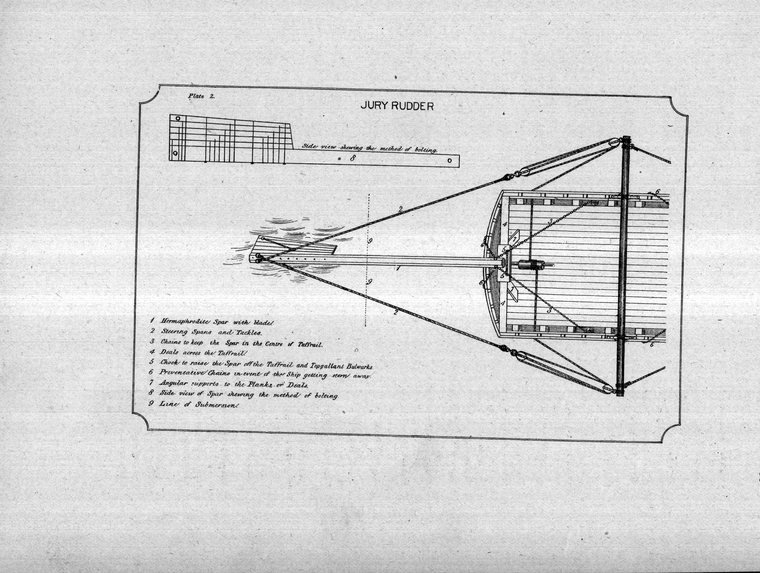
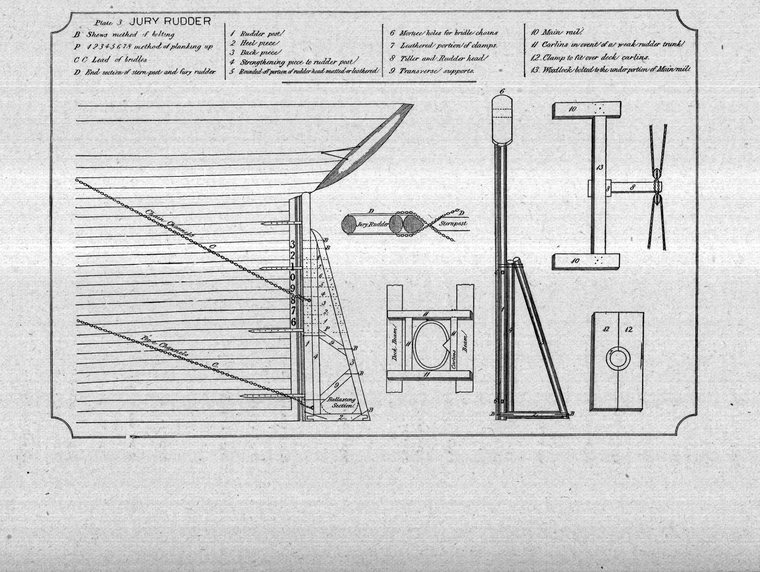
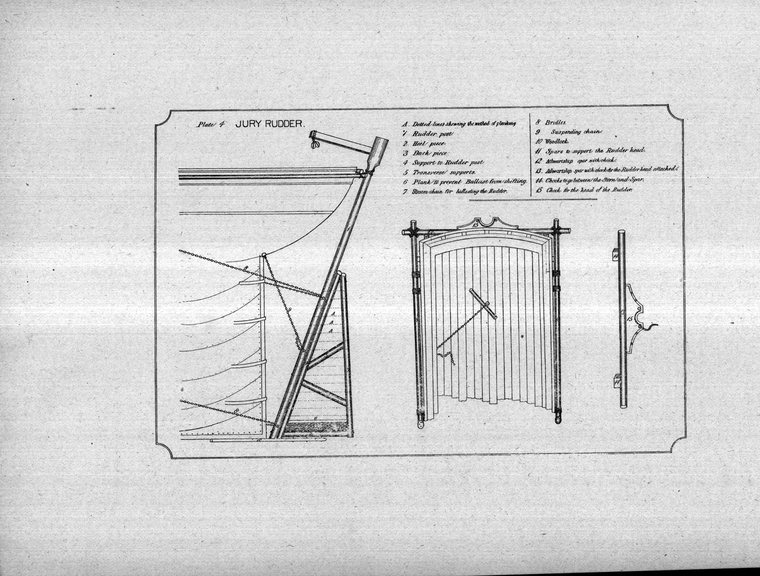
A temporary rudder rigged at sea in order to steer the vessel in the event of injury to the rudder proper.
The fibre of an East Indian plant, and in use for making rope, matting, etc.
A rope made from the fibre of a plant grown in the East Indies.
(See Caique.)
A Nile passenger boat.
A Lapland boat.
A fishing boat of the Arctic seas.
A Shetland Islands fishing boat.
Old rope used as chafing stuff around cables.
A small all-iron anchor used for kedging a vessel.
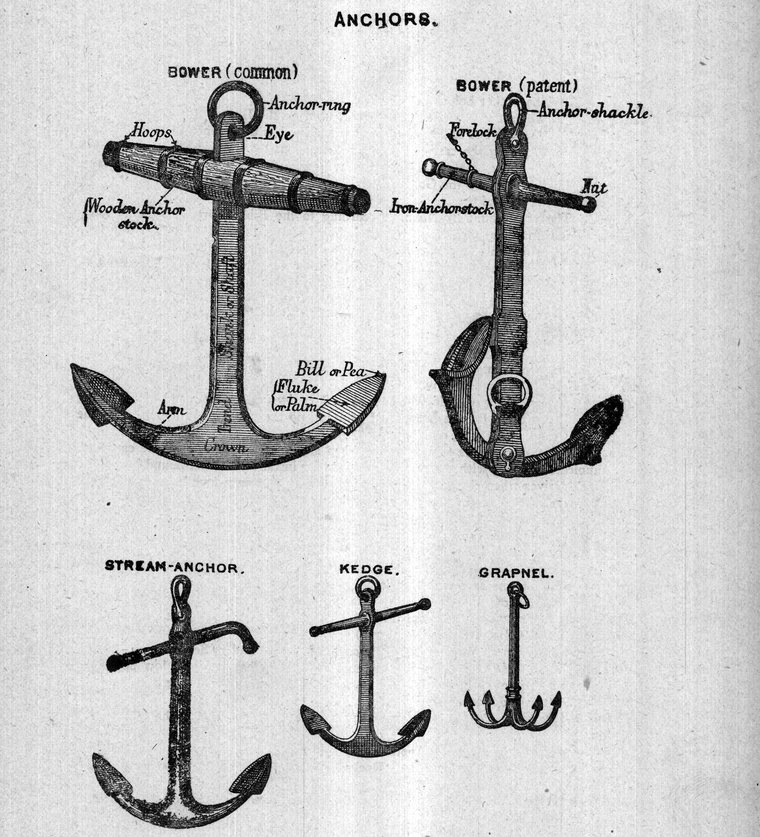
The rope used with a kedge anchor.
Moving a vessel by carrying out in a boat a kedge anchor with a hawser bent to it, and, after dropping the anchor ahead of the ship, hauling away on the rope so as to bring the vessel up to the place where the kedge was thrown overboard from the boat.
The first timber laid down upon the keel blocks in building a vessel, and the back-bone of the ship, supporting the entire frame. The keel runs the whole length of the vessel, the stem and stern posts being set into it, and being in reality continuations of the keel. When the latter is composed of several pieces, owing to the length of the vessel, the pieces are scarphed and bolted together.