Ropes-endSea Terms
The end part of a rope.
Page 212 of Patterson’s Illustrated Nautical Encyclopedia · 29 entries
The end part of a rope.
To inflict punishment by whipping a person with a rope's end.
A lashing which is made by passing the parts alternately over and under, and finishing by passing the end of the lashing around the crossing.
Same as rose-lashing.
The original log, generally written in pencil.
A spar in the rough.
To overhaul a tackle so as to allow the lower block to come down.
A house arranged for the convenience of the ship's company, situated near the bows.
To haul in a rope quickly. To round in a weather brace.
Three right-handed yarns used for heavy service, such as the eyes of rigging, heavy seizings, etc.
A flat-built vessel. (See Part II.)
A communication, or protest, signed by a number, and the signatures arranged in a circle, making it impossible to detect the first signer of the document.
Put on the eyes of rigging, etc. (See engravings.)
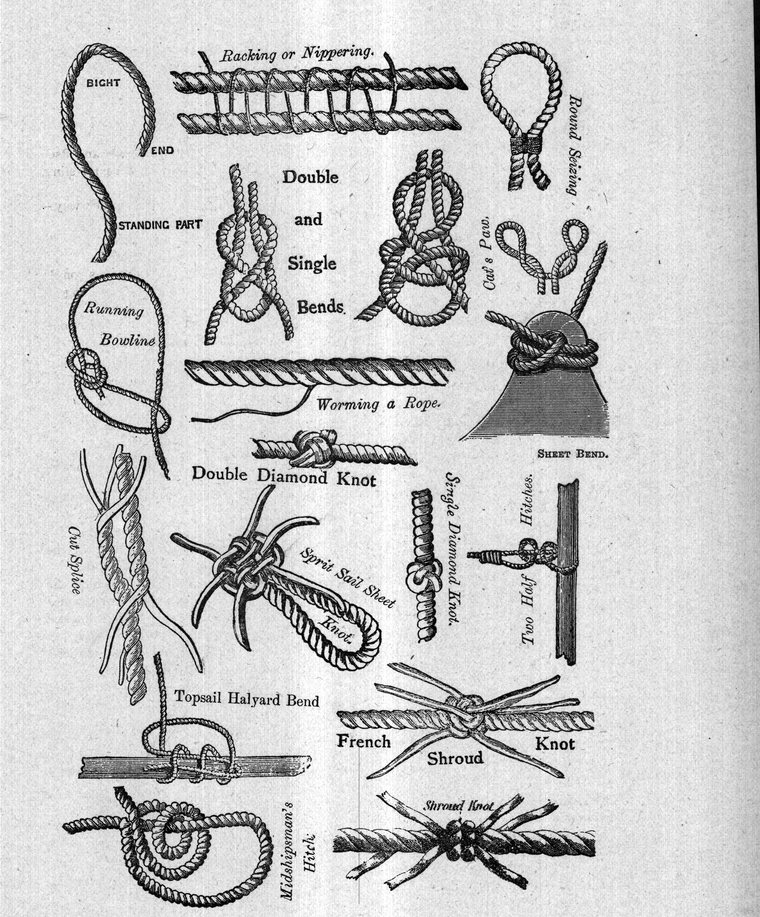
To change the course so that from sailing free the vessel is brought by the wind.
A platform of circular shape at the lowermast heads.
To pass a rope entirely around anything.
To haul away on a tackle so as to bring the two blocks together.
Service placed on a rope or spar to take the chafe.
To pull and haul by main force without the aid of tackles. To rouse up an anchor is to lift it without mechanical appliances.
(See Ship's Routine.)
A pirate vessel; a pirate or freebooter.
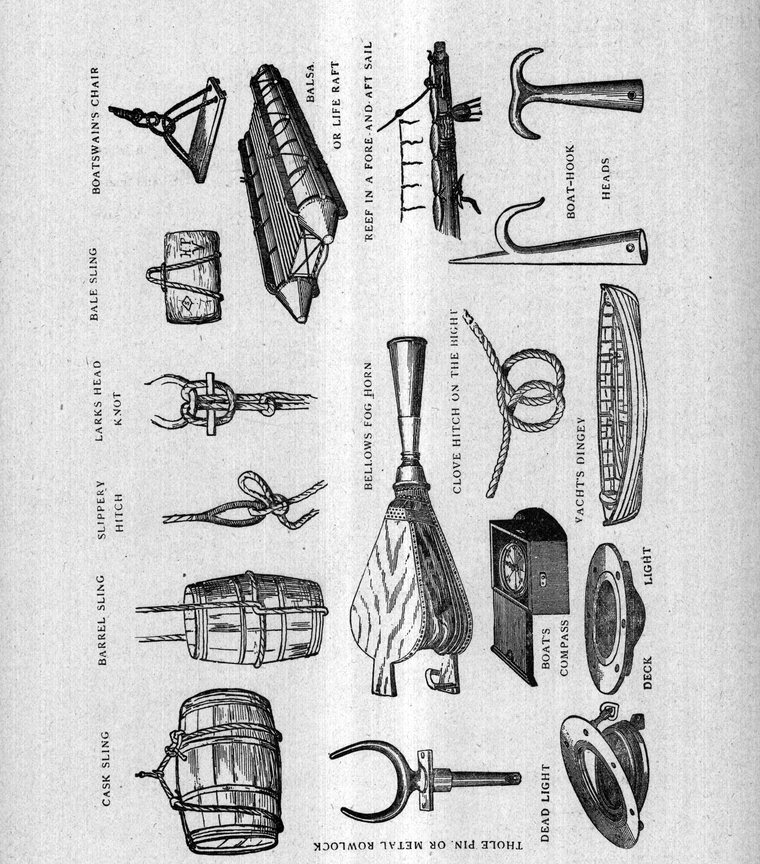
Squares cut in the wash-boards of boats for the oars to rest in. Thole pins are often referred to as rowlocks, as they form a rowlock elevated above the gunwale.
A square sail next above a topgallant sail. A ship carries fore, main and mizzen royals.
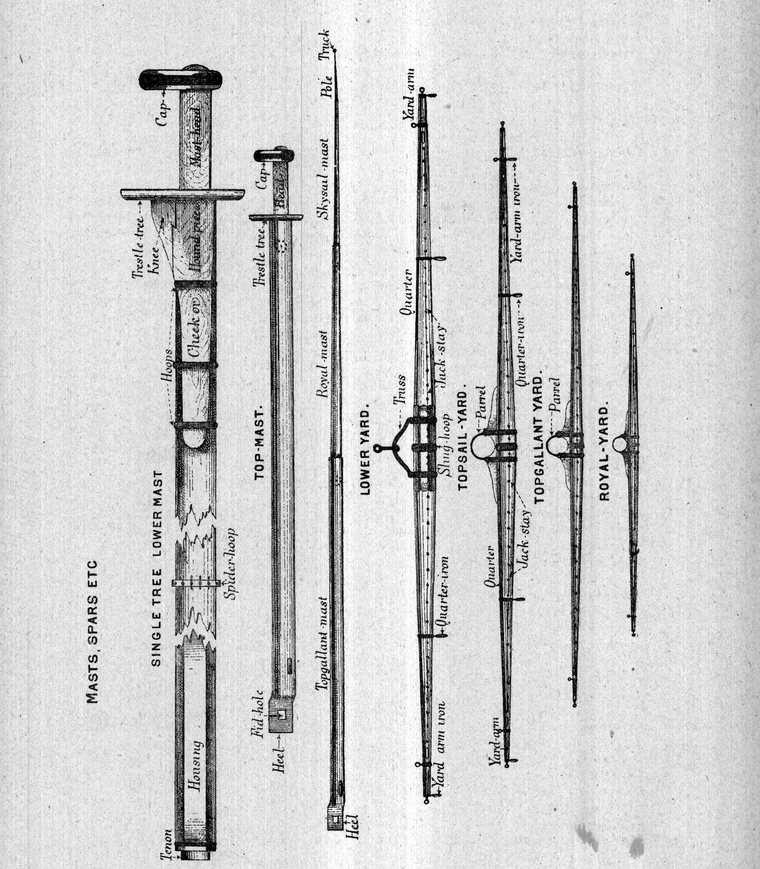
If it is a fidded royal mast it is a separate spar rising above the topgallant mast, but otherwise it is that part of the topgallant mast above the shoulder (and terminating at the truck) from which the topgallant rigging leads. In the latter case it is also referred to as a royal pole.
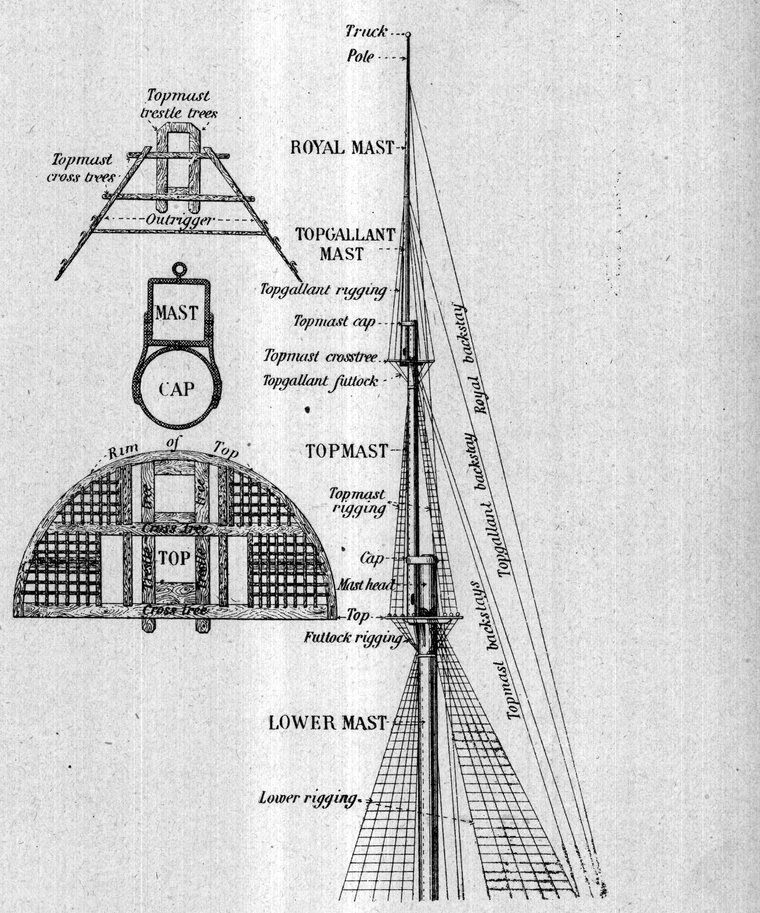
(See Royal Mast.)
The yard next above the topgallant yard. The royal is bent to the royal yard.
An instrument used by sailmakers to flatten the seams of a sail.
An instrument for steering a vessel, consisting of a flat frame of wood or iron hung upon the stern post by means of pintles and gudgeons.
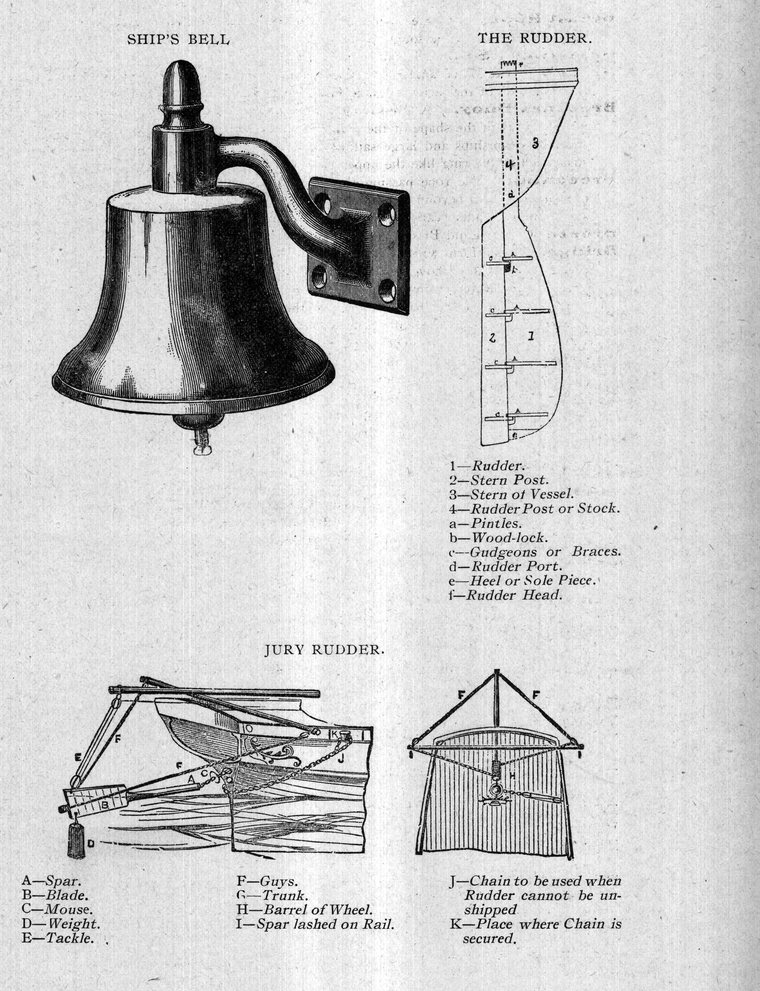
An iron band placed around the head of a wooden rudder.