Rudder BraceSea Terms
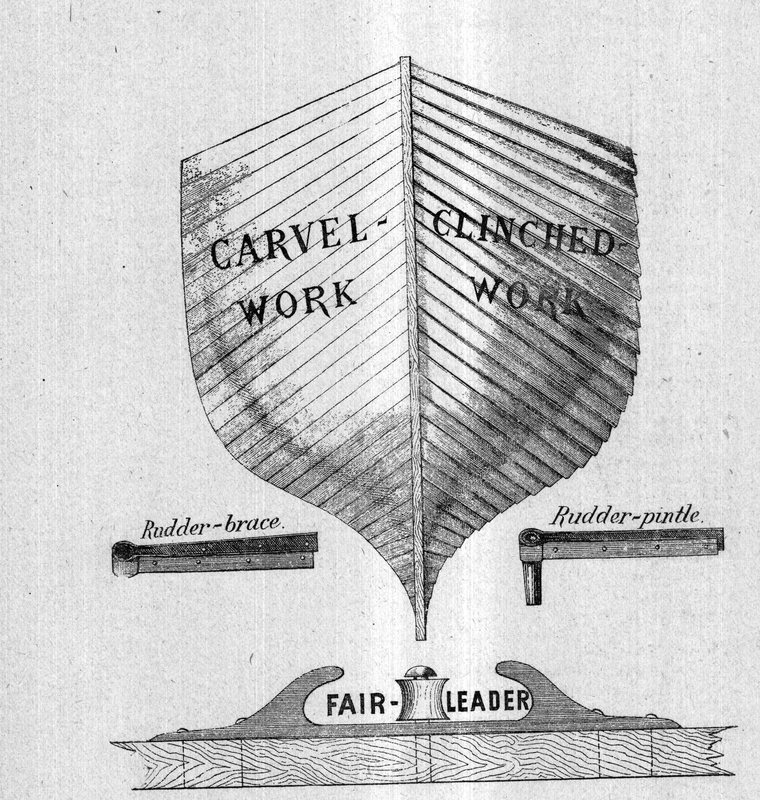
The metal hinges on which the rudder turns, otherwise called gudgeons.
Page 214 of Patterson’s Illustrated Nautical Encyclopedia · 27 entries
The metal hinges on which the rudder turns, otherwise called gudgeons.
The casing built around the head of a rudder, sometimes called the well.
The chains by which the rudder is secured to the quarters of a vessel, and to save the rudder in the event of its being unshipped by accident. The chains are hung slack. (See Chains.)
A piece of timber or anything employed to stop the motion and noise of the rudder when at anchor, or when desiring to ship a new tiller, etc. On patent steering gear a set screw takes the place of a chock.
An iron crutch bolted to the back of the rudder for attaching the rudder chains.
The name applied collectively to the pintles and gudgeons.
The continuation of the rudder chains leading to each quarter.
The hole in the counter in line with the stern post that the rudder head passes through, the head rising to a sufficient height above the deck to have the tiller or gear connected by which the rudder is moved around and the vessel steered.
Additional timbers secured to the forward and after sides of the main piece from the lower part of the head (the shoulder) to the lowest part of the rudder (the heel).
The main piece of the rudder.
Purchases hooked to the rudder chains and by which the ship is steered in the event of the rudder head being carried away.
(See Woodlock.)
The laws regulating the government of vessels when under way so that collisions may be avoided between them.
To scud before a gale. That part of the ship which narrows in approaching the stern post-sometimes called after-peak. The distance sailed, as the day's run. To let go by the run is to let go entirely instead of slacking gradually.
To sail along the coast.
To sail north or south until the desired parallel is reached, then heading either east or west until the port is arrived at.
To collide with a vessel head on.
To send a line out from the vessel. (See Warp.)
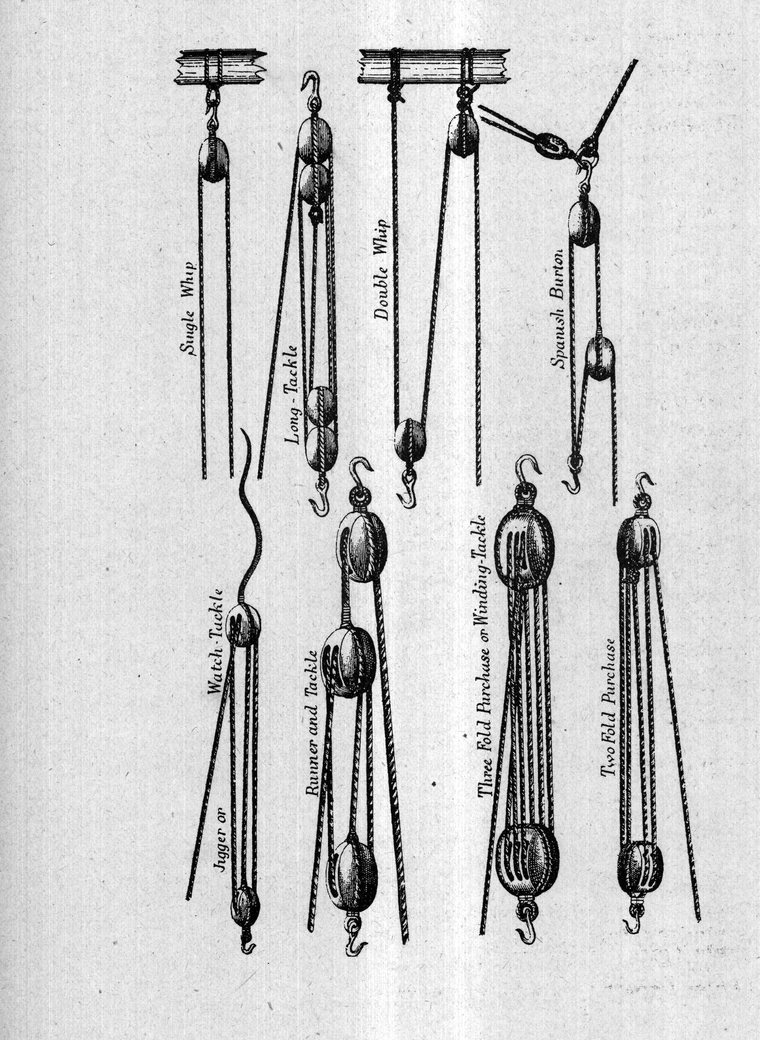
A rope rove through a single block that you wish to bring down, one end of the rope secured as a standing part, and the other provided with a tackle. (See engraving.)
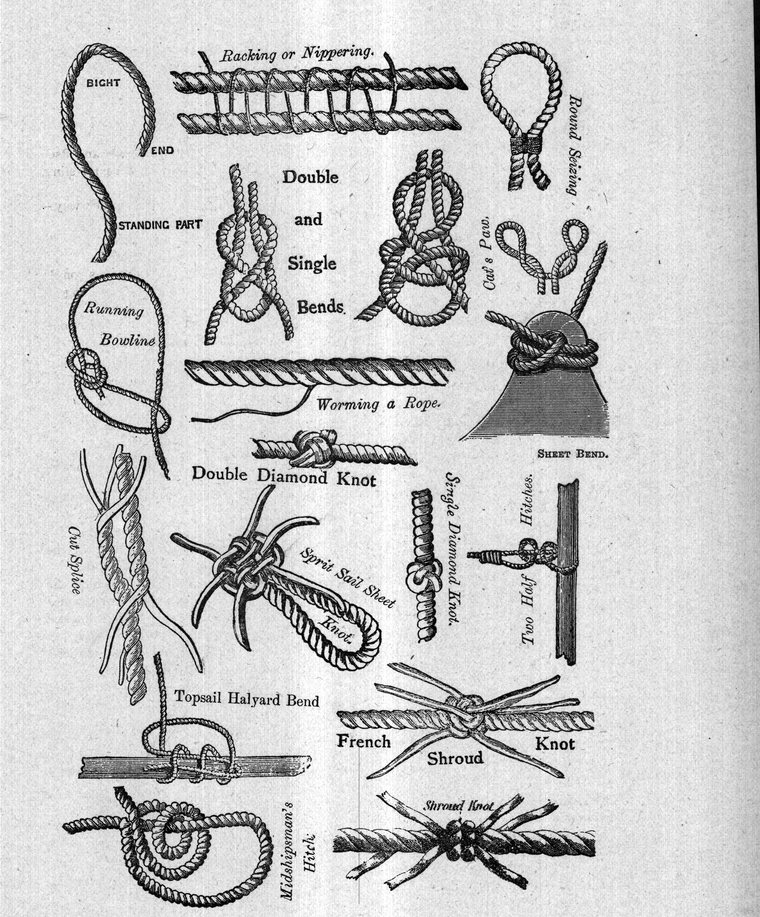
A bowline made over the standing part of its own rope so that it will form a sliding noose. (See engraving.)
A bowsprit fitted so as to run in and out-now in general use on cutters, sloops, yawls and schooner yachts.
(See Lay Days.)
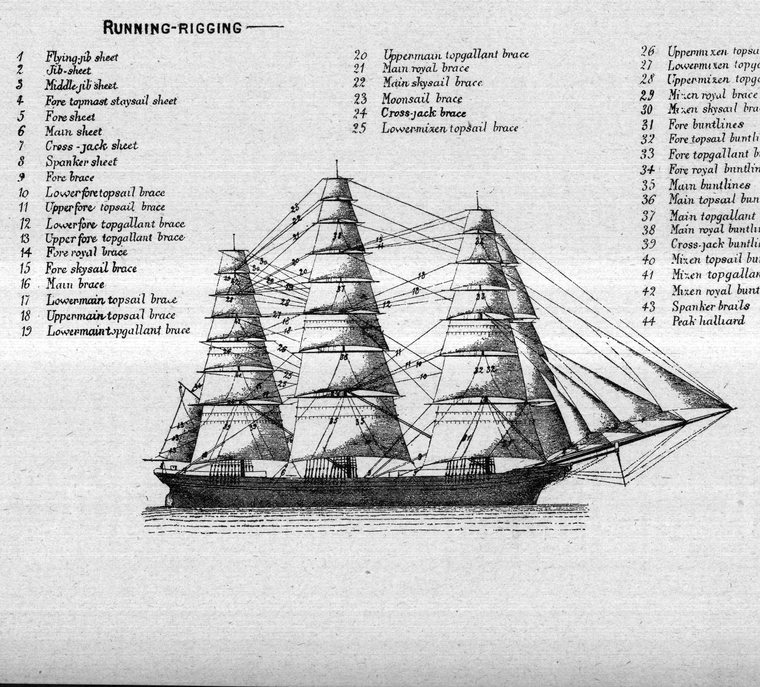
All the movable ropes of a vessel, such as braces, sheets, tacks, clewlines, buntlines, leachlines, halliards, downhauls, reef-tackles, outhauls, etc.
A Greek trading vessel.
Pieces of wood, sometimes called saddle crutches, bolted on to the sides of the masts near the deck to receive the weight of the boom jaws.
(See Angle of Safety.)
To settle. A vessel sags to leeward when she drifts off sideways under the influence of the wind or sea.