ShakesSea Terms
Crevices in a spar, generally referred to as sun-shakes.
Page 222 of Patterson’s Illustrated Nautical Encyclopedia · 34 entries
Crevices in a spar, generally referred to as sun-shakes.
A sail is said to be shaking when it flutters from being too close to the wind.
A name applied to a small rowing boat pulled by two men, also to a boat fitted with fore and main lug sails.
When men are pressed into the merchant or naval service against their will they are said to be shanghaied. (See Impressment.)
The main piece of an anchor. (See engraving.)
The rope or chain which confines the fluke of the anchor to the rail.
Also spelled Chanty. A verse of sailor song; singing.
A member of the crew who leads the singing when a yard is being mastheaded, or when some other piece of work is being done which requires "beef"--i. e., musucular effort.
To ascertain the compass point necessary to head in order to reach the desired port or place.
Yards are sharp up when they are braced as near fore-and-aft as possible.
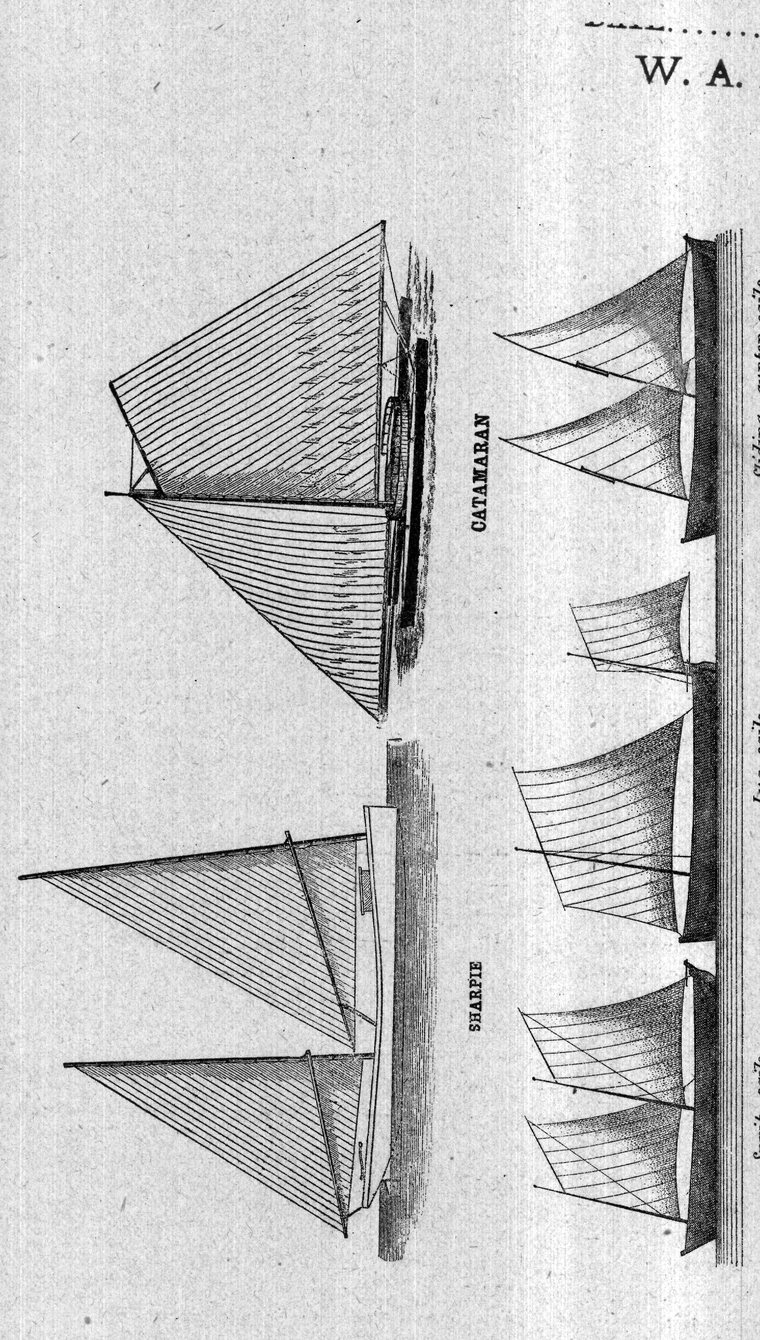
A sharp-built vessel of from 20 to 40 feet long, flat bottom, carrying a centre-board, and fore-and-aft rigged.
The upward curve of a vessel's decks.
To remove to a greater distance.
The copper or yellow metal covering on a vessel's bottom.
The wheel within the shell of a block.
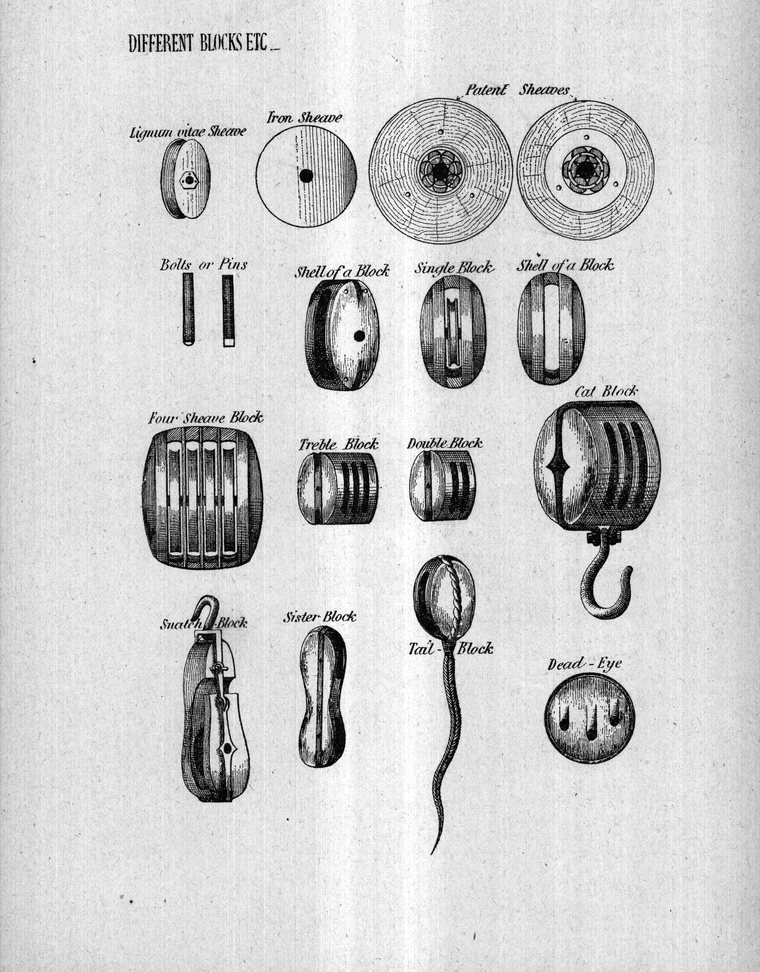
The space between the cheeks of a block.
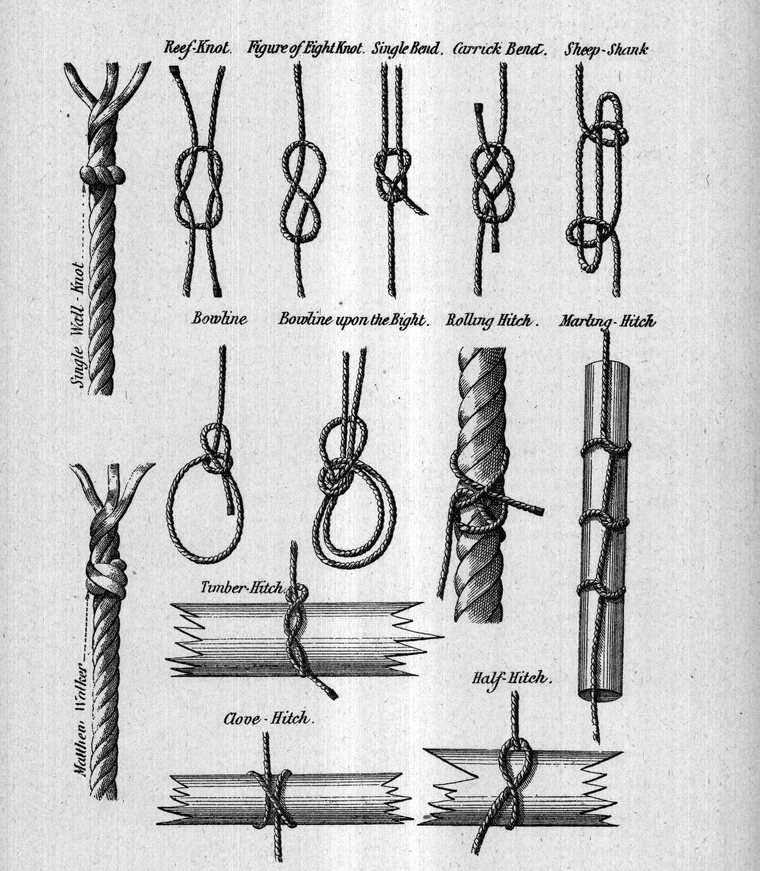
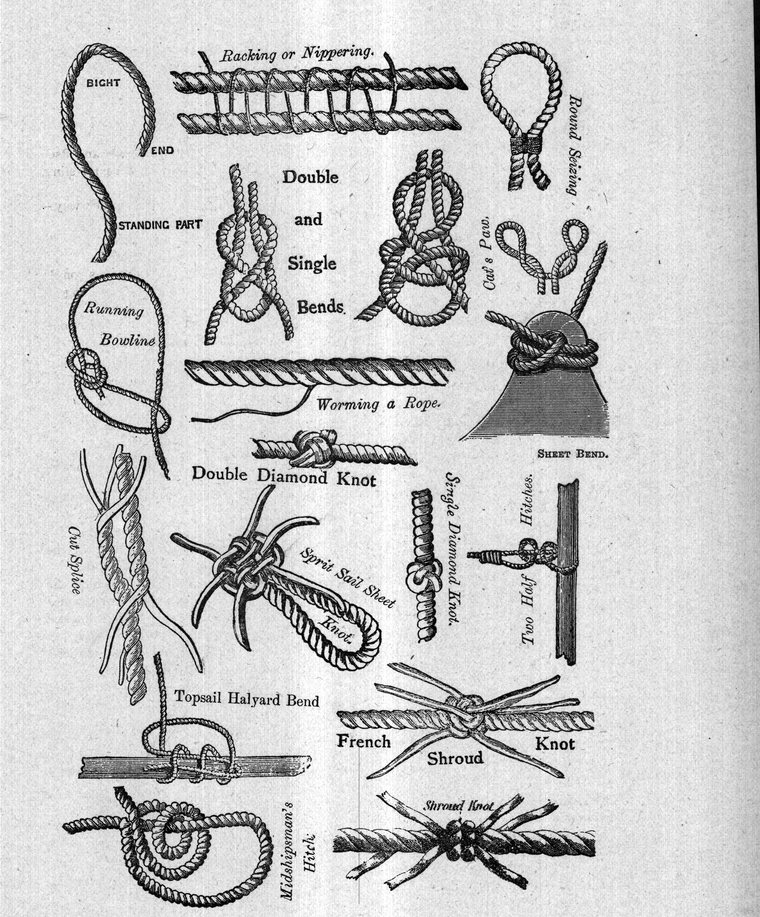
A method employed for temporarily shortening a rope. (See engraving.)
The position of a vessel when riding to a single anchor. (See Part II.)
An old vessel employed in taking out or lifting in a vessel's lower masts.
A bar of metal seized across the shrouds and resting on top of the upper dead-eyes. The sheer pole keeps the shrouds spread, and acts as the first ratline.
The line of planking on a vessel's side upon which the plankshear or covering board rests.
Two or more spars raised perpendicularly, their upper ends lashed together and supported by guys. To the under part of the lashing a tackle block is hooked, and the contrivance is employed for lifting in and out masts.
A rope employed to spread the clew of square-sails and head-sails. With boom sails sheets are used for controlling the boom.
The anchor carried in the waist on board men-'o-war. It is the same in weight as the bowers; sometimes called the waist anchor.
This bend is made by passing the end of one rope through the bight of another, then around both parts, and last under its own part. (See engraving.)
Bitts near the mast to which the topsail sheets are belayed.
The cable belonging to the sheet anchor; the heaviest anchor on the vessel.
(See Home.)
The spaces in a rowing boat forward and abaft the thwarts, and named respectively fore-sheets and stern-sheets.
The case of a block in which the sheave turns. (See Racing Shell.)
An old sailor.
To change the position or direction of anything, as to shift the helm, shift the berth, shift the ballast, a shift of weather, shift of wind, etc.
To reverse its direction.
Packstays used only as necessity requires. They are always shifted when a vessel goes about so that the weather ones are taut and the lee ones slack. Shifting backstays set up with their own permanent tackle, and are nothing more nor less than preventer stays for the topmast when the vessel is under a press of sail. When not employed, they are set up in the after-part of the channels of the mast to which they belong.