Tonnage DutySea Terms
A tax of so much per ton levied upon vessels by the customs authorities under certain conditions.
Page 252 of Patterson’s Illustrated Nautical Encyclopedia · 24 entries
A tax of so much per ton levied upon vessels by the customs authorities under certain conditions.
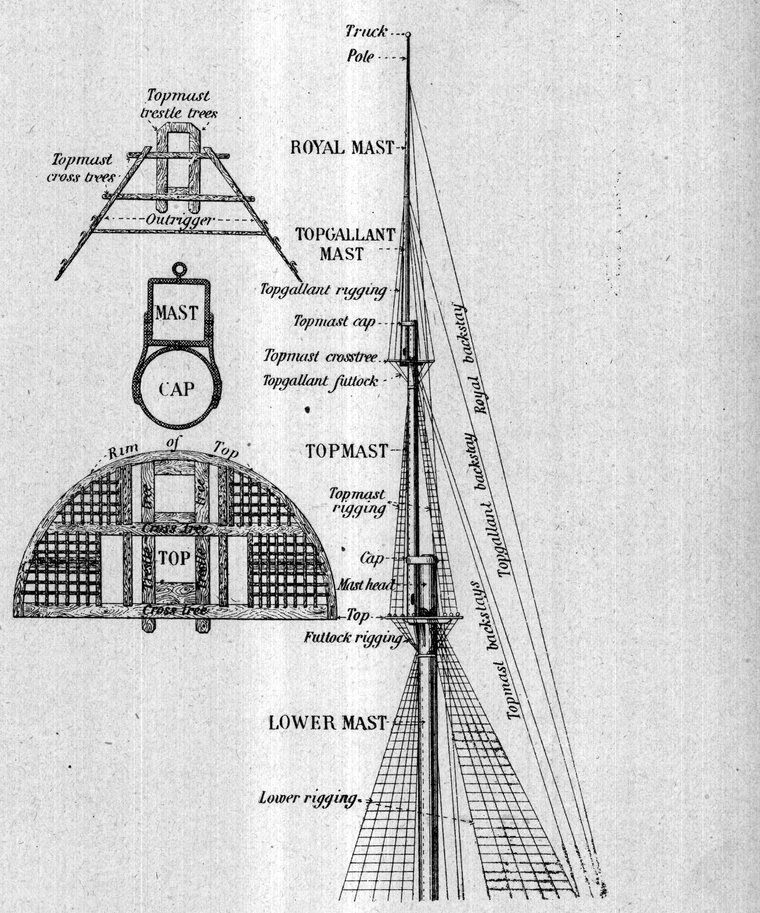
The platform at the head of a lower mast, resting upon the trestle-trees, which in turn rest upon the hounds of the mast. The top is used to give spread to the top-mast rigging, and to the rim of the structure the rigging is set up to dead-eyes.
To top a boom or yard is to elevate one end of it by the peak halliards and lift respectively.
A large iron-bound block through which the top-rope reeves when sending up or down topmasts.
The small deck built level with the rail at the extreme forward part of the vessel.
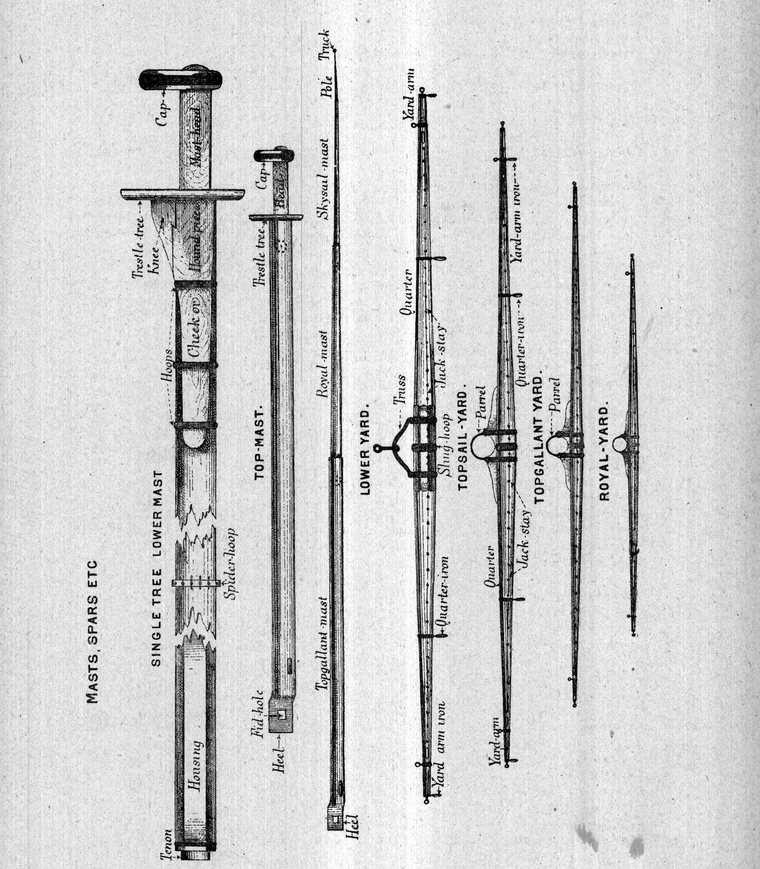
The mast next above the topmast.
A light rail built on top of the bulwark rail.
The shrouds and their ratlines belonging to the topgallant masts.
The third sail above the deck on a man-o'-war, or where single topsails are carried, but the sail next above the upper topsail on a vessel carrying double topsails. Some large merchant vessels divide the topgallant sail in the same manner as the topsail, thus having double topgallant sails, named in the same way as the topsails--upper and lower.
The shrouds on the topgallant masts.
The upper part too weighty for the lower.
All the spars, rigging, etc., above the deck.
An extra piece of canvas sewed on the after-surface of a square sail to take the chafe of the top-rim.
The second mast above the deck, or the mast next above the lower mast. They are named according to their situation, as fore, main and mizzen topmast.
The shrouds and their ratlines belonging to the topmasts.
The shrouds on the topmasts.
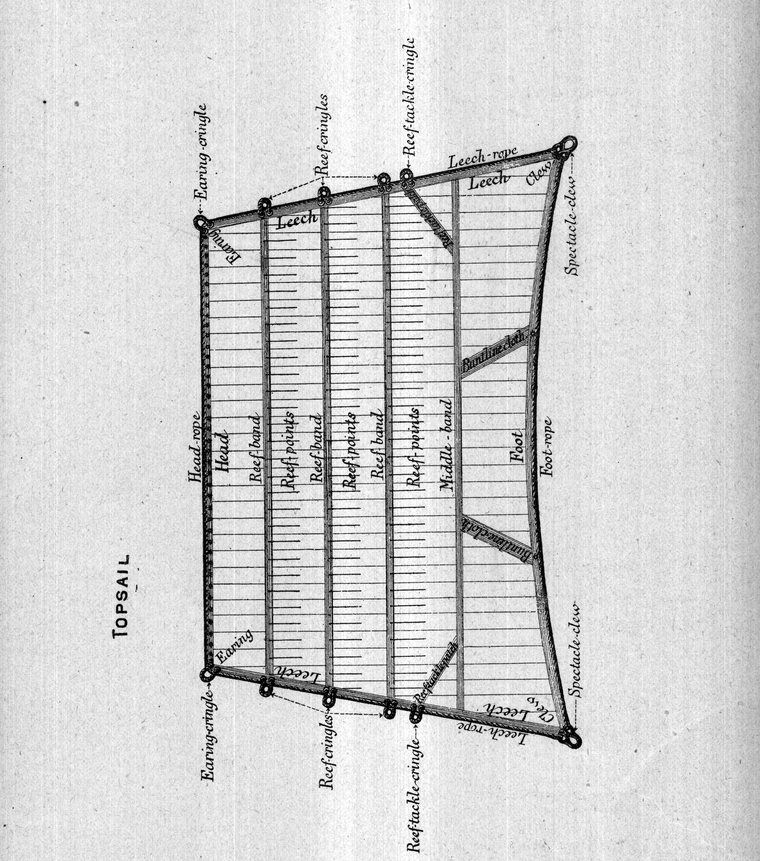
The second sail above the deck. Men-o'-war carry a large single topsail, but merchantmen carry double topsails, as they are much easier to handle with a limited crew. A ship carries fore, main and mizzen topsails. The topsails are named respectively upper and lower topsails.
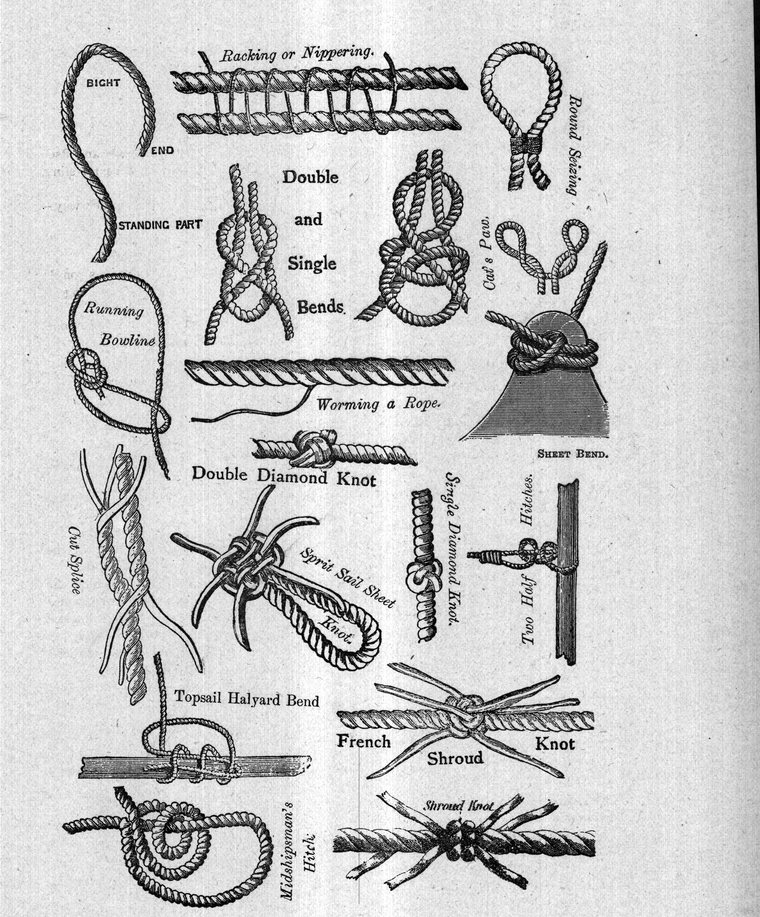
This is made by making two turns round the spar, then leading the end back round the standing part and underneath all the turns, bringing it round its own part and back again over the two other turns and underneath the inner turn. (See engraving.)
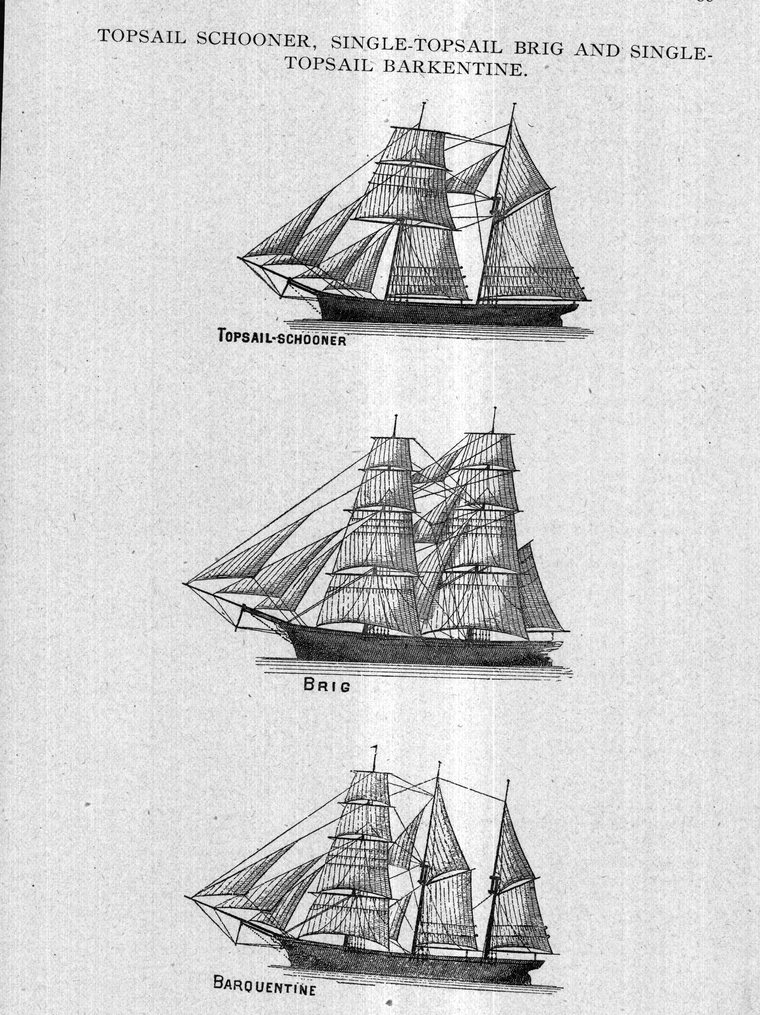
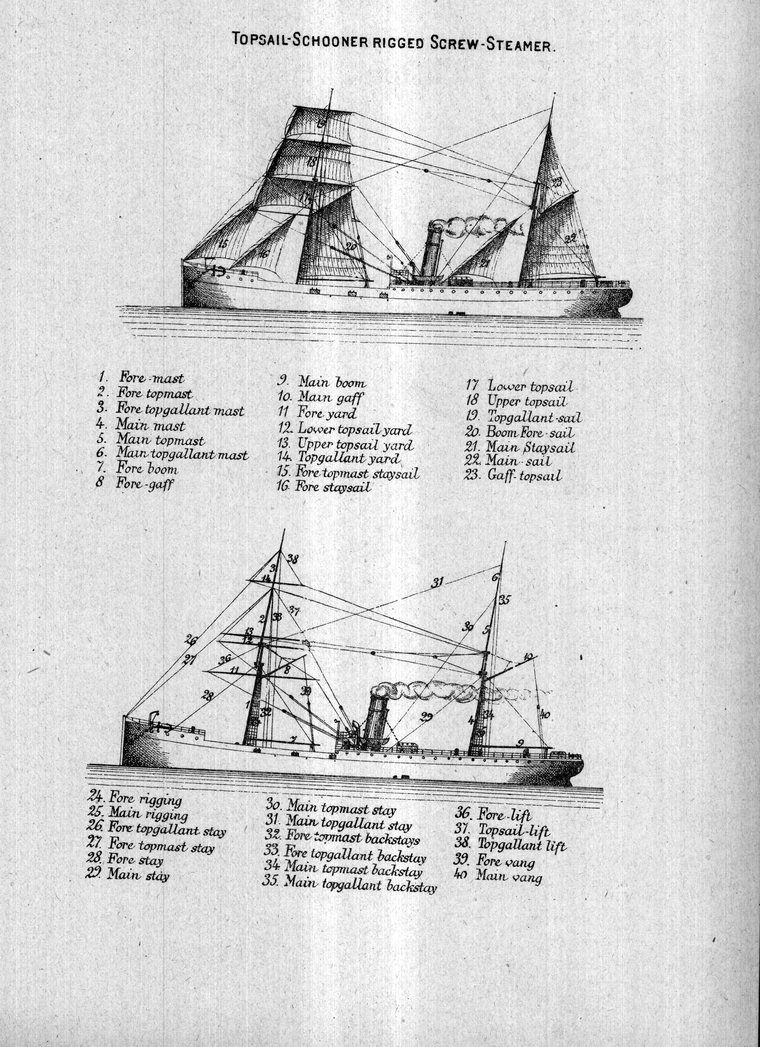
A vessel carrying a square topsail on the fore-topmast, the mainmast being provided with a fore-and-aft mainsail and a gaff topsail. (See Two Topsail Schooner.)
A name given to the leading member of the crew who is in the advance when any work is going on.
The sides of a vessel from the water line to the bulwark rail.
(See Part II.)
Raising one end of a spar higher than the other. To top the boom, etc.
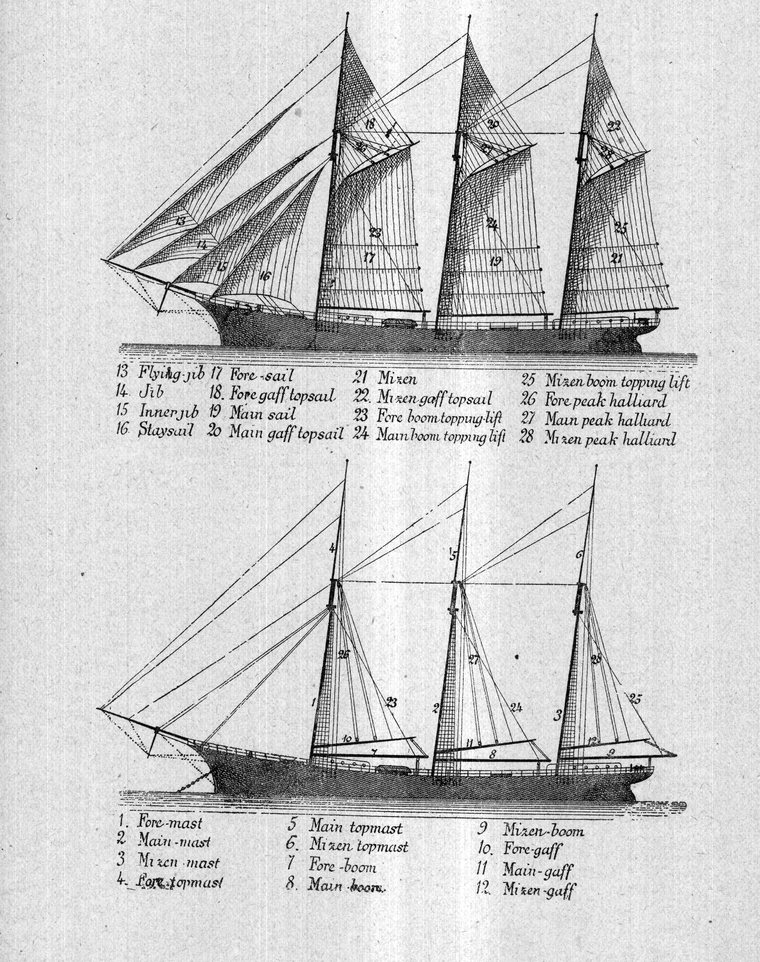
A purchase for topping a boom and sustaining the weight of the after-end of the same. (See Boom Topping Lift.)
An order to a boat's crew to lift the oars from the rowlock to a perpendicular position, then to lay them across the thwarts, the blades forward. It is an uninterrupted motion from first to last. A salute is also made by tossing oars from the rowlock to the perpendicular, and holding them so with the handle resting on the floor of the boat.