Tossing OarsSea Terms
Oars not provided with trailing lines so that they can be lifted to the perpendicular.
Page 253 of Patterson’s Illustrated Nautical Encyclopedia · 20 entries
Oars not provided with trailing lines so that they can be lifted to the perpendicular.
To touch a sail is to luff until the leach shivers.
When a vessel licensed for fishing wishes to touch and trade at a foreign port she may obtain permission so to do, for that voyage only, from the chief customs officer in the port where she may be; and she must not under penalty touch and trade without such permission.
To tow is to draw a vessel, raft, spar, etc., through the water by means of a rope or chain.
The rope by which a vessel is towed.
Charges for towing.
The signal made for a towing boat is the ship's ensign in the main rigging a little above the deck.
The white masthead lights carried in a vertical line by a steam vessel when towing another vessel, raft, etc.
A timber head to which towing hawsers are secured.
To track a vessel is to tow her along by a hawser led to the shore. A vessel path across the waters.
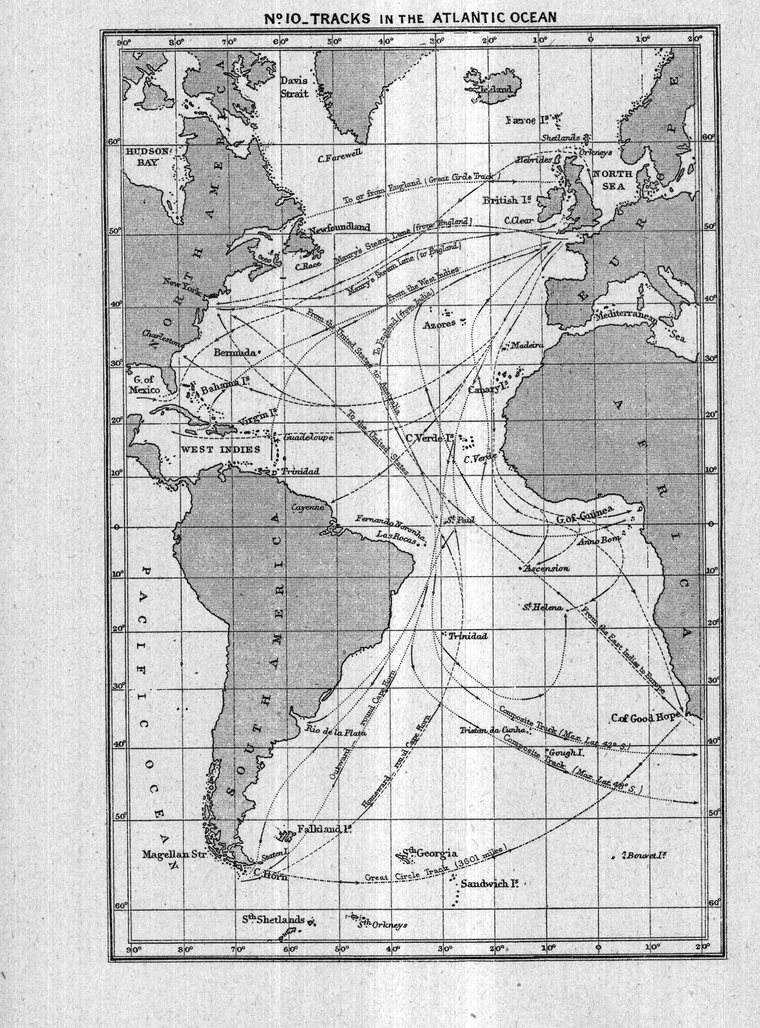
A mariner's chart on which is traced the track of a ship from port to port, or from point to point. (See Charts.)
A vessel engaged in regular voyages for trading.
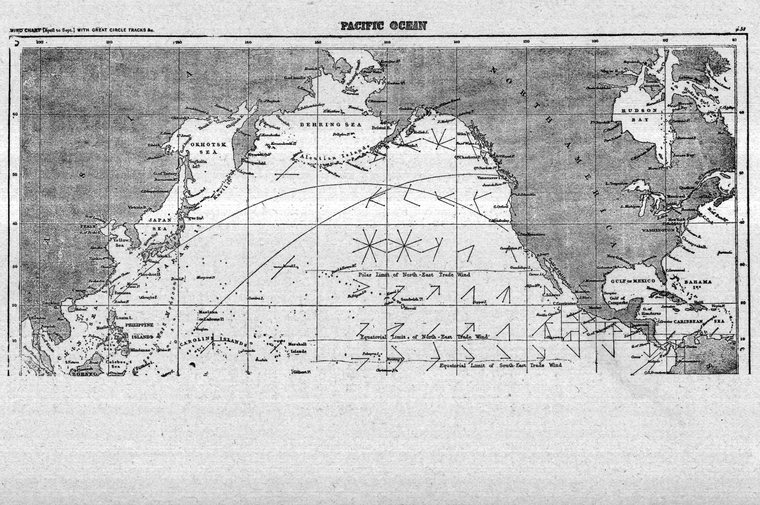
A name applied to the currents of air within the tropics which blow from the northeastward in the northern hemisphere, and from the southeastward in the southern hemisphere. (See Charts.)
An order given in boat service for the crew to cease rowing and to throw their oars out of the rowlocks and let them trail alongside by the trail ropes which are made fast to the handle of the oar and secured inboard. This order takes the place of "Way Enough," used for tossing oars, and which is a signal for the crew to lift their oars out of the water and lay them down fore-and-aft on the thwarts with their blades forward. (See Out Oars.)
Oars fitted with trailing lines, and which are trailed alongside the boat when the crew are not pulling. (See Tossing Oars.)
The tackle hooked to the rear of a broadside gun and by which it is run in, and by which it is also prevented from running out while loading it. The side-tackles run out the guns.
A coasting vessel of the Adriatic.
A large boat of the Persian Gulf.
The timbers extending across the stern-post, and to which they are bolted.
A vessel employed for carrying troops from one place to another, or for carrying munitions of war.