Clock StarsNavigation
The stars employed by astronomers for determining latitude and longitude.
Page 348 of Patterson’s Illustrated Nautical Encyclopedia · 28 entries
The stars employed by astronomers for determining latitude and longitude.
Cirrus, cumulus, stratus, cirro-cumulus, cirro-stratus, cumulo-stratus, and cumulo-cirro-stratus, or nimbus.
This extends from 0 to 10--the first indicating a clear sky and 5 a sky half-overcast, while 10 represents an entirely obscured sky.
(See Axis of Collimation.)
The complement of the latitude--what it lacks of 90 deg.
The angular distance of the middle latitude from the nearest pole.
Same as Calendar Year, containing 365 days.
To observe a comparison is to note the difference in time between two timepieces.
A magnetic needle alone, or a circular card having a magnetic needle secured across it, parallel to the north and south line, and suspended upon a sharp point so as to balance and to turn freely. The card is marked with the 32 points of the compass, and the north and south line of the card indicates the magnetic meridian.
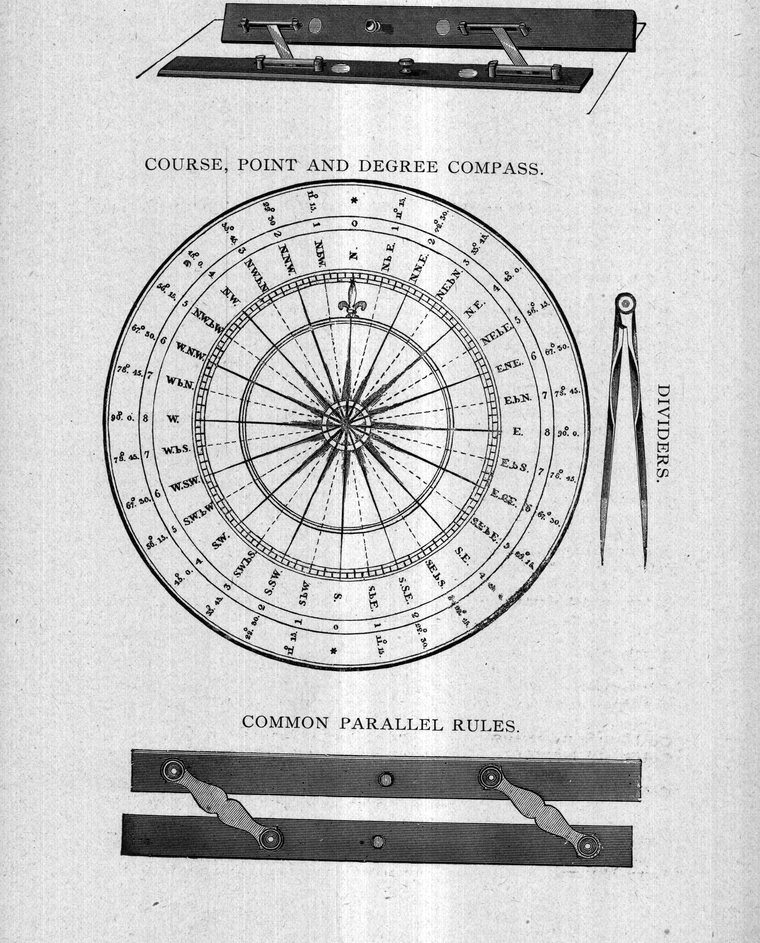
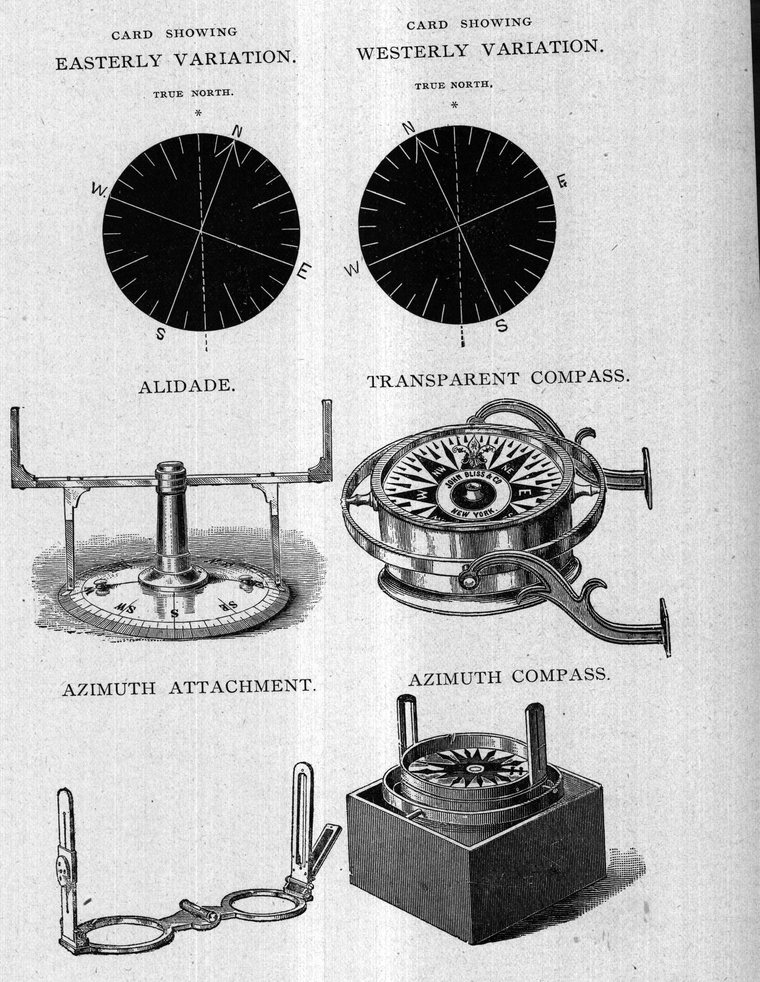
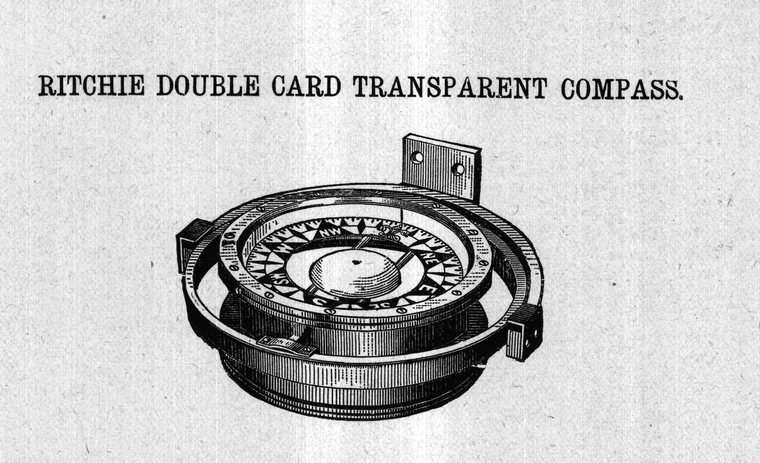
The process of correcting the compass for deviation by the employment of artificial magnets.
The direction of an object as indicated by a magnetic compass.
The hollow half-sphere in the top of the binnacle stand, and inside of which the compass is suspended by gimbals.
The painted circle, representing the 32 points of the compass, to which is fastened the magnetic needle.
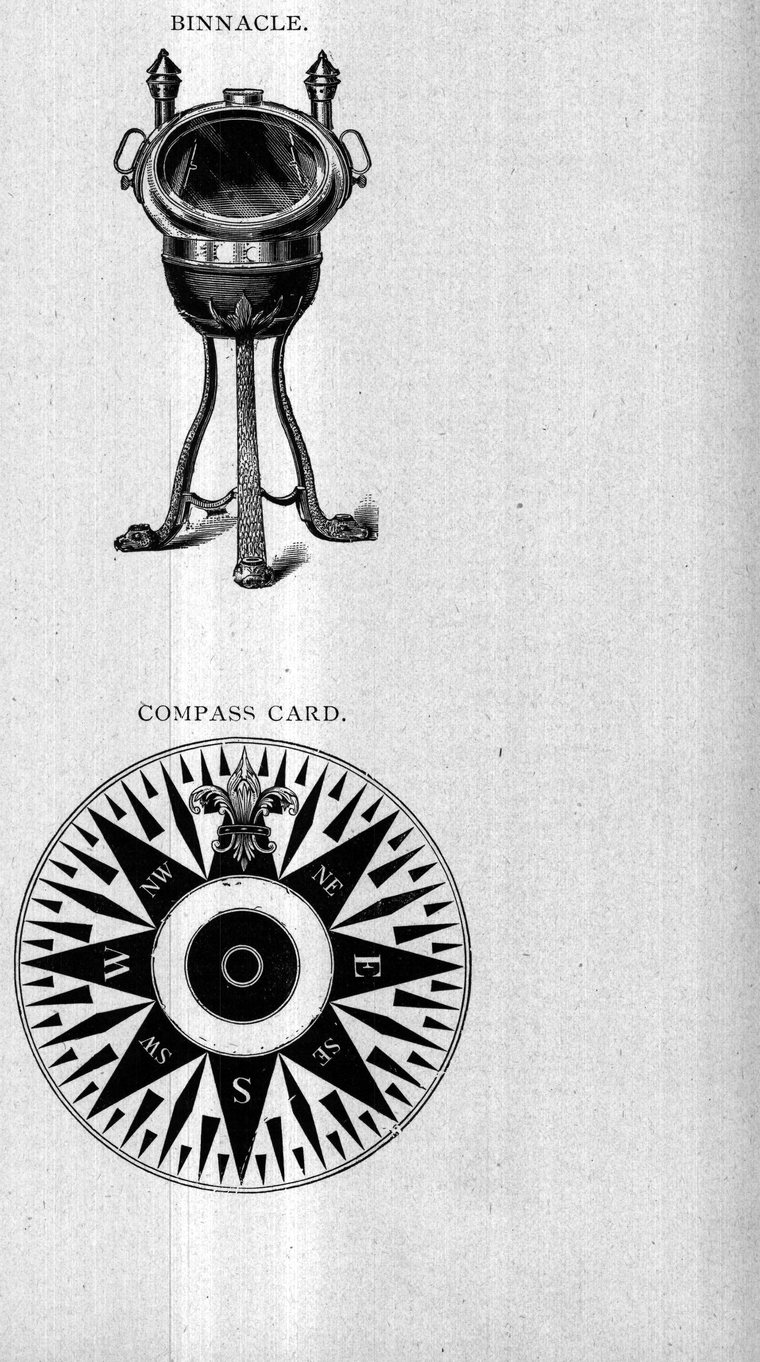
The quantities in the way of points or degrees which must be applied to a course or bearing in order to obtain correct magnetic and true bearings.
The angle which the track of a vessel makes with the meridian as indicated by the ship's compass.
The deviation of the north point of the compass card from the magnetic meridian. (See Residual Errors.)
The magnetized steel bar which indicates the magnetic meridian when freely suspended and not subject to counterbalancing magnetism.
One of the 32 divisions painted on the compass card.
The diagram compass printed on charts.
Azimuth Compass. A compass provided with revolving sight vanes, and employed for taking bearings.
Bridge Compass. The compass situated on the bridge of a steamer.
A compass which has been corrected for deviation by the employment of magnets.
Crazy Compass. A compass is said to be crazy when the card refuses to indicate the magnetic meridian by flying around and around. This sometimes happens in a violent seaway, and at other times when the atmosphere is heavily charged with electricity.
Demagnetized Compass. A compass needle which has lost its magnetism is said to be demagnetized. Electrical disturbances have been known to effect this.
Dry Compass. A term applied to a compass which is enclosed in an air chamber instead of a liquid one.
Elevated Compass. Under this head come masthead, pole, and tripod compasses. Compasses are elevated in order to get them beyond the influence of the ship's iron, which, being magnetized by induction, seriously affects the pointing of the magnetic needle.
Liquid Compass. A term used in connection with a compass the card of which is enclosed in a chamber filled with thirty-five parts of alcohol and sixty-five parts of distilled water, the freezing point of the mixture being--10 deg. Fahrenheit. Compasses used in Arctic explorations have their bowls filled with pure alcohol. The reason for not filling all compass bowls with an undiluted mixture is that the pure alcohol eats the paint on the card. Sometimes oil is used instead of alcohol.
Masthead Compass. As its name implies, a compass placed aloft in order to remove it from the influence of the iron in the ship's hull, deck fittings, machinery, etc.
Oil Compass. A liquid compass, the card of which floats about in oil instead of alcohol.
Pole Compass. A compass elevated above the deck on the end of a pole, access to it being had by means of a short ladder. It is sought by these means to remove it from the influence of the ship's iron.
Spirit Compass. A compass the card of which floats about in alcohol or oil.
Standard Compass. A compass situated above the deck so that deviation will be reduced to a minimum, and in a good position for observing bearings. It is by this compass that the ship is navigated.
Steering Compass. The compass used by the wheelsman in steering the vessel. The vessel is put on her course by the standard compass, and the point against which at that time the lubber's mark stands on the steering compass is held by the wheelsman.
Tripod Compass. So named owing to the three-leg stand on which the compass is elevated. A tripod compass is, in other words, a pole compass.
Artificial magnets placed near a compass for the purpose of correcting the deviation.
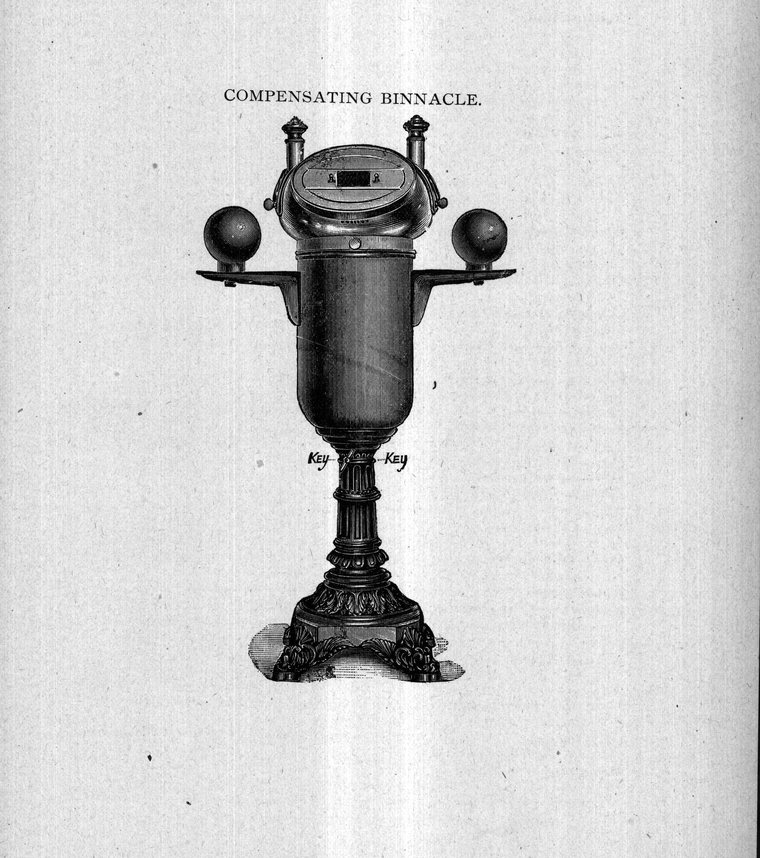
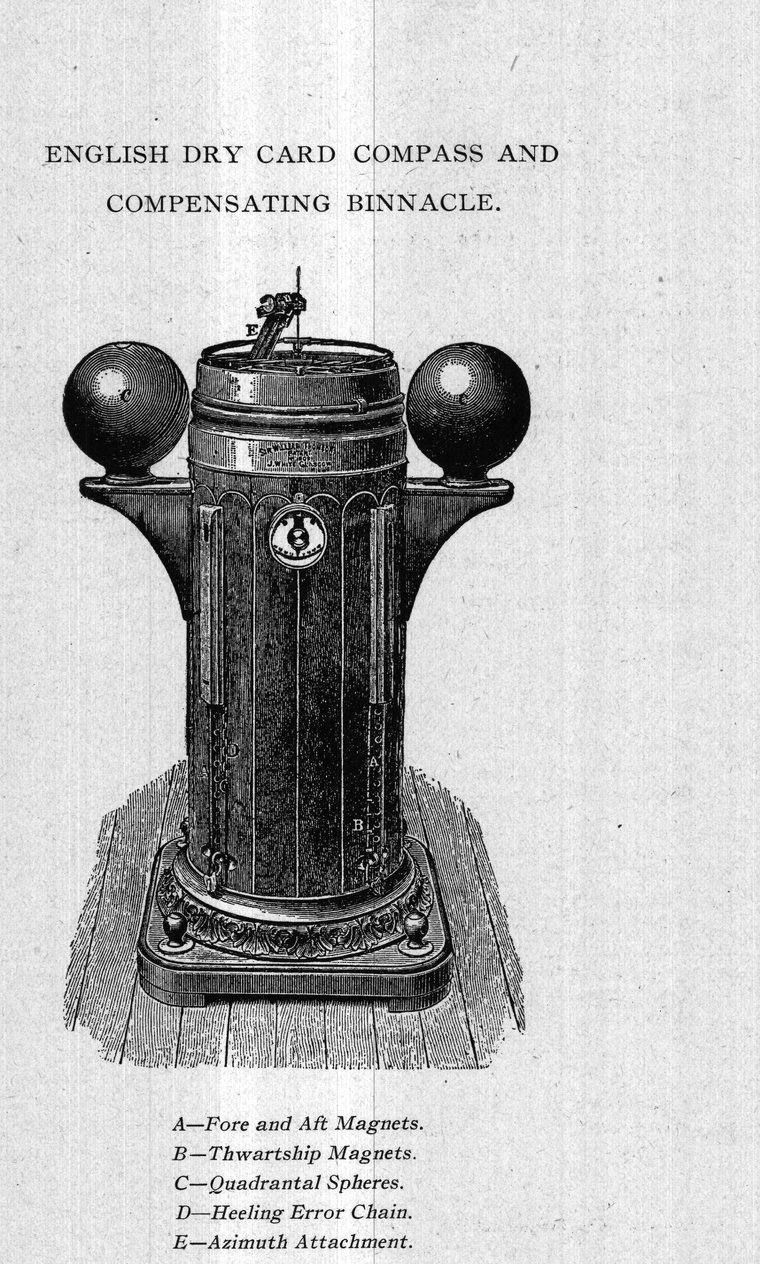
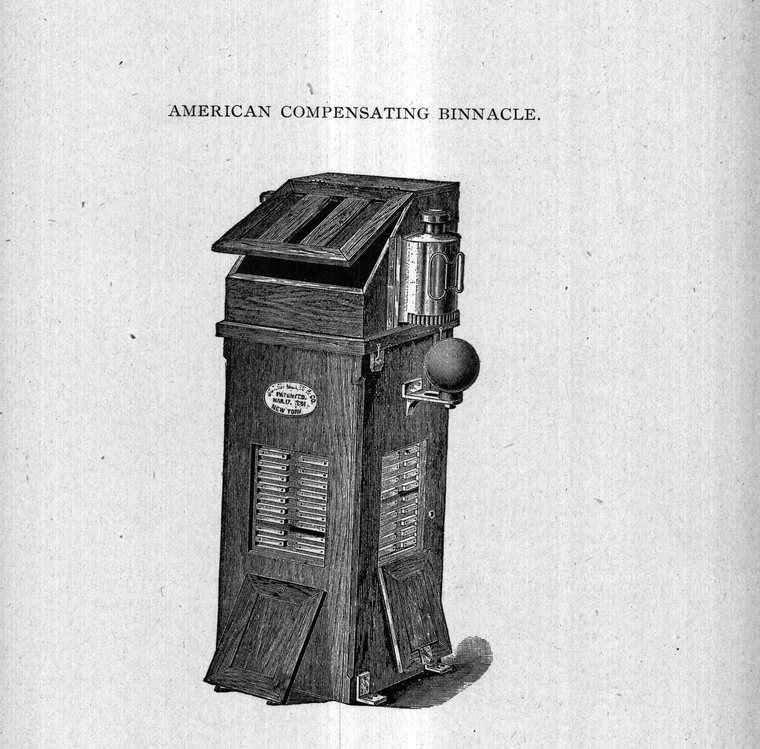
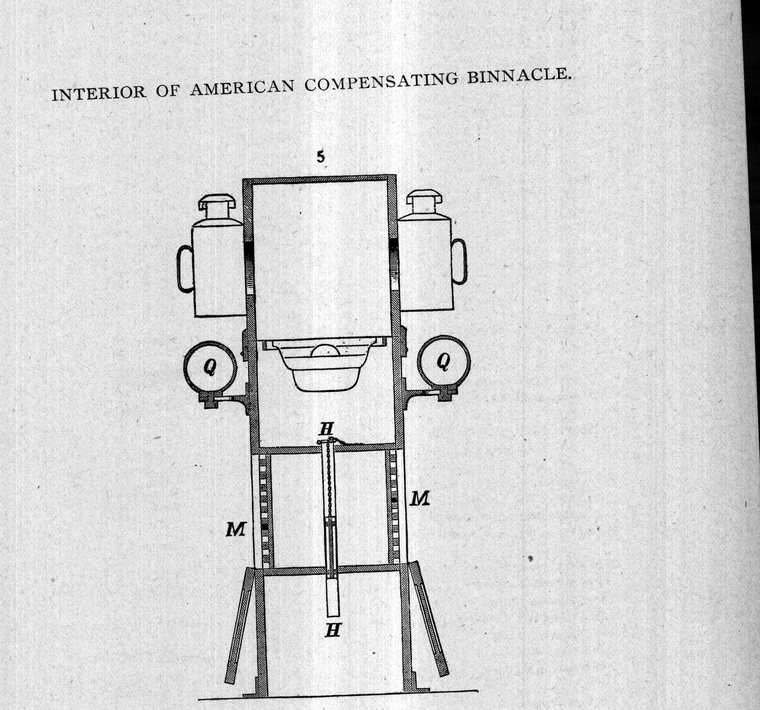
A pilot who conducts a vessel from one part of the coast to another; a book of pilotage directions.
The complement of an altitude is the zenith distance, or what an altitude lacks of 90 deg.
A combination of parallel and great circle sailing.
To ascertain the ship's position by reckoning or calculation.
Heavenly bodies are in conjunction when they have the same longitude; that is, when they meet in the same point or place in the heavens.
Inferior Conjunction. When a planet is in conjunction on the side of the sun nearest the earth.
Superior Conjunction. When a planet is in conjunction on the side of the sun farthest from the earth.
What are known as superior planets have no inferior conjunction.
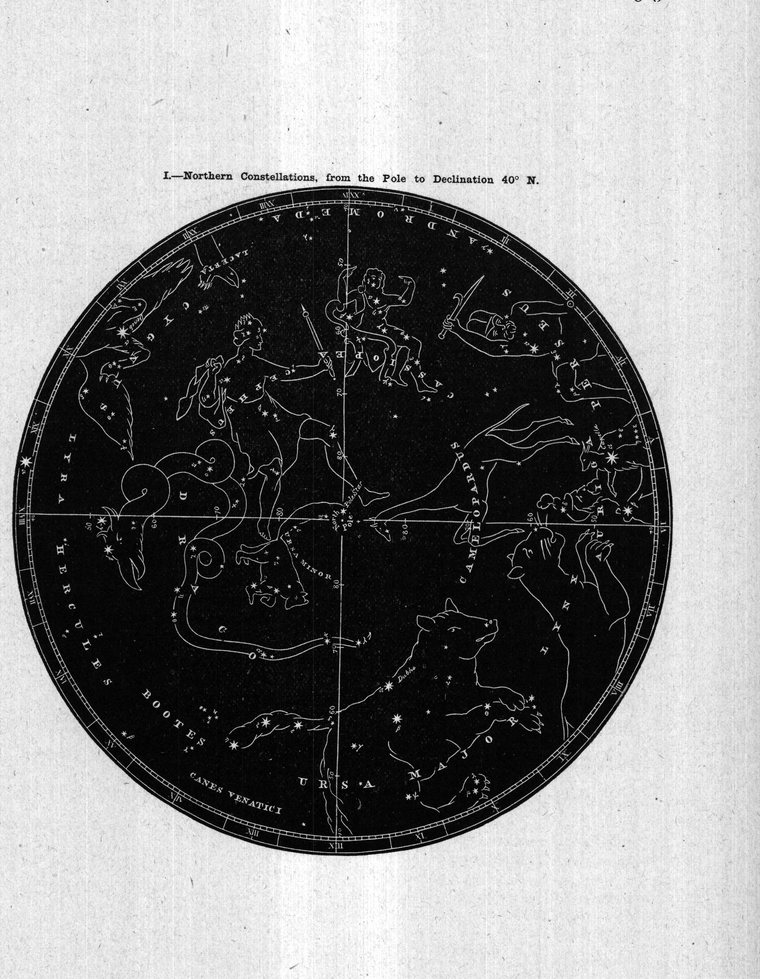
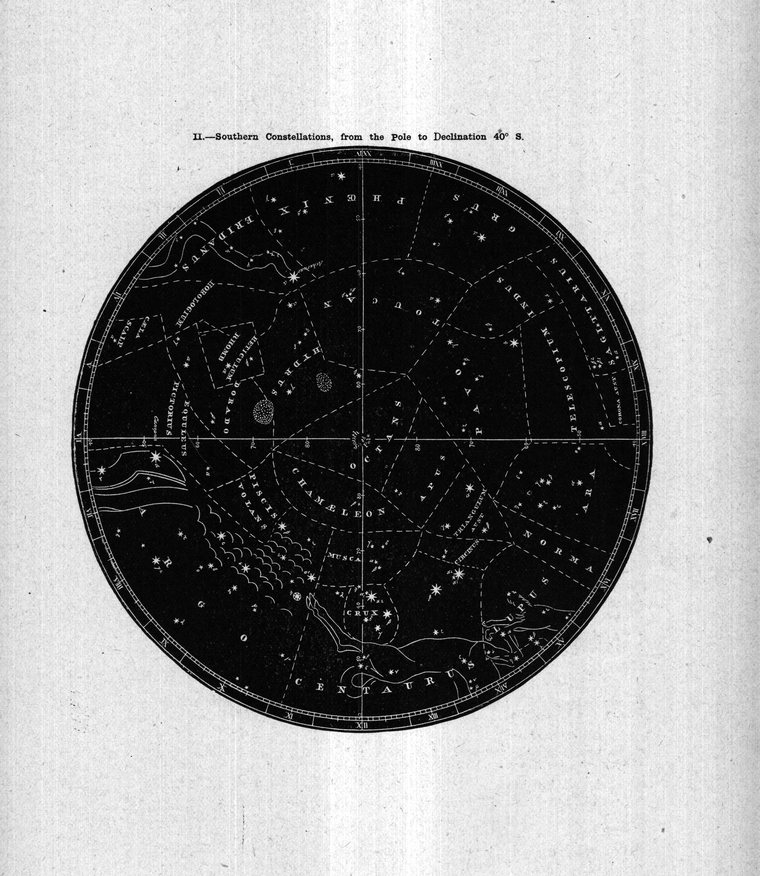
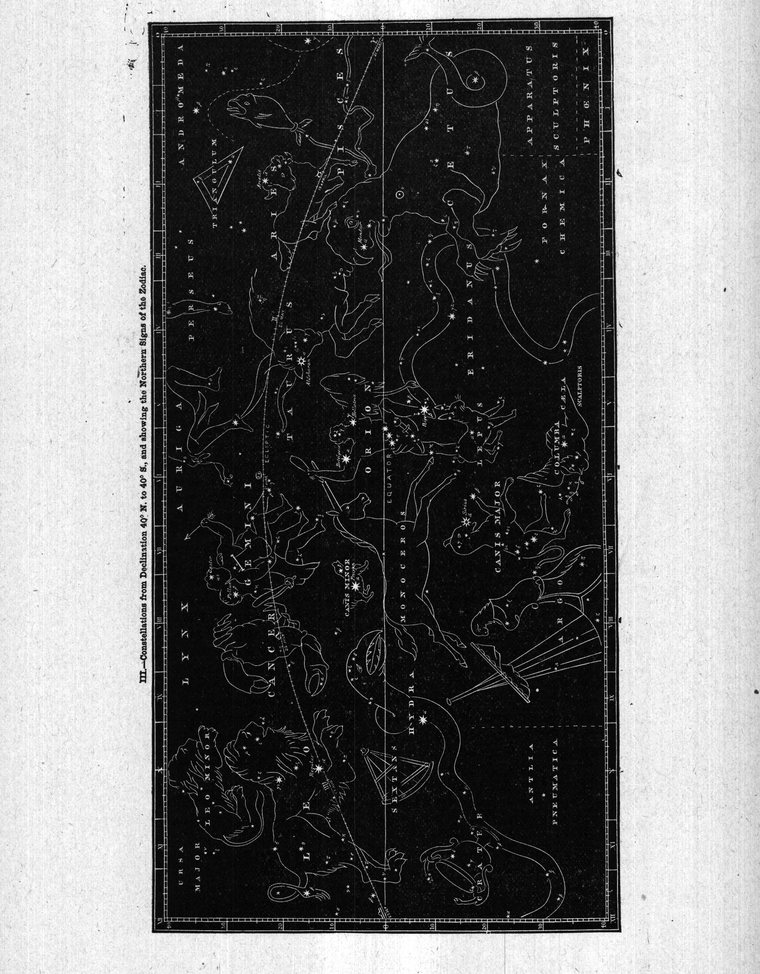
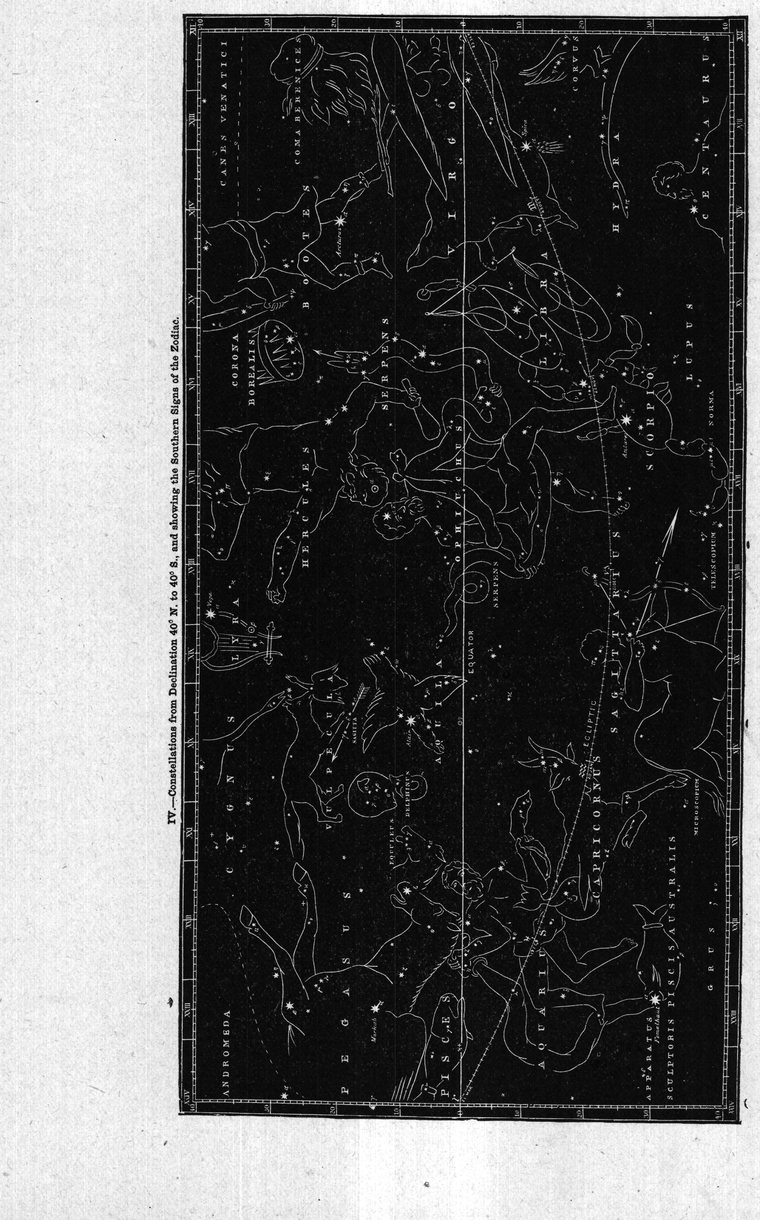
A group of fixed stars, bearing the name of some animal or emblem, such as the Great Bear, the Dipper, etc.
A system of angles and lines, by the employment of which the position of any point may be determined with reference to a fixed point known as the origin, and an assumed direction known as the axis.