Green SeaSea Terms
When a large body of water is shipped at one time it is called a green sea, taking the name from its greenish shade as viewed in the daytime against the light beyond the vessel.
Page 128 of Patterson’s Illustrated Nautical Encyclopedia · 41 entries
When a large body of water is shipped at one time it is called a green sea, taking the name from its greenish shade as viewed in the daytime against the light beyond the vessel.
A name for a seaman's great coat.
(See Ocean Greyhounds.)
A small vessel of two masts belonging to Normandy.
A framing of heavy beams for the ship to rest on when the tide is out, so that her bottom may be examined.
An anchor is said to grip when it holds.
When a vessel sailing close-hauled shows a tendency to come up to the wind against a weather helm she is said to gripe. The term is also applicable when a vessel steers very hard.
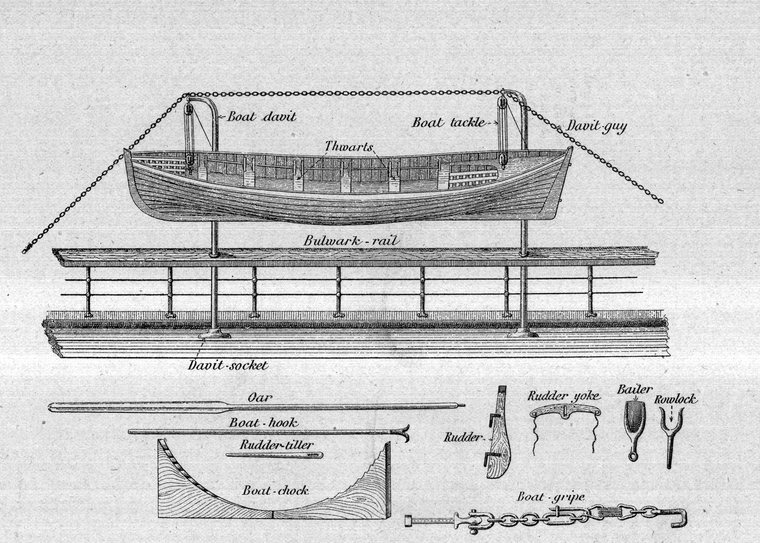
The iron fastenings for securing large boats to the deck; bands of canvas with thimbles in their ends which pass over and under davit boats and are set taut with lanyards when the vessel is underway.
The name given to the spirit-ration once served out to the crew on board men-of-war. (Now abolished.)
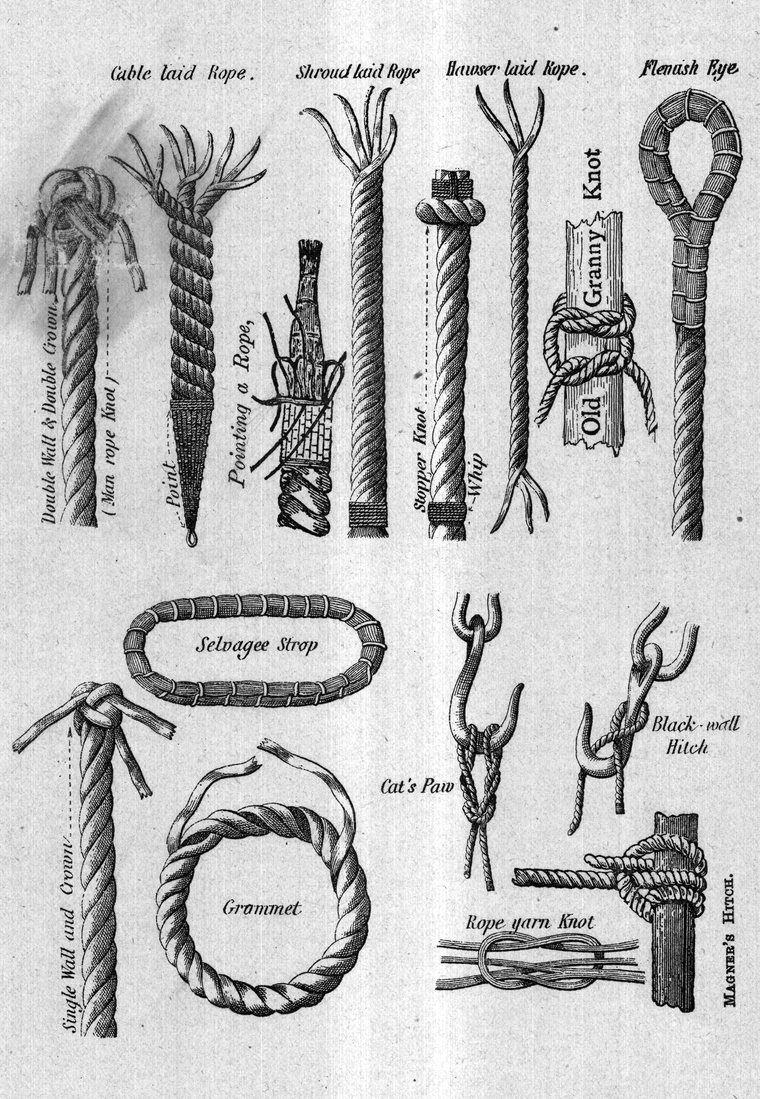
A ring made of a single strand of rope by laying it three times round. (See engraving.)
(See Tonnage.)
A vessel is said to take the ground when she goes ashore
An almost continuous swell along shore owing to the shallowness of the water.
A term collectively applied to all the anchors, cables, anchor-purchases, etc.
The lowest tier of cargo in a vessel's hold.
Large pieces of timber laid across a dry-dock on which the blocks are placed.
Running aground accidentally, or putting the vessel on the beach for the purpose of repairing her.
To enlarge; to come into sight more and more; gradual development of an object.
A Spanish gun boat mostly employed against smugglers.
A picket boat among men of war, or for enforcing quarantine rules.
A sort of cage surrounding the carved work on a vessel's stern as a protection.
A timber bolted on the outside of the covering board or plank-shear on wooden steam vessels navigating harbors, lakes, and rivers, to act as a fender when lying alongside of other vessels, or when made fast to a dock. Sometimes a second guard rail is carried along the sides just above the water, and this is termed a bilge guard rail.
(See Part V.)
The metal braces bolted on the stern-post of a vessel, and through the eye in which the pintle of the rudder ships.
A hawser run out from the vessel to an object and secured for the purpose of hauling the vessel to it.
The name applied to the rope which is dropped into a boat coming alongside of a vessel, and to which the painter of the boat is bent temporarily.
A fast rowing vessel of olden times. It is claimed by some writers that it derived its name from the smuggling of gold across the channel.
A name once applied to a negro slave ship.
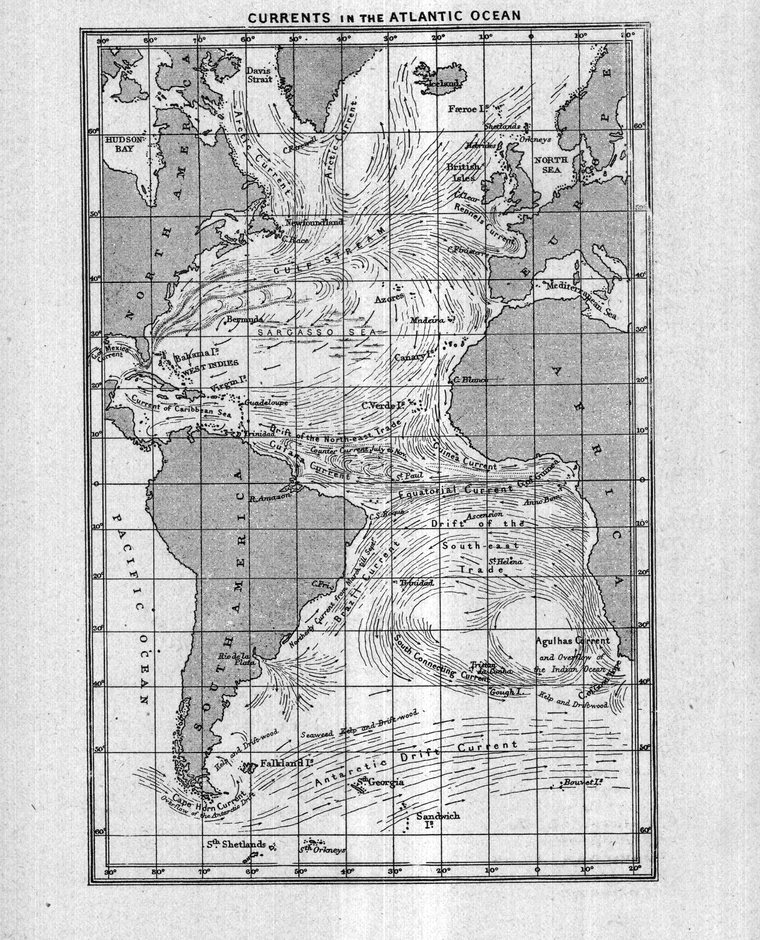
A great ocean current flowing out from the Gulf of Mexico through the Straits of Florida, and progressing along the Atlantic coast, following its trend, and widening as it flows, until off New Foundland it separates, one branch flowing north-east toward Spitzenbergen, and the other branch continuing an easterly course to the coast of Europe where it recurves to the southward and finally joins the Great Equatorial Current and pursues a westerly course until it completes the circuit by again entering the Gulf of Mexico to be expelled anew through the Straits of Florida.
A cargo boat of the Moluccas.
A purchase made of a length of rope and two single blocks.
(Pronounced gun-nel.) The rail of a boat.
A steadying rope. (See Jib-boom Guys.)
(See Jibe.)
A vessel hails from the port to which she belongs; to accost another vessel, prefacing the word ahoy with the name of the rig of the vessel, as schooner ahoy! etc.
A vessel is said to make a half board when she luffs up into the wind, and then when her headway has almost ceased to go off again on the same tack. This is nothing more than a pilot's luff.
The fish davit.
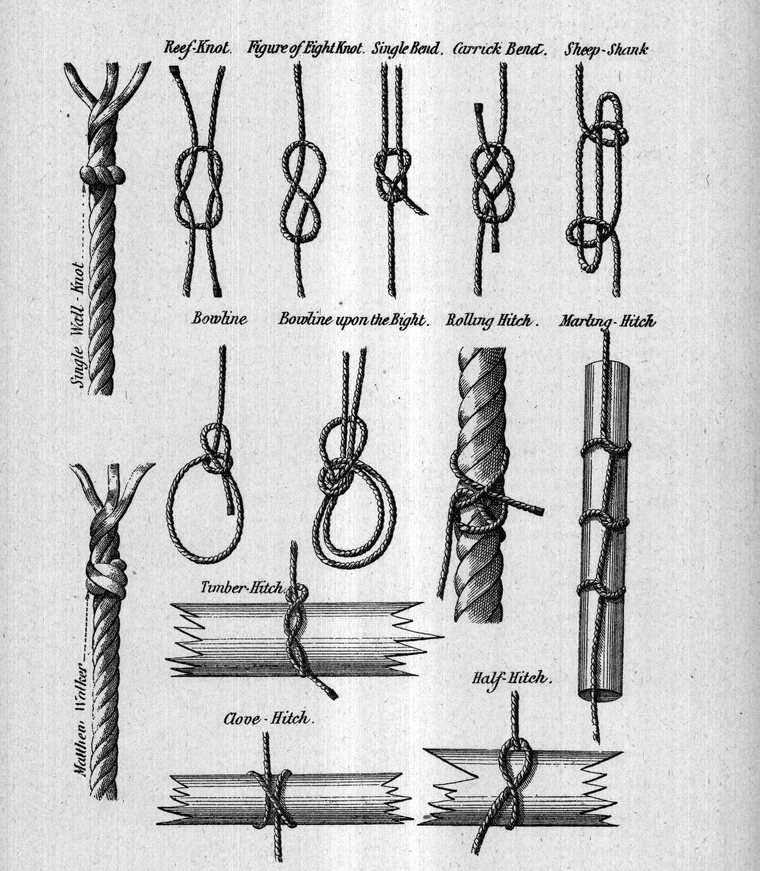
Formed by passing the end of a rope around its own standing part and bringing it then through its own bight. (See engravings; see Two Half Hitches.)
A flag is half-masted when it is hoisted but half way.
Also written halyards. Tackles used for hoisting and lowering yards, gaffs and sails.
A fine quality of seizing stuff, three-stranded, and tightly laid.