Luff of the BowSea Terms
(See Luff.)
Page 172 of Patterson’s Illustrated Nautical Encyclopedia · 30 entries
(See Luff.)
A tackle formed of a length of rope and a double and single block.
Luff upon Luff. One luff-tackle applied to the fall of another luff-tackle.
Log Foresail. A sail which takes the place of the regular working foresail on a schooner. It is cut long on the foot so as to sheet about six feet abaft the mainmast, and is sometimes bent on to the fore-boom as far as the spar goes.
Vessels on one, two and three masts with quadrilateral or four-cornered fore-and-aft sails bent to a hoisting yard, the luff being about two-thirds the length of the leach.
A square port in the bows of some vessels through which the long lengths of lumber are taken in and discharged, and for which the hatches are useless. Also known as cargo ports.
A sudden, quick rolling of the vessel.
Heeling over to leeward under a press of sail with a beam wind.
(See Lie-to.)
A vessel with a large foresail, jigger and spritsail.
Small rounded patches of clouds.
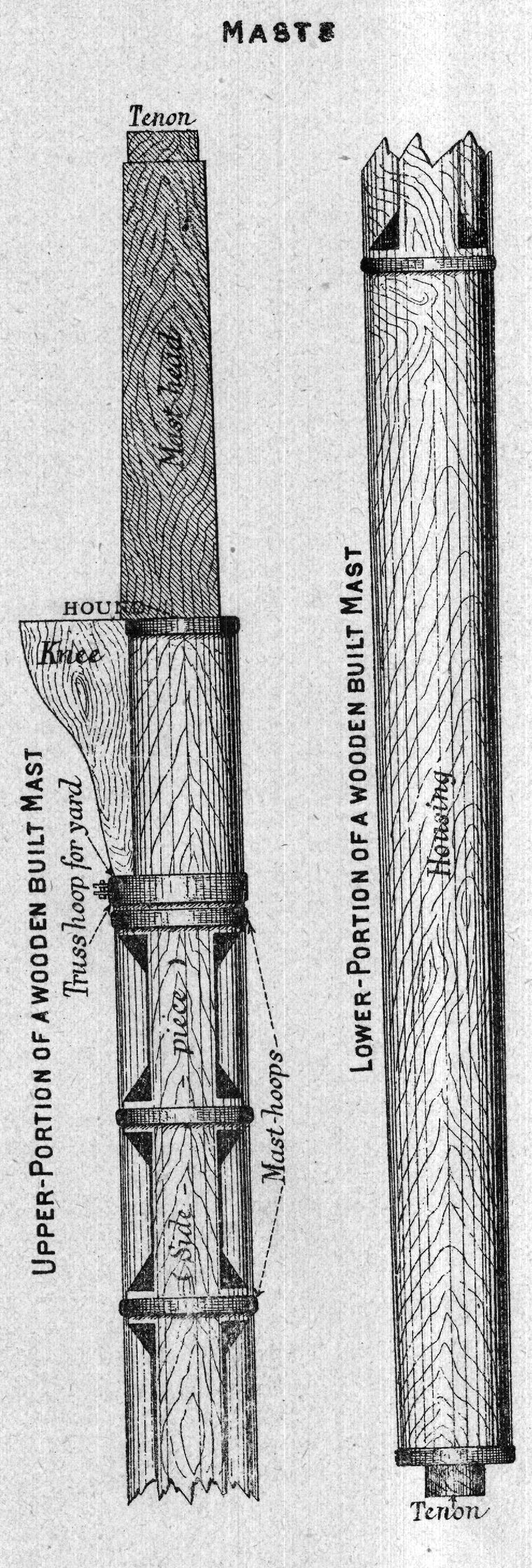
A made mast is composed of different pieces, likewise a made block.
Topmasts and topgallant masts are whole spars--not made.
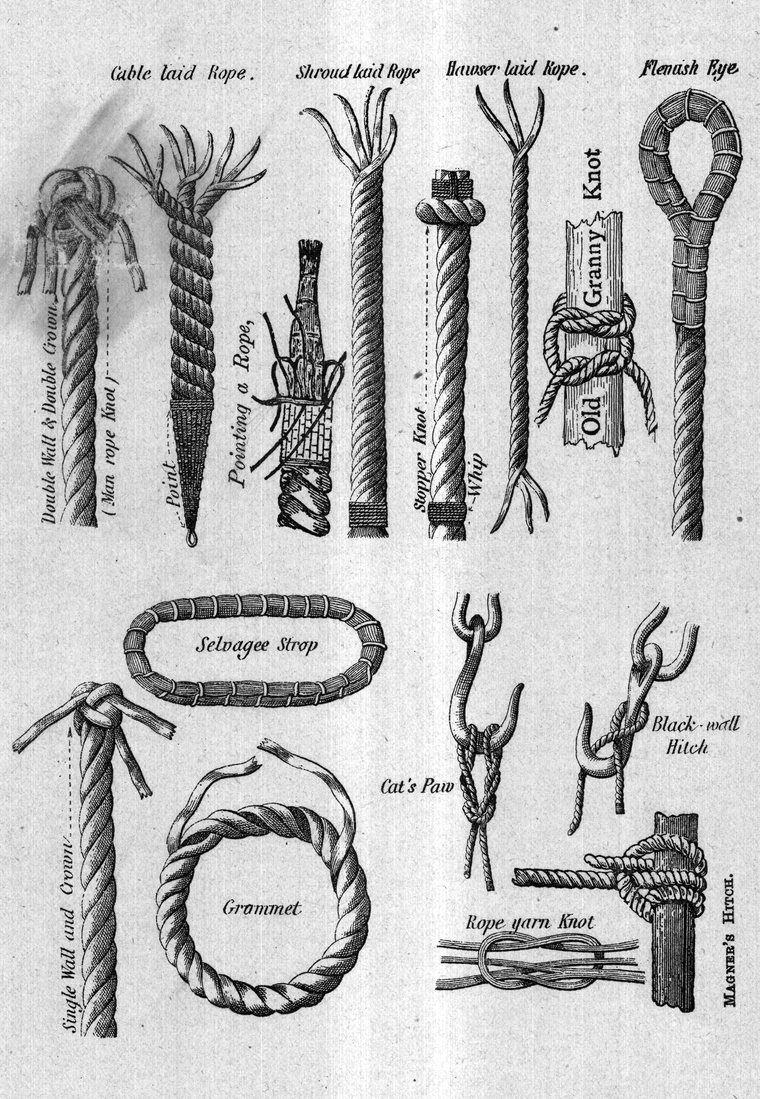
A round turn around a spar, the turn itself being jammed by a half hitch. (See engraving.)
(See engravings.)
(See Chains.)
The hatch between the fore and main masts, just forward of the latter.
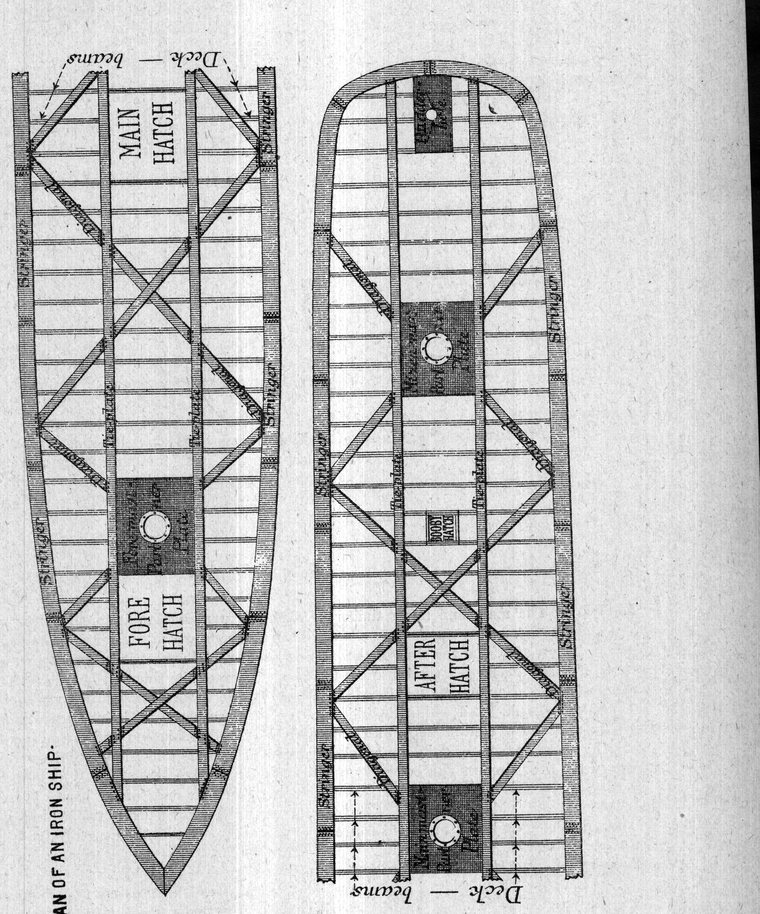
That part of the interior of a vessel which is in the vicinity of the main hatch.
The piece of timber of which the rudder head is composed.
The shrouds and ratlines of the main lower mast.
The sail that on a square-rigger is bent to the main yard, but the sail that on a fore-and-after is spread by the main gaff and main boom.
The shrouds on the main lower mast.
The hemp or wire rope leading from the mainmast head to the foremast near the deck, where it sets up. The mainmast is stayed (supported) by it, and on this stay the main staysail is set. (See Stays.)
A triangular sail that hoists between the fore and mainmasts, both on square-rigged vessels and on schooners. (See engravings of each showing the sail set.)
The lowest yard on the mainmast of a brig, bark or ship.
The mast next abaft the foremast on a vessel carrying two or more masts, but the name given to the single mast carried by sloops and cutters, etc. (See Fore Mast.)
The order given to the crew to swing the main yards around when tacking ship--properly speaking, main topsail haul, as the mainsail is clewed up before tacking.
An order to the crew to set the sails.
The first appearance of the shore. (See Landfall.)
When a vessel leaks she is said to make water.
At 8 a. m. the vessel's ensign (also the club pennant and private signal, if a yacht) is hoisted and displayed, and this is known as making colors.
Spreading the sails.
At sundown the colors are struck (hauled down), and this is known as making sunset.