Catch a CrabSea Terms
To make a false stroke in rowing.
Page 78 of Patterson’s Illustrated Nautical Encyclopedia · 54 entries
To make a false stroke in rowing.
To take a turn with a rope quickly.
Long row boats used by the Portuguese for pilotage purposes, also for landing through surf.
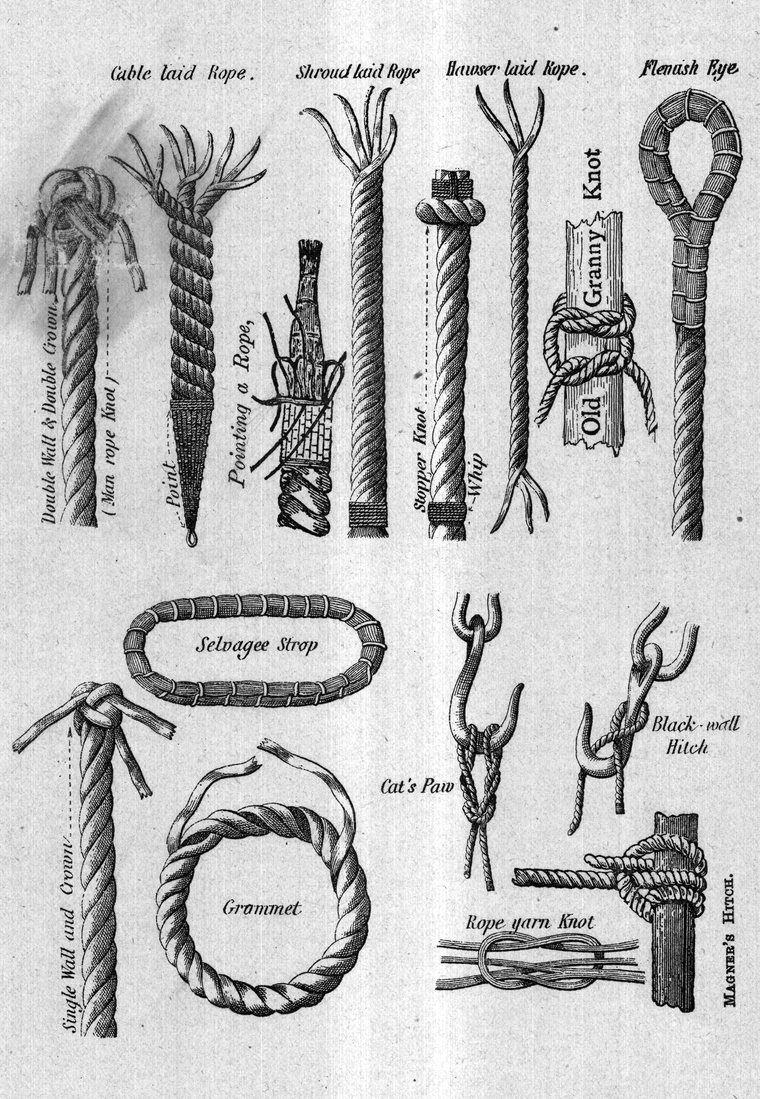
The slight ruffling seen on the surface of the water during calm weather, being caused by transient flaws of wind; a twist put in the bight of a rope, forming two small eyes close together, and into which the hook of a tackle is slipped in order to get a strain on the rope for any purpose.
(See Bullock Slings.)
To drive oakum into the seams of a vessel to prevent leaking.
A chisel-shaped instrument used for driving oakum into the seams of a vessel.
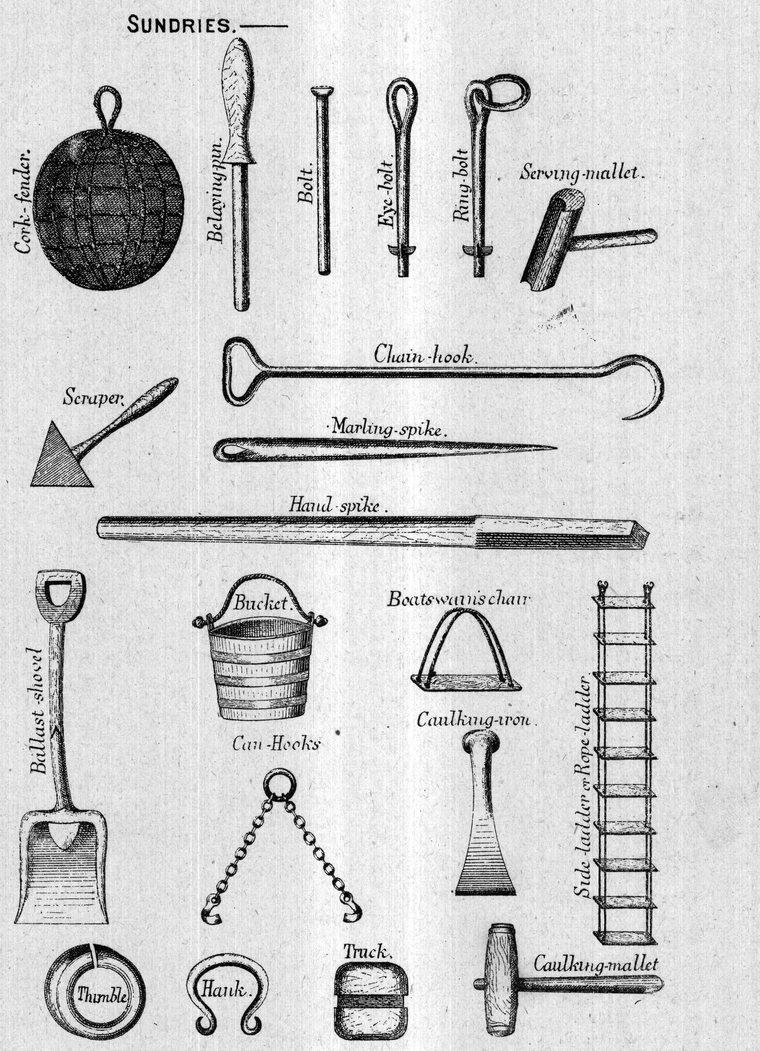
A small wooden maul used in caulking decks.
(See Signals.)
A length of timber, like a long cleat, bolted on to the bulwark stanchions in a fore-and-aft direction and used for belaying ropes to.
Timber heads when used as cavils.
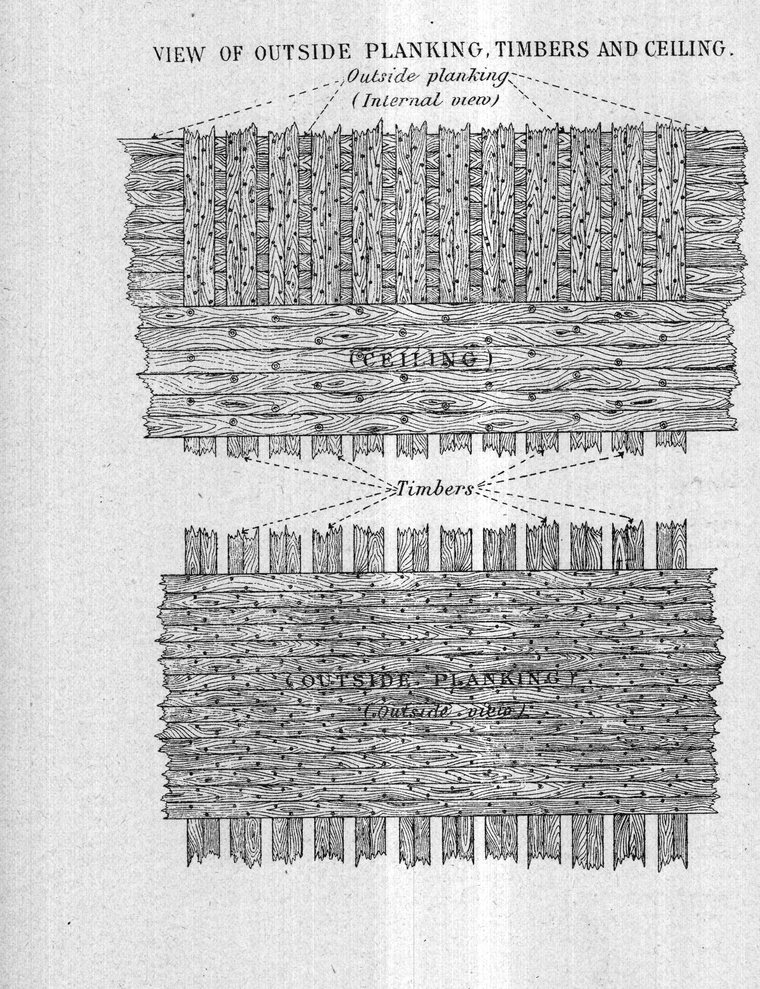
The lining or inside planking of a vessel.
The board which works on a thwartships pin up and down in the centre-board trunk, passing through a fore-and-aft narrow opening in the keel of the vessel. When the board is hoisted all the way up its lower edge is flush and parallel with the keel. When down the board drops a distance below the keel according to the size of the vessel. It is lowered to overcome the sideways drift (leeway) of the ship when she is close hauled.
The hollow wooden wall from the keel up in which the centre-board slides up and down.
Diplomas issued to masters and mates certifying to their excellence as seamen and navigators.
Rope, canvas, etc., placed upon rigging, spars, etc., to save them from being chafed.
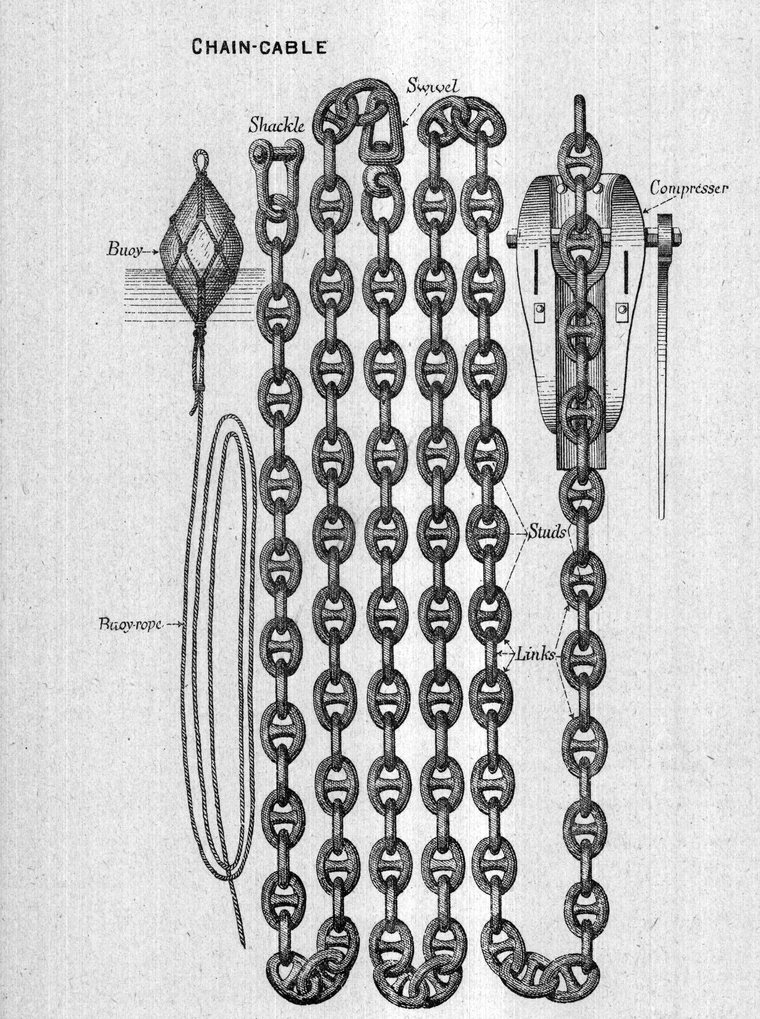
Connected links of metal.
The cable of a vessel when it is composed of iron links.
(See Locker.)
A leading pipe to the locker for the cable.
(See Chains.)
Strong, narrow plates of iron bolted to the ship's timbers through the side. To the upper end of these plates dead-eyes are secured by an iron strop. The ship's channels are also called chains, as the fore-chains, main-chains, and mizzen-chains. (See Rudder Chains.)
A flat-bottom boat used on the Loire.
To take off the angle or edge of a timber.
(See Ship Chandler.)
Plank secured edgewise to the outside of a vessel and to which the upper parts of the chain plates with their dead-eyes are secured. Channels are used in order to obtain more spread for the lower rigging. (See Chains.)
(See Shanty.)
When taken aback in a light breeze the ship may be worn completely around until she arrives on her original course without bracing the yards. This is known either as chapeling or building a chapel.
The ten-gun brigs that were built in England about 1810 for the purpose of giving command to a large number of officers.
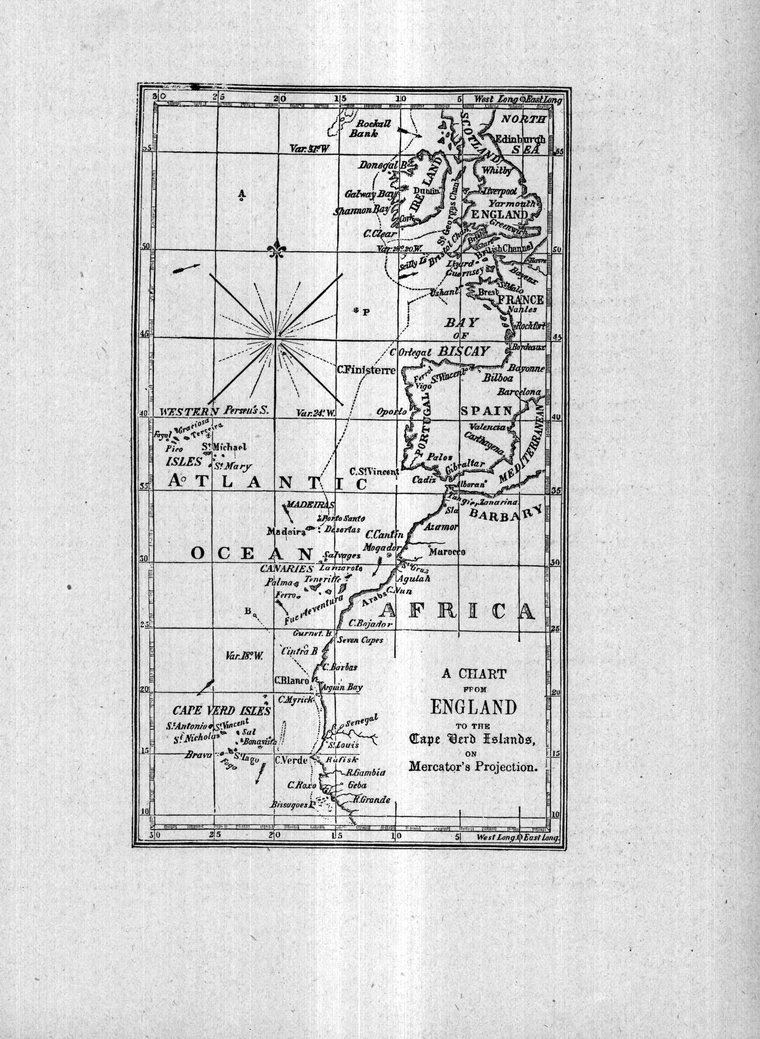
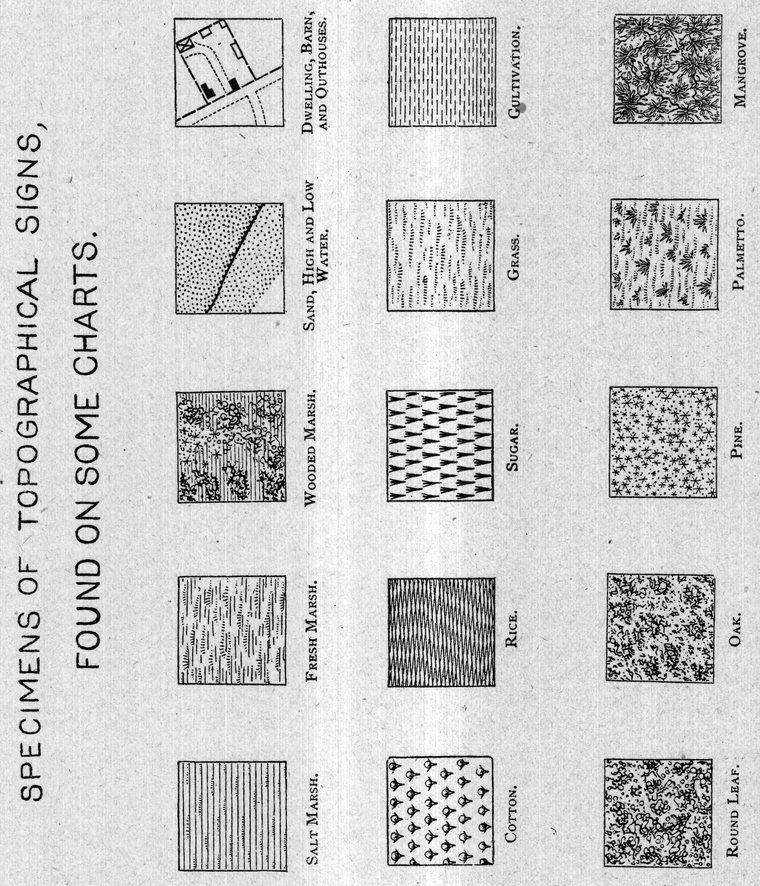
A marine map delineating some part of the sea and the sea coast, giving information as to the rocks, shoals, lights, soundings, and all that is necessary to assist the mariner in shaping the course of his vessel. (See Part III.)
The name given to a contract in writing between the owner, agent, or master of a vessel, under a certain specified condition, for the conveyance of the goods of the freighter to some particular place or places. A charter party also specifies the nature of the voyage, the terms on which the cargo is carried, etc.
One vessel pursued by another.
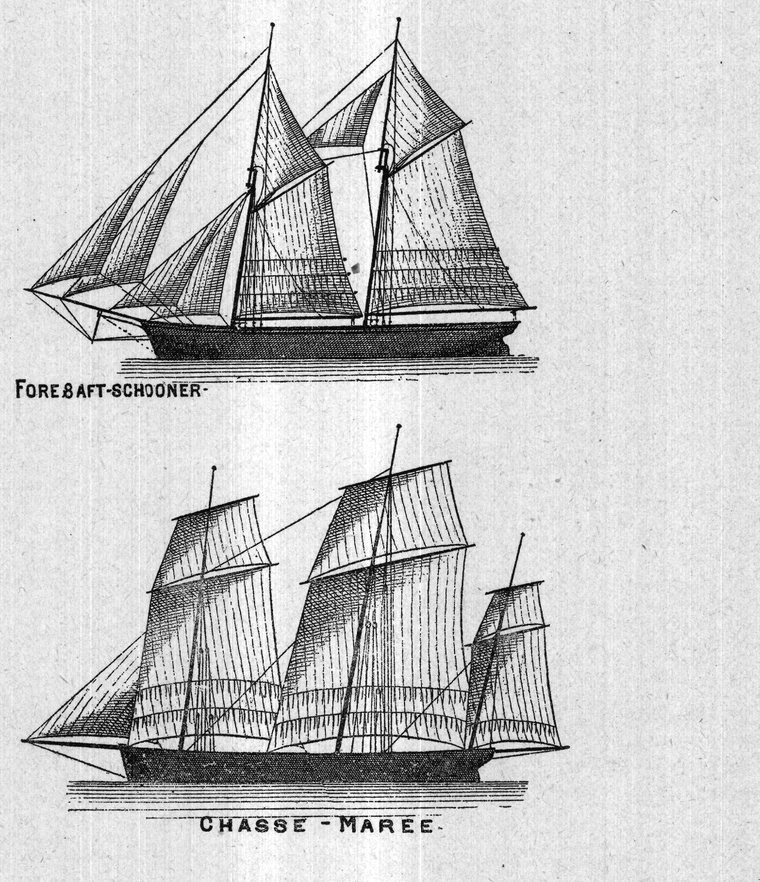
A French lugger.
To slack off a little on a rope or brace.
Half of a shell containing the sheave bolted on to a spar, the latter acting as the missing cheek.
Those projections which are bolted to the sides of the mast and upon which the trestle-trees rest. Also a name applied to the two sides of a block.
Cheerily Ho! Heartily; with good will.
Pieces of oak, bolted to the topsides of the vessel, containing a sheave, and used for hauling home the main tack (gone out of use.)
That part of the staves of a cask where they project beyond the heads.
To drive oakum or cotton into a tight seam with a thin caulking iron.
(See Log.)
A wedge employed to prevent a body from rolling or moving.
When two blocks of a tackle have been drawn as close together as possible. Same as block-and-block and two blocks.
A rope is said to choke in the block when it fouls and will not render.
A Chinese lighter.
A quick, tumbling sea--short waves.
Where the waters of a channel and the sea meet, for instance, the Chops of the English Channel.
A provision lighter in China.
The act of breaking a bottle of wine against the stem of a vessel in immediate anticipation to her plunge into the water from the launching ways. The custom is a very old one. Among the many accounts of this performance the following may be cited: In 1418 the good Bishop of Bangor was sent to Southampton for the purpose of blessing the king's ship, named the "Grace Dieu." As far back as 1242 Henry III. had his war fleet blessed by the priests, and in person sought to propitiate the saints by visiting many shrines. It is yet customary in some parts of the world for priests to bless the fishing fleets just previous to setting sail for the fishing grounds, and to pray for a successful voyage.
The ports of Dover, Hastings, Romney, Sandwich and Hythe are the five principal ports of an ancient jurisdiction situated in the south of England. Up to the time of Henry VII. the Cinque Ports furnished the Crown with many ships and sailors for the general defense, and as a reward were granted certain extensive privileges and immunities. The original charter of the Cinque Ports dates from the time of William the Conqueror.
The name given to revolving storms, such as West India hurricanes.
The well in the hold of fishing vessels in which the catch is preserved alive. This well or cistern is supplied with water from the sea through a flood-cock pipe connecting the cistern with the outside of the vessel.
An iron shape which works on a hinge and is used to confine a spar, such as a studding-sail boom.
To make more sail; to lay hold of a rope and haul away.
The degree of excellence pronounced upon a merchant vessel, according to her construction and the material used. American vessels are classed as A I, A I 1/2, A I3/4, A 2, A 2I/2, and A 3. , and A 3. Vessels classifying under A I and A I 1/2 are considered fit for the transportation of all kinds of cargo and for all voyages; those classifying under A I3/4 and A 2 are considered fit for carrying all kinds of cargo on Atlantic voyages, and such cargo as molasses, oil and sugar on long voyages; while those classifying under A 21/2 and A 3 are deemed fit for the coastwise trade only in the transportation of wood and coals. The class is given for a certain term of years, and expires by limitation, necessitating a new examination or survey of the vessel in order to re-establish the class or secure a new one, and in order to maintain the class assigned the vessel must be submitted to occasional surveys not less than once in two years, and must be re-surveyed for a class in the event of collision, running ashore, loss of masts, etc.