Snag BoatSea Terms
A boat fitted with machinery for removing snags in rivers.
Page 236 of Patterson’s Illustrated Nautical Encyclopedia · 31 entries
A boat fitted with machinery for removing snags in rivers.
To confine two ropes after the manner of racking or nippering.
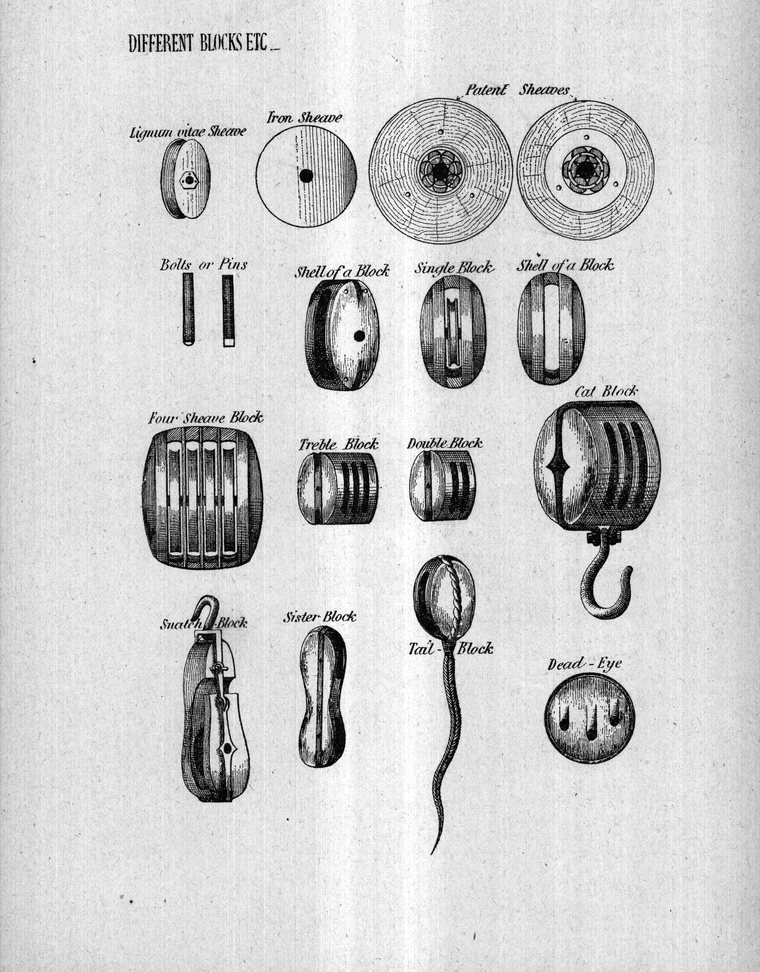
A block containing one sheave, the shell having an opening in the side so that the bight of a rope may be passed into it; this obviates the necessity of reeving the end.
A rope used for pulling off the lift and brace of a light yard when it is being sent down.
A two-masted vessel resembling a brig but having a boom mainsail set on a trysail mast.
To check anything suddenly, as the anchor chain when it is running out.
To reduce sail so as to be prepared for a gale.
So. An exclamation signifying that anything is to be left just as it was when the word was used.
Fresh made raised bread.
(See Soft Bread.)
The timber bolted on to the foot of a rudder in order to make it even with the false keel.
A Japanese junk.
The line attached to either the hand or deep-sea leads.
(See Part III.)
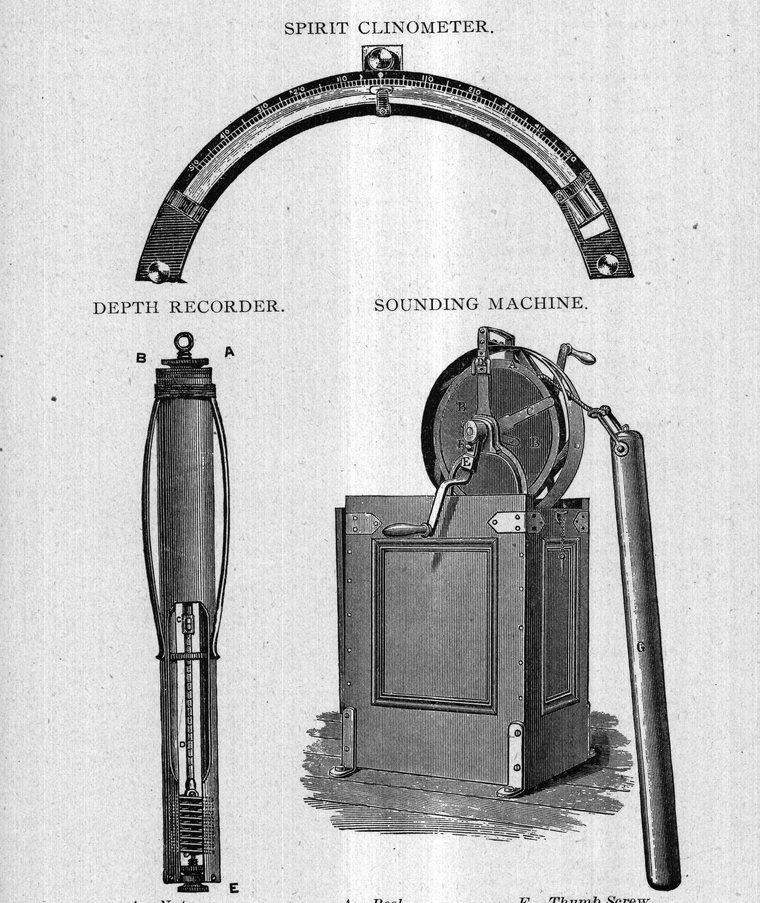
A rod used for ascertaining the depth of water in the ship's hold. It is marked in feet and inches.
(Pronounced sou'wester.) A storm-hat made of rubber, or oiled or painted canvas, in shape much like a fireman's hat.
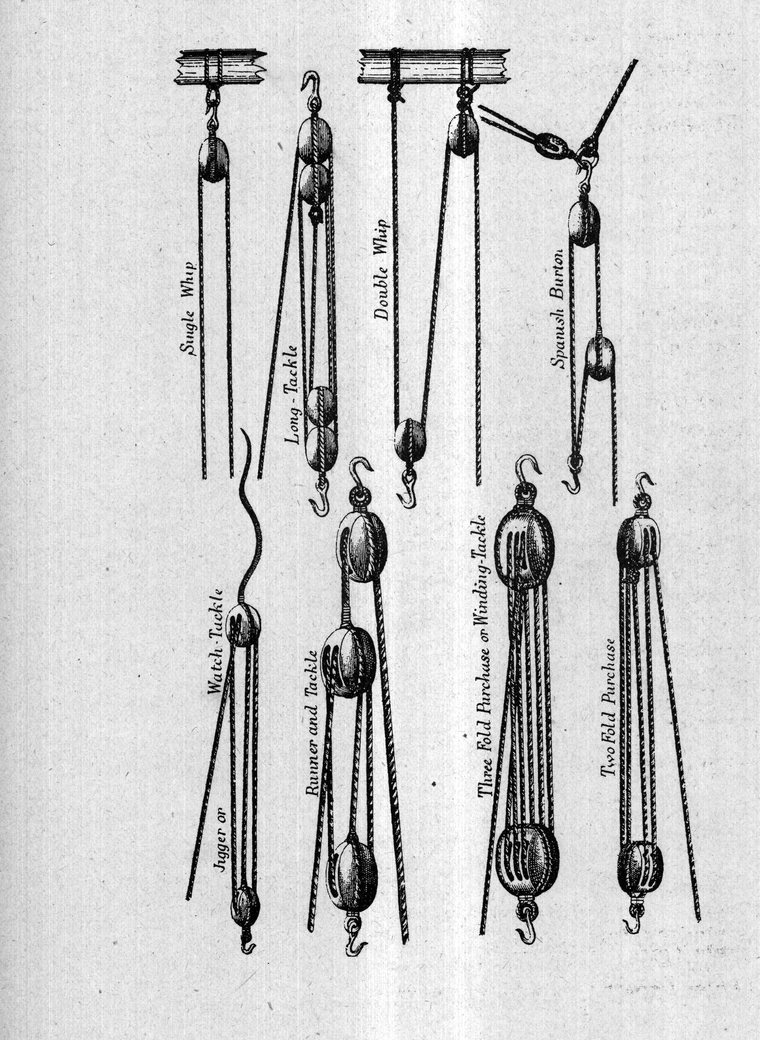
A rope having both its ends made fast, to the bight of which a purchase is hooked. The span of the rigging is the distance from the dead-eye on one side of the vessel, up over the eyes of the rigging at the masthead, and down to the dead-eyes on the other side.
A purchase. (See Burton; see engraving.)
This is made by untwisting a yarn, then laying it up again the contrary way.
When the yards are lowered on the cap; a knot tied in the head of a head sail.
A wooden roller secured so as to revolve, and which is turned by hitching a marline spike used as a lever into the rope wound around it.
The after fore-and-aft sail on a three-mast vessel. This sail was once called the driver.
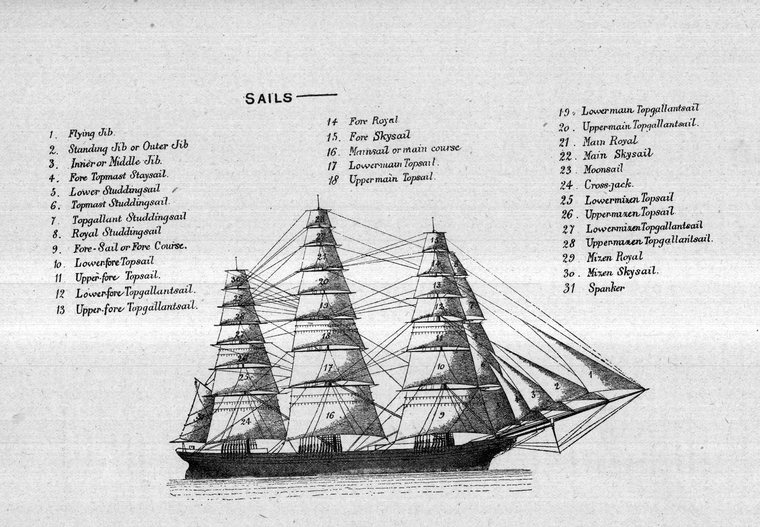
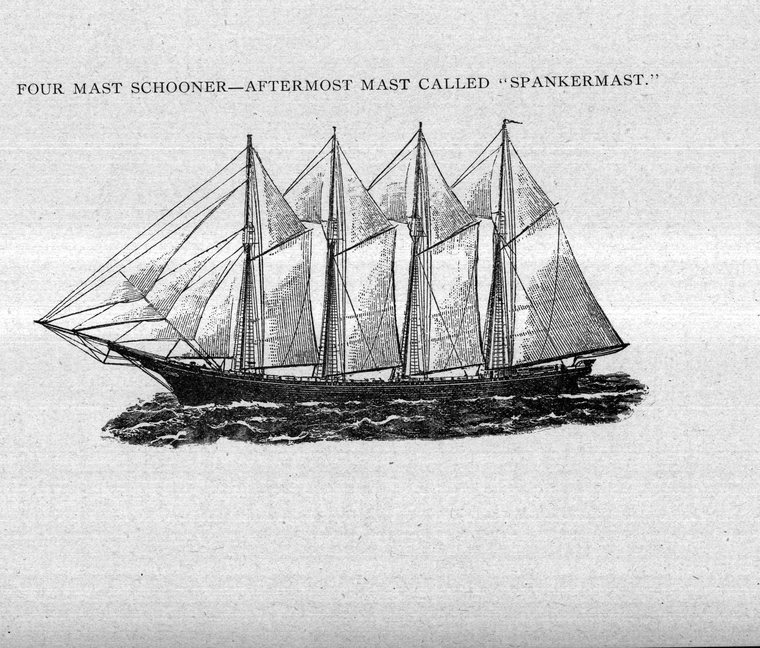
The mast on which the spanker is set.
A term employed in giving description to anything fine, large or satisfactory, as a spanking breeze, a spanking ship, etc.
A long spar floating perpendicularly, having one end anchored to the bottom.
(See Spar Varnish.)
(See Deck.)
A superior make of varnish, not affected by salt water, steam, soap, grease, or ammonia fumes; used as a coating for spars and all outside or exposed work, or any place where a varnish of extra durable qualities is required. This is sometimes called "spar composition."
To seize oars or short lengths of light timber across the ratlines preparatory to rattling down.
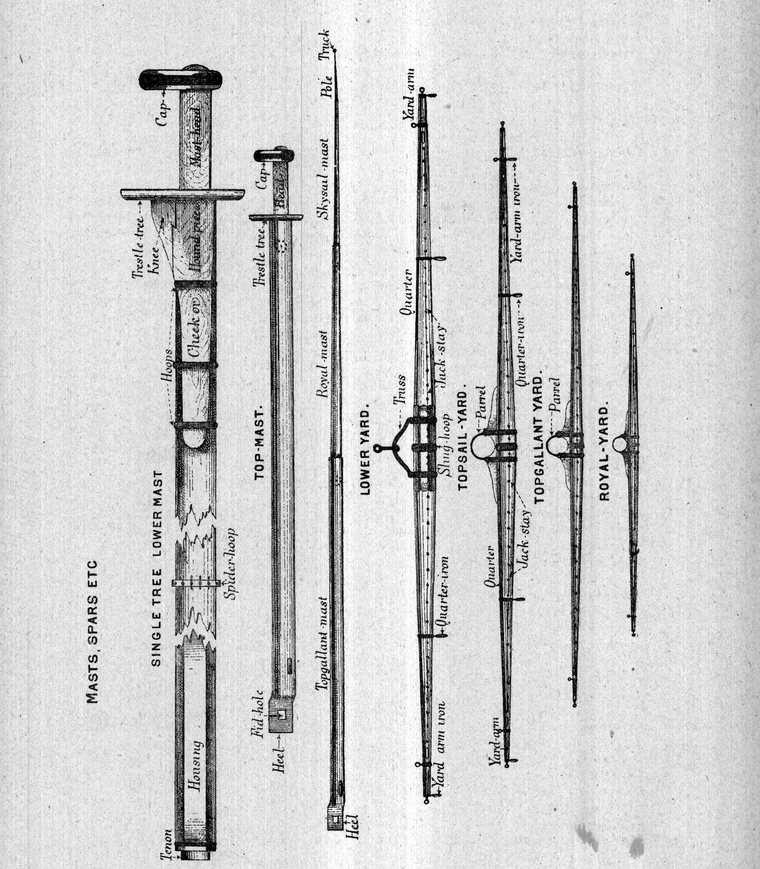
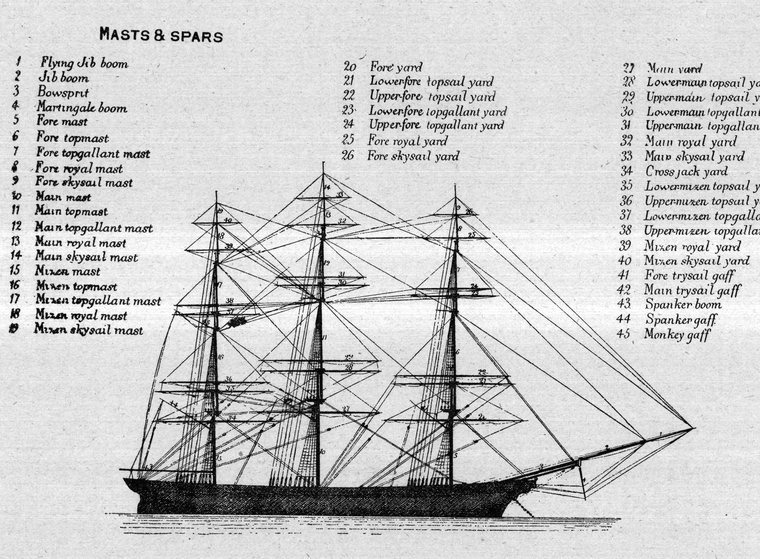
A general term applied to masts, booms, gaffs and yards.
To communicate with a vessel either by voice or signal.
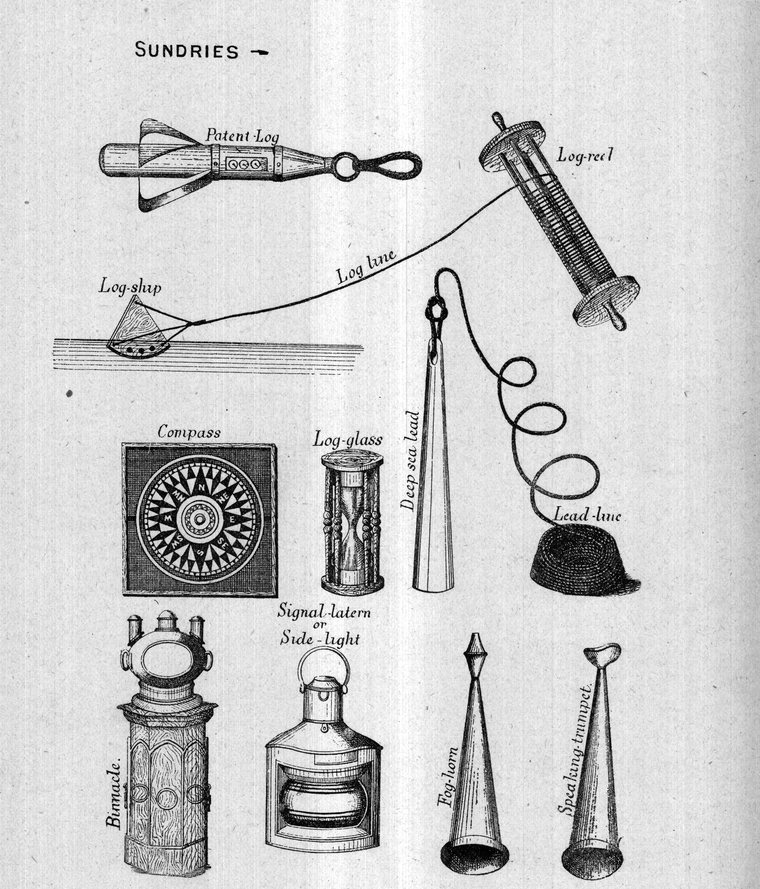
The hollow tube, flaring at one end, through which orders are issued by officers to the crew.