Spectacle IronsSea Terms
Sometimes called Spectacle Shackle. A three-eye iron on the clews of courses for the tack, etc., to make fast in.
Page 238 of Patterson’s Illustrated Nautical Encyclopedia · 28 entries
Sometimes called Spectacle Shackle. A three-eye iron on the clews of courses for the tack, etc., to make fast in.
A period of time. To spell is to relieve another at any work upon which he is employed.
Spell ho! A cry employed either by an officer signifying that the men working are to be relieved, or made use of by such men as a request for relief.
(See Trysail.)
Speronare A lateen rigged boat of Italy, having two masts.
The seams of a vessel are said to spew pitch when from excessive heat the pitch melts and expands above the planks.
An iron crane used for keeping a block clear of anything.
The name sometimes given to the iron band just under the top, and to which the futtock-shrouds are secured.
(See Pile.)
To empty the wind out of a sail by luffing, or by bracing in the yards, or by hauling in or letting a boom go off, or by clewing up a sail.
Temporary ropes fitted to sail for the purpose of spilling the wind out of them.
The perpendicular shaft or axle upon which the capstan revolves.
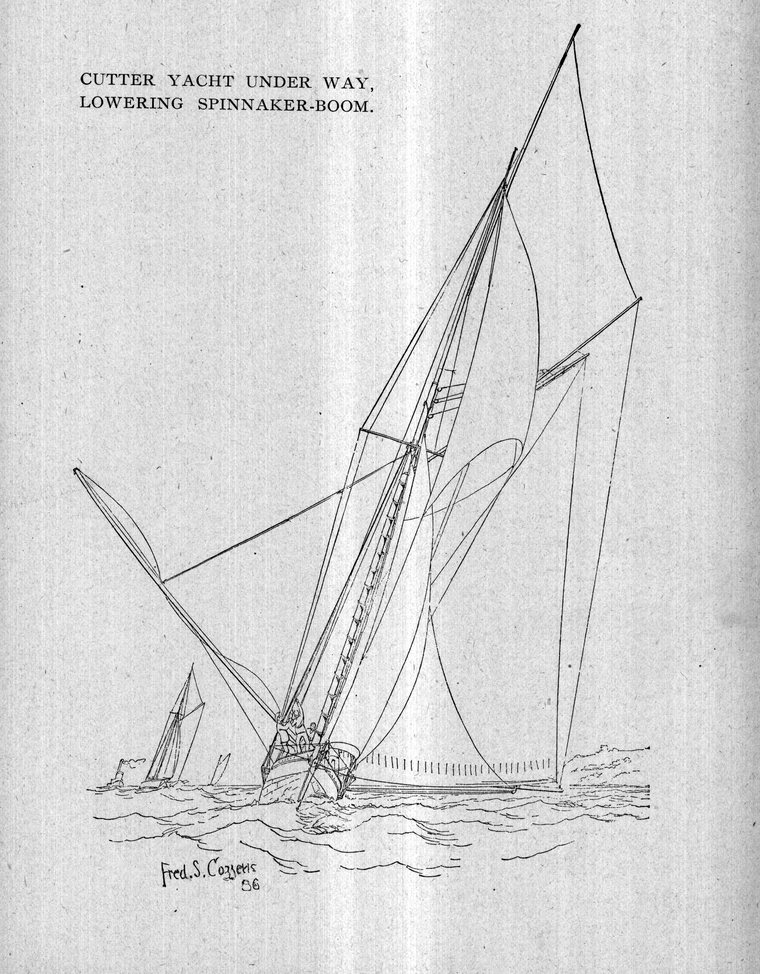
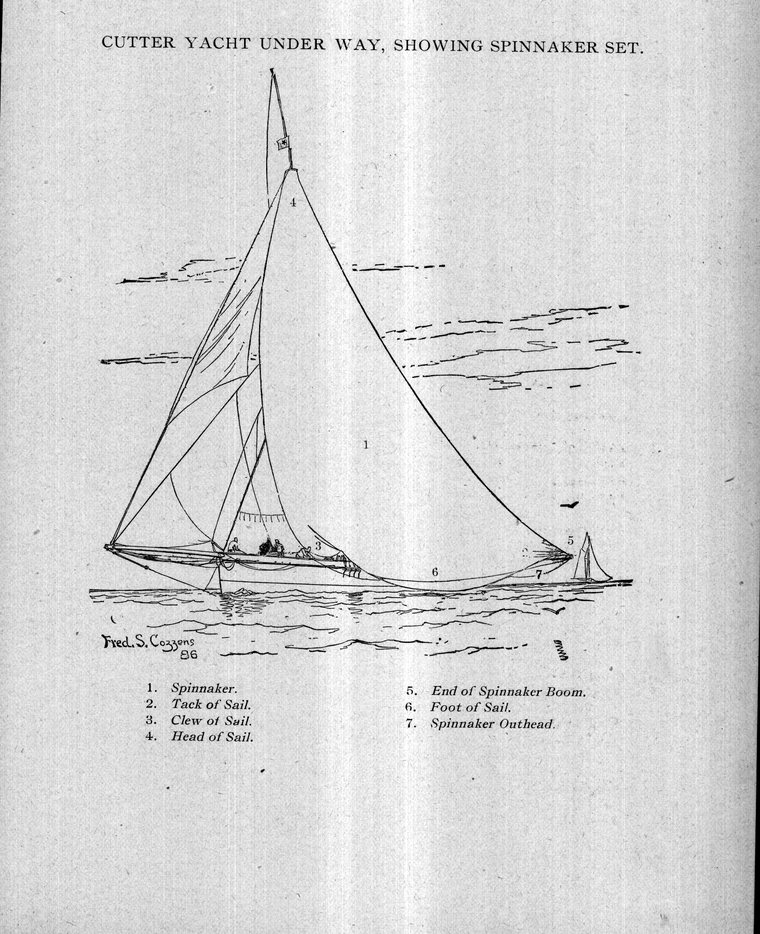
A racing sail shaped like a jib, the open foot of which is extended along a light spar called a spinnaker boom. It is set on the opposite side to the main boom when the vessel is sailing with the wind abaft the beam.
A small wooden tub used as a spittoon.
A name given to the storm jib.
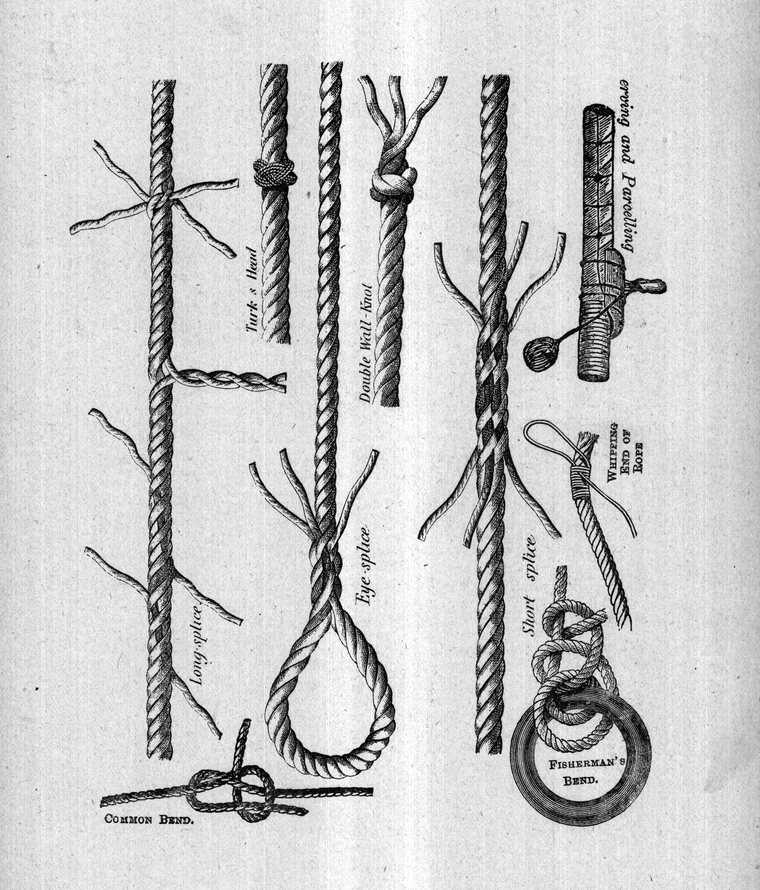
To join two ropes together, or to form a loop in the end of a rope. (See Long Splice, Short Splice, Eye Splice.)
Indulging in a glass of spirits. Sometimes called topping the boom and taking an observation through a tumbler.
One of the handles of a steering wheel. (See King Spoke.)
Water blown from the tops of waves during a heavy gale.
Oars that are curved or concaved at the end of the blade, used for racing shells and other light boats.
A portable board extending above the gunwale of a boat and used for the purpose of keeping out flying water.
To spread eagle a man is to lash him in the shrouds with his arms and legs spread at angles of about 45 degrees to his body.
On each bow of very sharp vessels a horizontal bar is rigged out to give more spread to the head sheets; on the same principle that the whiskers spread the jib-boom guys.
A hawser run out from any part of a ship to the shore, or to a buoy, to turn, or spring the vessel. (See Sprung.)
To start the end of a plank from its fastenings.
To begin to leak.
To put the helm down so as to bring the vessel sufficiently close to the wind to shiver the sails.
A horizontal stay from one lower-mast-head to another lower-mast-head. (See Stay.)
The highest tides. Spring-tides occur every new and full moon.
A staff used to hoist the peak of a small boomless and gaffless sail not provided with peak halliards. The upper end of the sprit rests in a small grommet or becket, and the lower end in a snotter secured to and near the foot of the mast. (See engraving.)