Watch and WatchSea Terms
The crew are said to get watch and watch when their service on deck and their leisure below is regularly alternated.
Page 258 of Patterson’s Illustrated Nautical Encyclopedia · 17 entries
The crew are said to get watch and watch when their service on deck and their leisure below is regularly alternated.
A list of the crew showing the division of the watches.
Watch ho! Watch! The cry passed along from forward to aft by the men stationed along the bulwarks when heaving the deep-sea lead, signifying that the line is running out, and warning the man next aft to feel for the bottom.
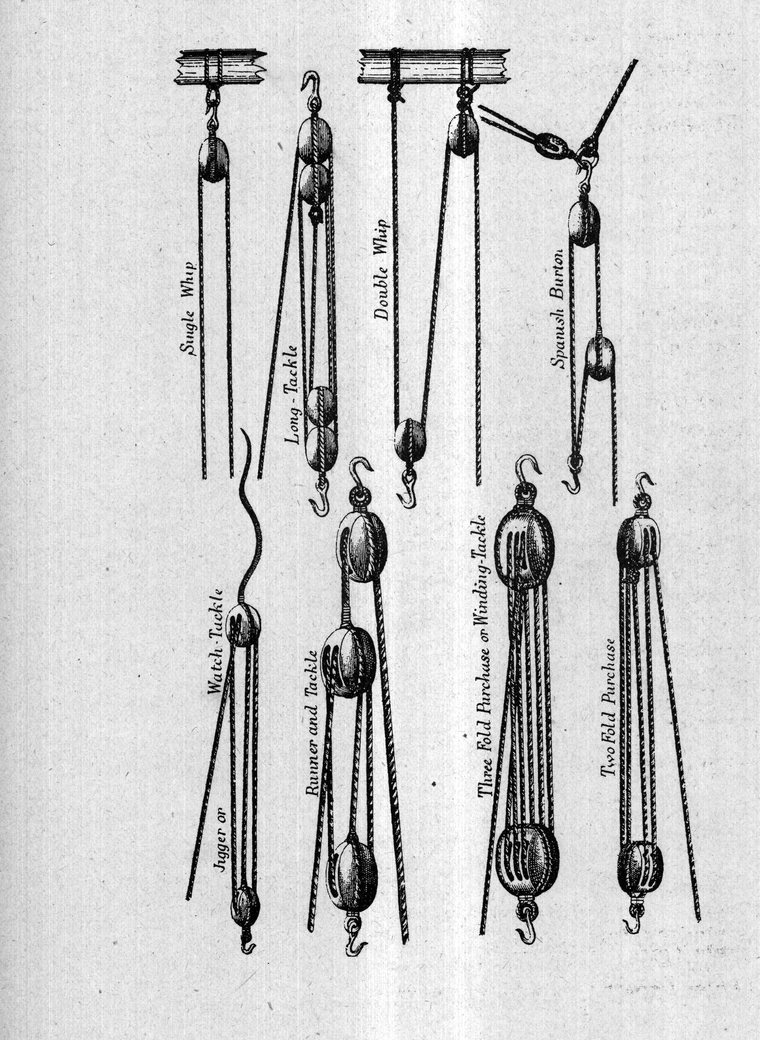
A purchase formed of a double and single block, the single block being provided with a hook and the double block with a tail. Also known as a jigger and a handy-billy.
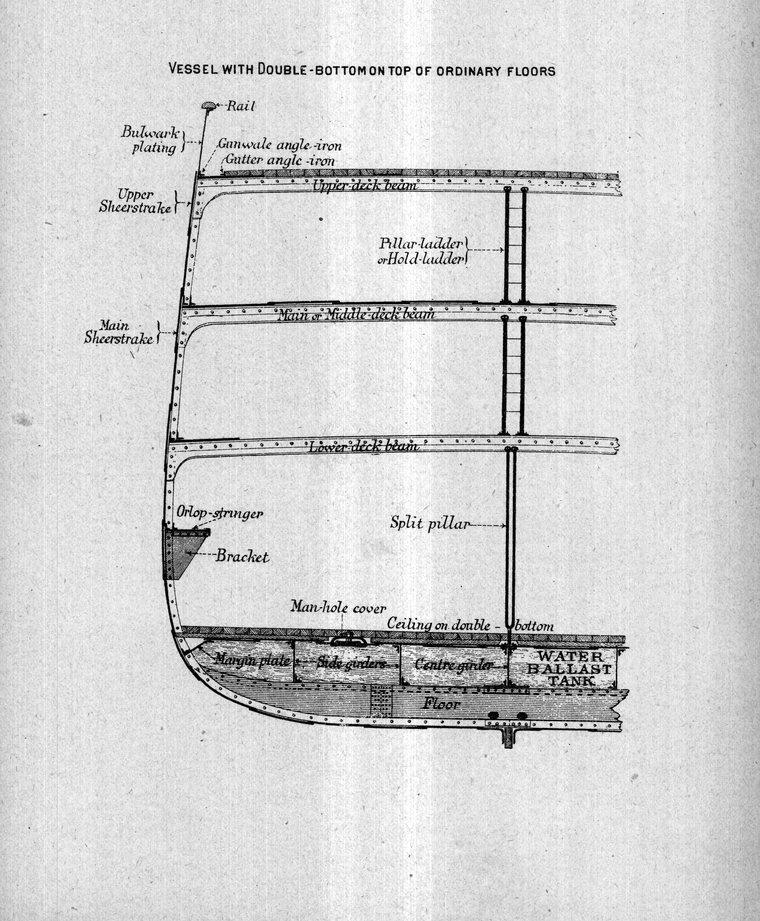
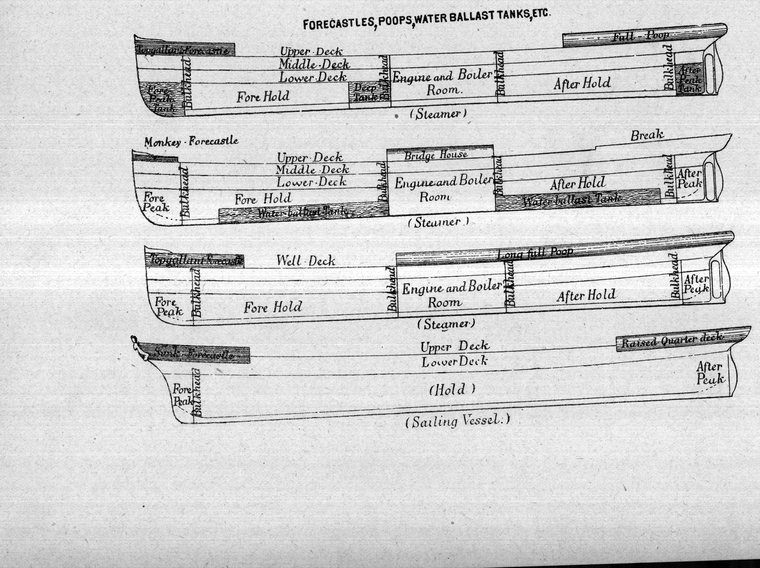
Water carried in flat tanks in a vessel's hold to serve as ballast for the ship. When the vessel is loaded these tanks are emptied by being pumped out.
A boat for supplying vessels with fresh water, the same being contained in a large tank in the boat's hold, and pumped into a vessel either by a hand or steam pump.
A ship is said to be water borne when there is just sufficient water to float her clear of the bottom.
A large cask for containing fresh water. (See Scuttle Butt.)
Any kind of a vessel.
(See Fountain Dues.)
A name sometimes applied to rope laid up left-handed.
A horizontal line painted around the vessel's hull to mark her proper trim in loading.
When a vessel is filled with water yet afloat owing to the buoyant nature of her cargo, she is said to be water logged.
Also known as a save-all. It is seldom used in these days. It was a kind of studding sail set under the swinging boom.
(See Tank.)
The opposite to leaky.
(See Part II.)
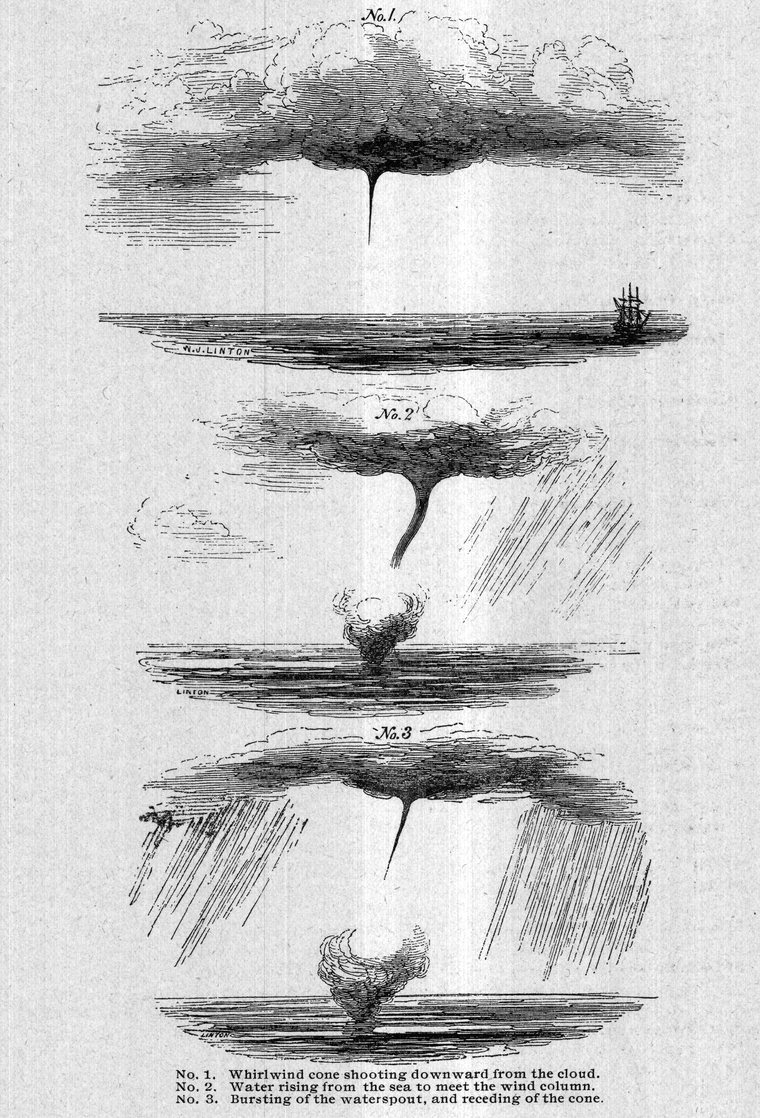
A vertical column of water having a gyratory motion, and moving along the surface of the sea, being uninfluenced by any wind that may be blowing. It is eccentric in its movements, and often emits a loud roaring as it rushes along. Waterspouts often form during dead calms, and are of the same nature with the tornado. At the commencement of a waterspout a cloud protrudes downward, and elongates in the form of an inverted cone, and meets the cloudlike mass or cone rising from the water. Vessels use every means possible to get out of the track of these terrific engines, a meeting with which would send the ship to the bottom. A gun directed toward one and fired with a heavy charge of powder will often break and disperse it. (See engravings.)