Sing OutSea Terms
To cry out loudly.
Page 232 of Patterson’s Illustrated Nautical Encyclopedia · 31 entries
To cry out loudly.
(See Banked.)
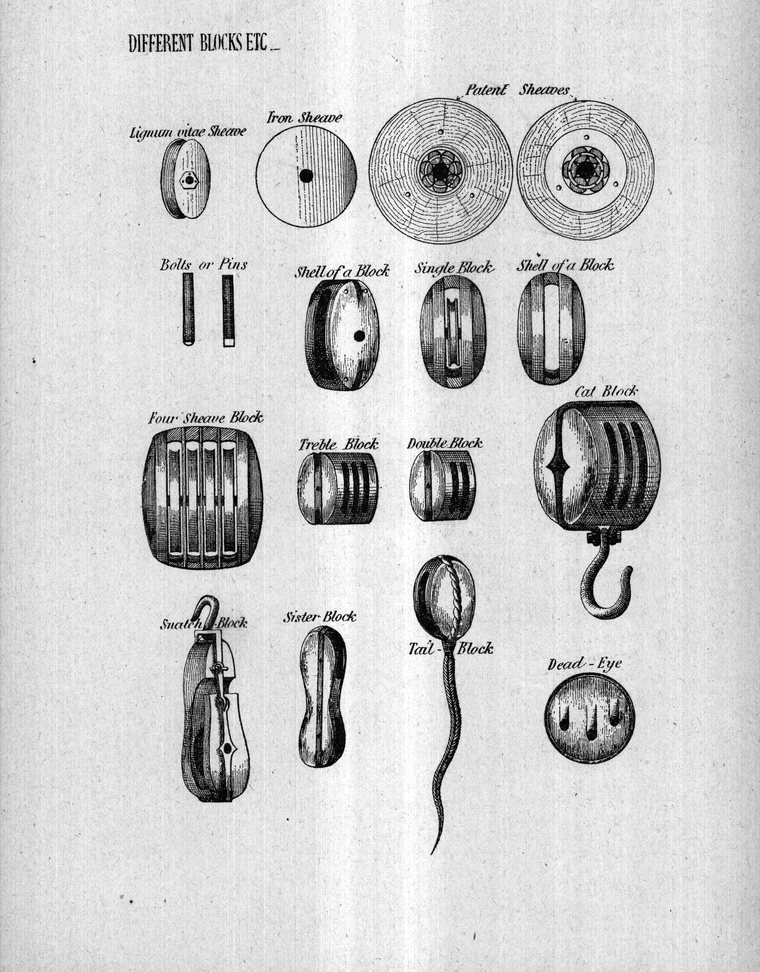
A block containing but one sheave.
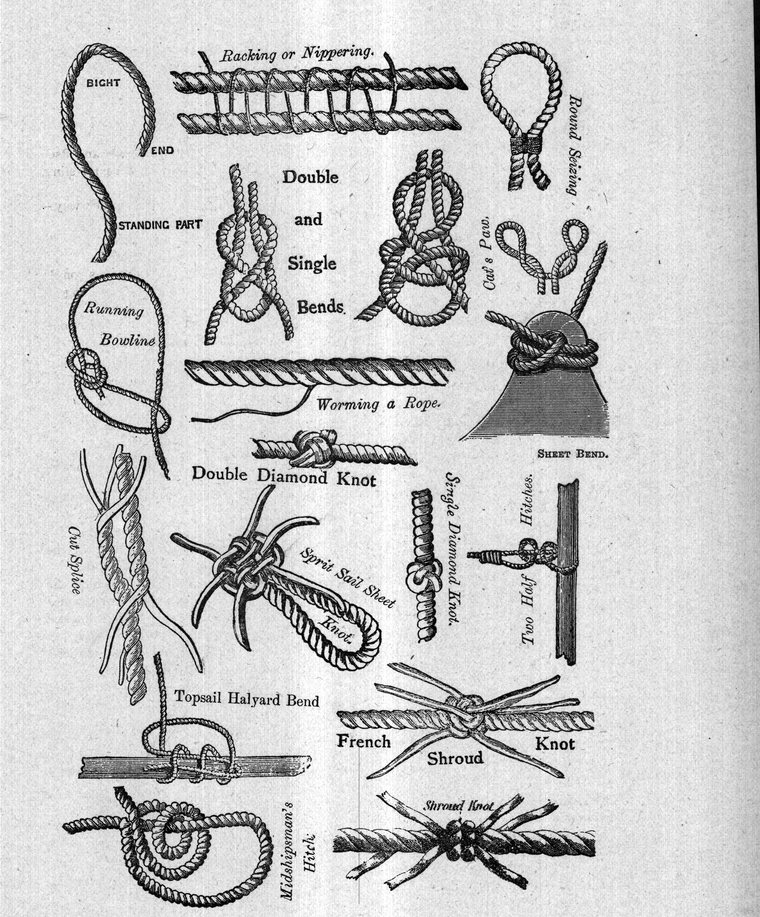
An ornamental knot worked with the strands of a rope and used on man-ropes, etc. (See engraving.)
A sloop or cutter.
(See Topgallant-sail.)
(See Topsail.)
An order to the mate to get in the double parts of the mooring lines and allow only one part of each fast to connect the vessel with the dock or with some other vessel. This is done preparatory to pulling out in the stream or changing the berth.
To sail away from the land until it sinks below the horizon.
An instrument for emitting an exceedingly shrill sound; used during fogs and in thick weather as a warning to mariners. It is blown by pumping air through it with a bellows.
A length of wood containing two sheaves, one over the other. The outside shell has a score between the two blocks for a seizing.
(See Clip Hooks.)
Timbers placed on the sides of the main keelson and bolted through it. This is often done in vessels to strengthen or stiffen them, as the term is.
Vessels built from the same model.
A long-handled scoop for drawing water from over the side.
The after-part of the keel upon which the stern-post rests.
A roughly made boat.
Lengths of timber used for sliding anything up and down, on the same principle that a barrel is slid from a truck to the ground on cart rungs.
A small rowboat.
The inside of a vessel's plating or planking; that fold of canvas which is outside when the sail is furled.
The usual title for the master of a small vessel. Also a title for Holland shipmasters.
(See Weather Indications.)
A sailor's name for a parson. (See Holy Joe.)
The wooden frames or sashes (working on hinges) containing glass windows, and placed over openings in the deck in order to give light and air below.
The sail next above the royal. A three-skysail-yard ship carries fore, main and mizzen skysails.
(See Skysail Pole.)
That part of the royal mast above the shoulder and terminating at the truck) from which the royal rigging leads.
The yard next above the royal yard.
When a skysail is triangular it takes the name of skyscraper.
A line used for hauling up the foot of a course.
The opposite to taut. A vessel is said to be slack-in-stays when she goes around slowly in tacking. To slack off anything is to ease it up. Slack water refers to that state of the tide when it is stationary, just before it turns.