Bowline on a BightSea Terms
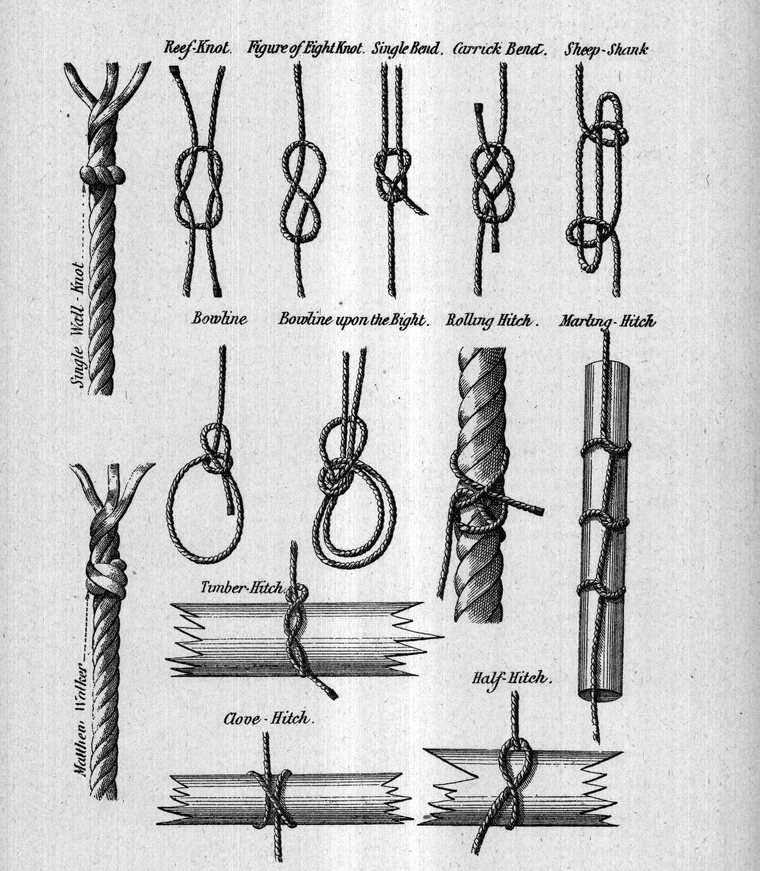
A double bowline. (See engraving.)
Page 64 of Patterson’s Illustrated Nautical Encyclopedia · 30 entries
A double bowline. (See engraving.)
The rope leading over the vessel's bows to another vessel or wharf and by which the forward part of the vessel is made fast.
A vessel is said to be bowling along when she is sailing rapidly with a free wind.
To haul.
A strong spar projecting outward over the stem of a vessel, and on which all, or a part, of the head sails are extended, according to the rig of the vessel.
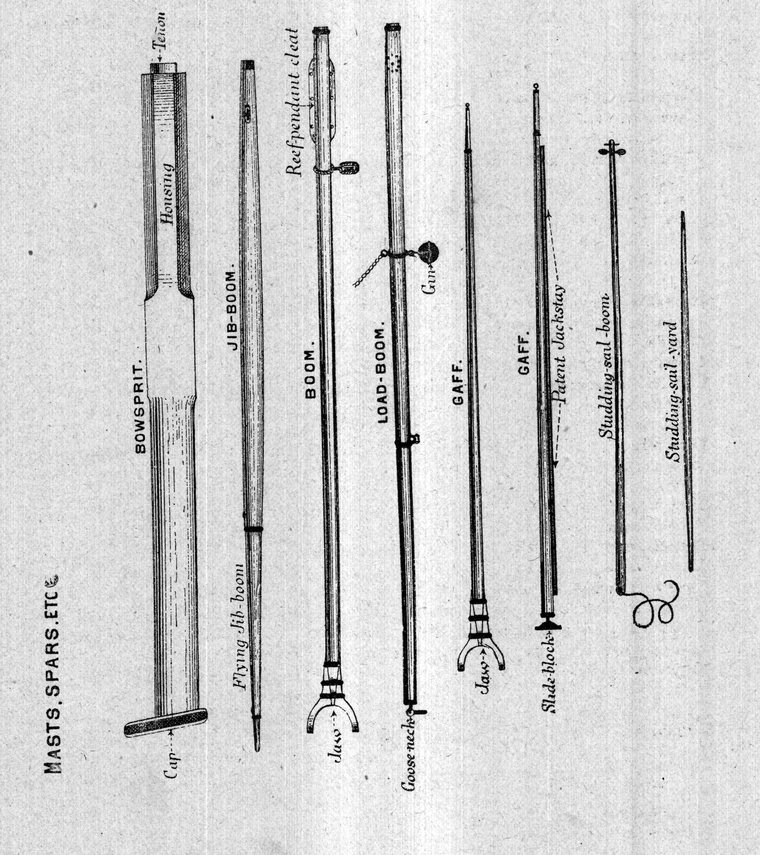
Perpendicular timbers extending above the deck, and between which the heel of the bowsprit is secured.
The iron band fitted to the outboard end of the bowsprit, with a ring on top for the jib boom to run through. (See Cap.)
The ropes leading from the side of the bowsprit cap back to the bows of the vessel where they are set up, and which stay the bowsprit sideways. (See Bobstays.)
(See Dock.)
To wear a vessel short round instead of making a long sweep. (See Abox.)
Calling the names of the thirty-two points of the compass in order. (See engraving.)
Rudder gudgeons are sometimes termed braces. The rope leading from the yard arm, and by hauling on which a yard is turned around at various angles to the keel. (See Counter-brace.)
To lay the yard so that the sail will throw against the mast.
To lay the head sails aback and keep the after sails full.
To lay the yard more thwartships.
(See Pendant.)
To slack the lee head braces so as to permit the ship's head to come quickly to the wind.
To lay the yard nearer fore-and-aft.
To lay the yard as nearly fore-and-aft as possible.
A common term for handcuffs or hand irons. Garters is a name applied to leg irons.
Ropes used for gathering fore-and-aft sails into the mast; spankers are provided with brails. There are foot, throat, and peak brails.
The lever used for working a deck pump.
When whole seas roll over a vessel it is said that they make a clear breach; when the seas sweep the deck of masts and bulwarks they are said to make a clean breach.
To commence to unload.
When the anchor is lifted from the bottom it is said to break ground.
When the wind comes more ahead so that a vessel is obliged to go off from her course in order to keep the sails full, it is known as breaking off.
Said of an anchored vessel when she tends the wrong way so as not to lie well for keeping clear of her anchor.
A vessel breaks up when she is torn in pieces by the waves; a storm breaks up when it ceases.
A small cask for containing water, carried in boats under the thwarts.
A sudden breaking of waves against a steep shore, or against a coralreef, rocks, etc. (See Surf.)