CanalSea Terms
An artificial water-course for light-draught vessels.
Page 74 of Patterson’s Illustrated Nautical Encyclopedia · 46 entries
An artificial water-course for light-draught vessels.
A flat-bottom vessel specially constructed for the navigation of canals.
A permit obtained from the State authorities at the entrance of canals. This pass must be shown at the various locks upon demand.
Clearance. The canal pass is often referred to as a clearance.
Change Bridge. The tow-path shifts form one side to the other, and where this occurs a bridge spans the canal for the mules to cross over.
Double Header. Two canal boats in line, one pushing or pulling the other.
Free Canal. When no toll is demanded nor charges made for the pass.
Gate Sluice. The blade which opens and shuts on the bottom of the lock gates, and is controlled by a lever in the hands of the lockman. The opening and shutting of this blade floods and drains the lock.
Heel-path. The opposite side of the canal from the tow-path.
Lock. The mechanical structure used on canals for raising and lowering a vessel from one level to another.
Lock Gates. The gates to a lock which may be opened and closed, and by means of which the lock may be flooded or drained and the desired level obtained.
Level. The stretch of water between two locks.
Lowering Lock. A lock which lowers a boat to a new level.
Raising Lock. A lock which raises a boat to a new level.
Tow-path. The roadway for the mules drawing the boats.
Towing Canal Boat. A canal boat drawn by mules.
Single Header. A single canal boat, either steam or towing.
Steam Canal Boat. A canal boat propelled by its own steam.
A light, flat boat propelled by paddles and by sails. In the Fegee Islands a double canoe is used, supplied with a large sail. The two canoes are far apart, and a deck extends from one to the other.
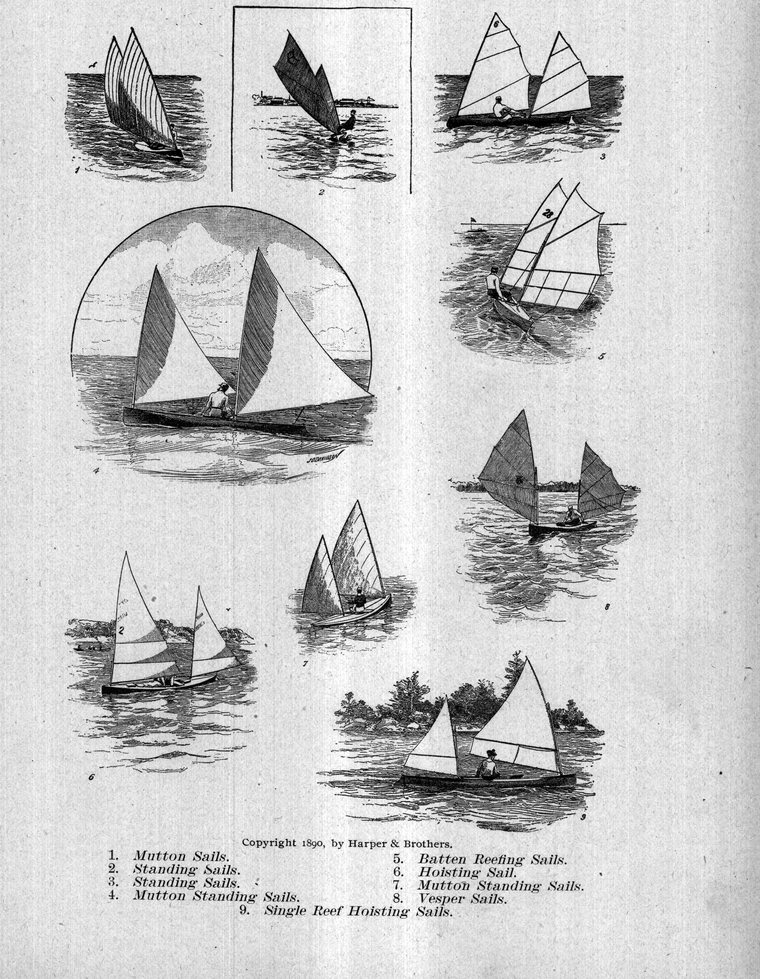
The material of which sails, awnings, etc., are made, 00 is the coarsest and strongest. It ranges from 00 to No. 10. Sails lighter than No. 10 are made of Ravens, which runs from 8 oz. to 15 oz. to the yard. The standard width canvas for yachts' sails is fourteen inches, but as narrow as six inches is often used.
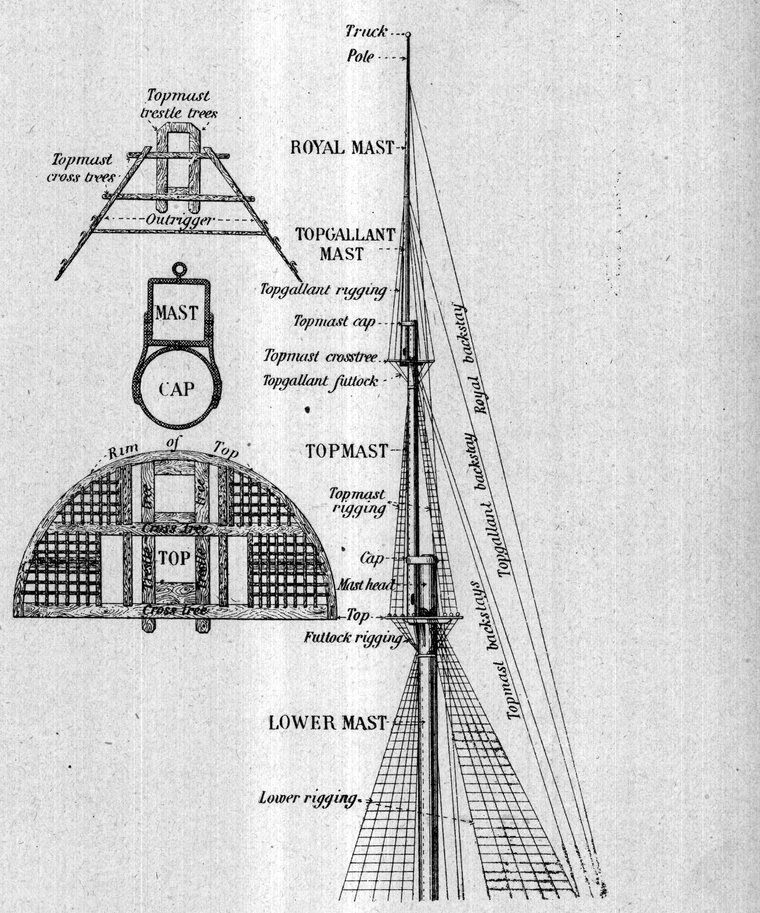
A leather, canvas, or metal thimble-shape placed over the ends of standing rigging, such, for instance, as the brass acorns on the ends of the lanyards of the lower rigging. A block of wood containing both a square and a round hole, and used for confining two masts to one another. The square hole is fitted over the lower or topmast head and strongly secured, and the round hole permits the topmast or the topgallant mast to run through it. The bowsprit cap is situated at the outboard end of the spar, and secures the jibboom to the bowsprit.
To overturn. To capsize a coil of rope is to turn it over.
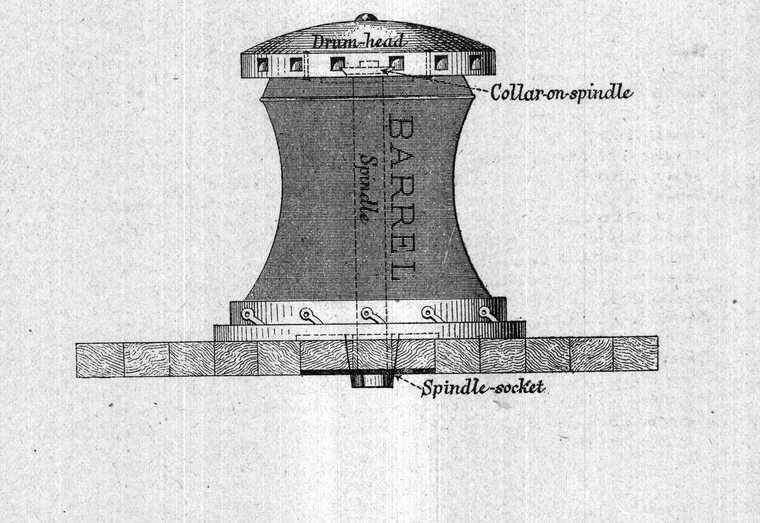
A barrel-like machine placed perpendicularly on the deck. It is of great power and is used for heaving and hoisting, etc. Also used on naval vessels to lift the anchor from the bottom. (See Jeer Capstan.)
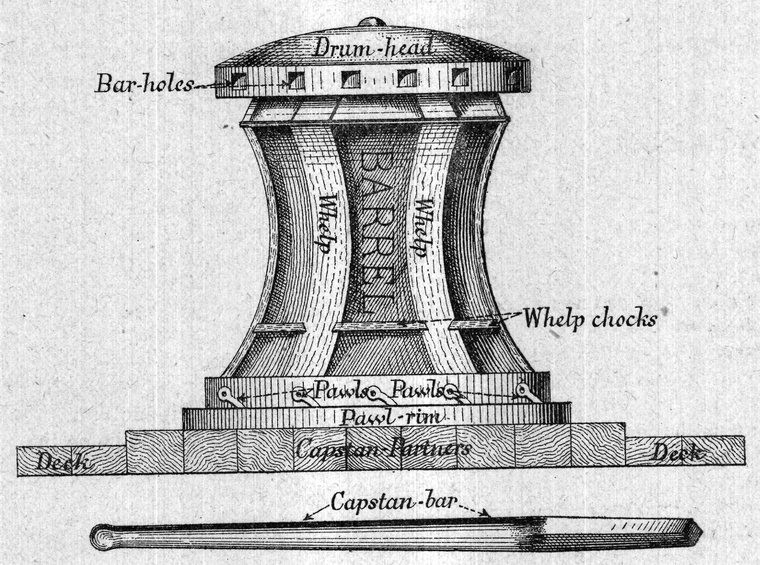
A wooden bar to ship into the capstan head (bar holes) and by which the latter is hove round.
The top part of the capstan.
The title for the commander of a good-sized vessel. The commander of a small vessel is termed skipper.
The flunkey appointed to wait exclusively upon the captain, keep his room tidy, etc.
Spanish and Portuguese vessels of large tonnage, or burden, and designed both for carrying cargo and for fighting.
A Turkish merchant vessels with a peculiar narrow, high stern.
A Portuguese vessel, lateen rigged--now obsolete.
A small pink sterned vessel of the Azores.
When a vessel lies over on her side, either in sailing or from being hove down to undergo repairs, she is said to careen. (See List.)
The goods, merchandise, or wares with which a ship is loaded.
(See Derrick.)
A jack used for lifting or forcing heavy cargo into place, such as a bale of cotton, etc. (See Jack.)
(See Lumber Port.)
Pieces of fore-and-aft timber placed between the beams.
An officer on board ship whose duty it is to have care of the hull of the vessel, masts, yards, blocks, rudder, steering gear, decks, etc.
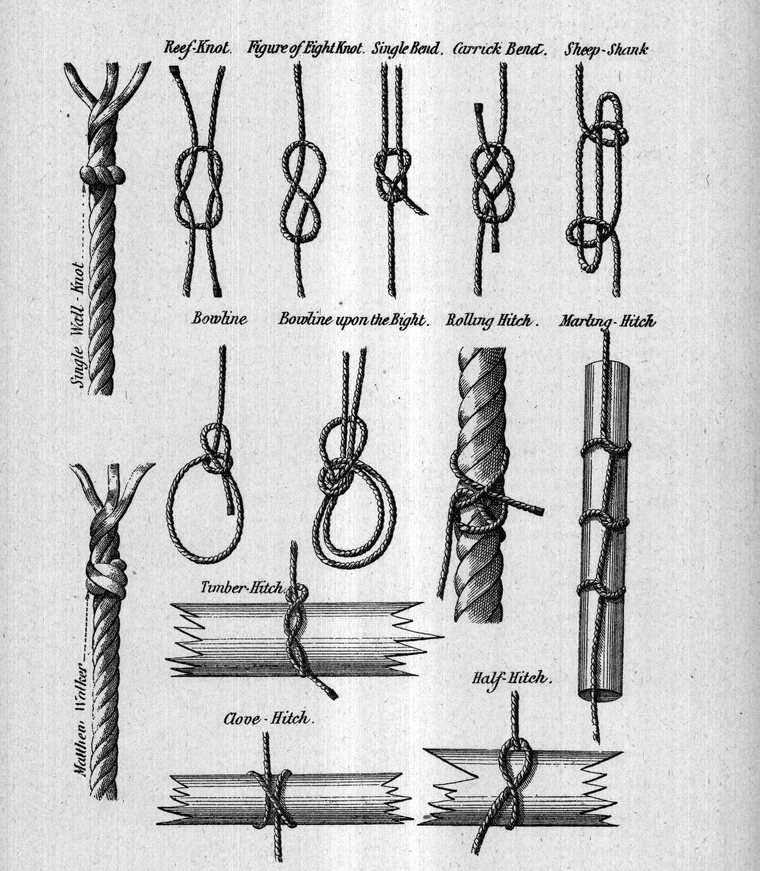
Used for bending two hawsers together. (See engraving.)
The windlass bitts.
To break or part anything, such as a spar or a rope.
(See Part V.)
A manner of building boats so that the planking is flush, or smooth sided; the opposite to clinker or clinched built, where the edges of the planks overlap.
A lighter used for carrying rubbish in the Philippines.
A barrel buoy. Sometimes a cask buoy consists of a barrel placed over the head of a stake driven in the bottom.
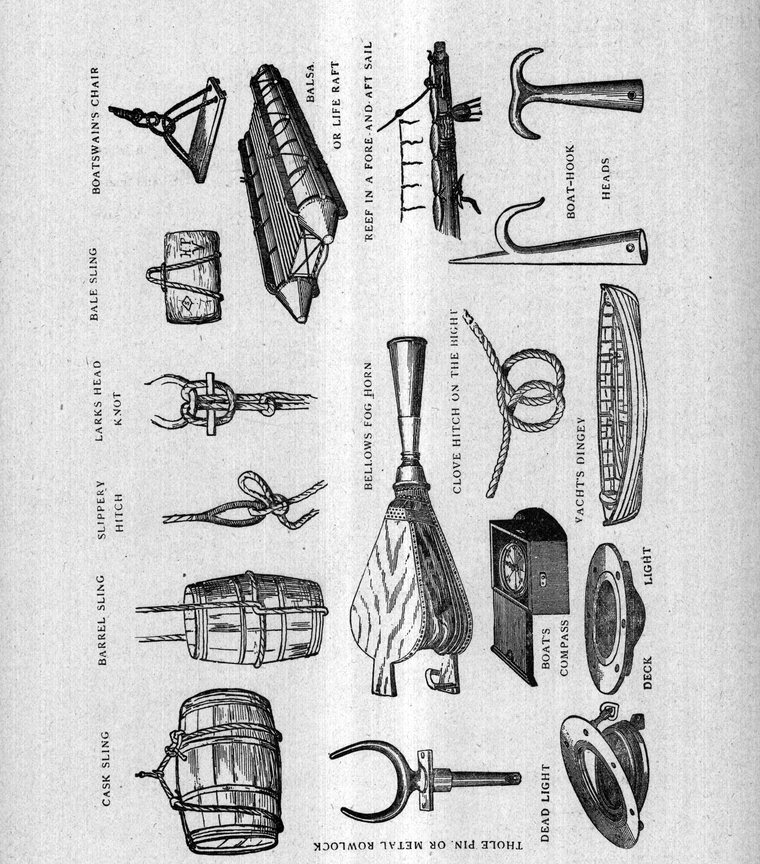
A length of rope having either a hook or an eye in one end, and used for lifting a cask on its bilge. (See engraving.) This differs from a barrel sling, which see.
To pay a vessel's head off, either to port or starboard, in getting under way--cast to port, cast to starboard.
To unfurl; to throw the gaskets off a sail; to untie, etc.
A small Spanish boat in the fishing trade.
A kind of raft. In the East Indies native made catamarans consists of three logs secured to one another by spans, the middle log being the longest, and is curved upward at the fore end.
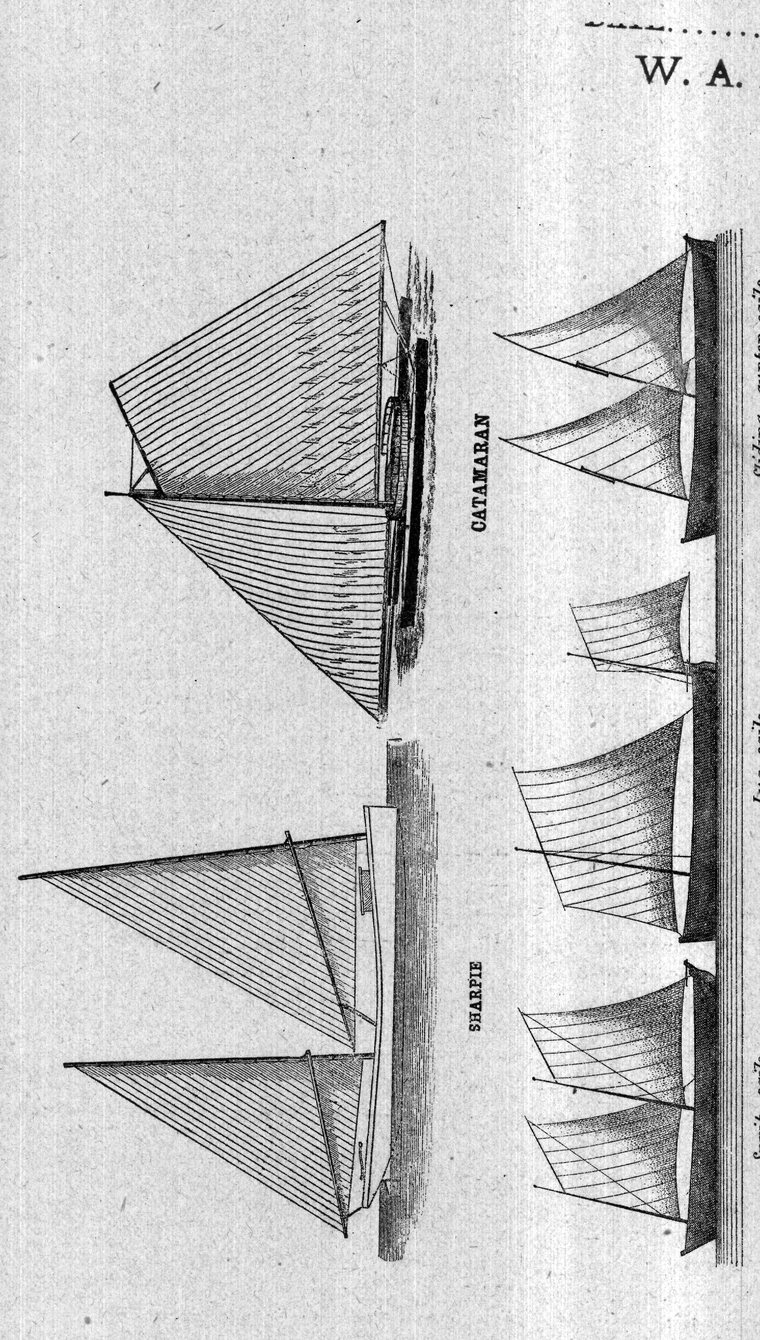
A small light draught vessel, having two separate hulls of canoe shape, which are joined by cross-beams from one deck to another, and rigged with fore-and-aft sails.
A ship of Norwegian model used in the coal and timber trade.
A whip made of leather or rope ends used to inflict punishment. Also called cat-o'-nine-tails; the tackle by which the anchor is hoisted to the cat-head.
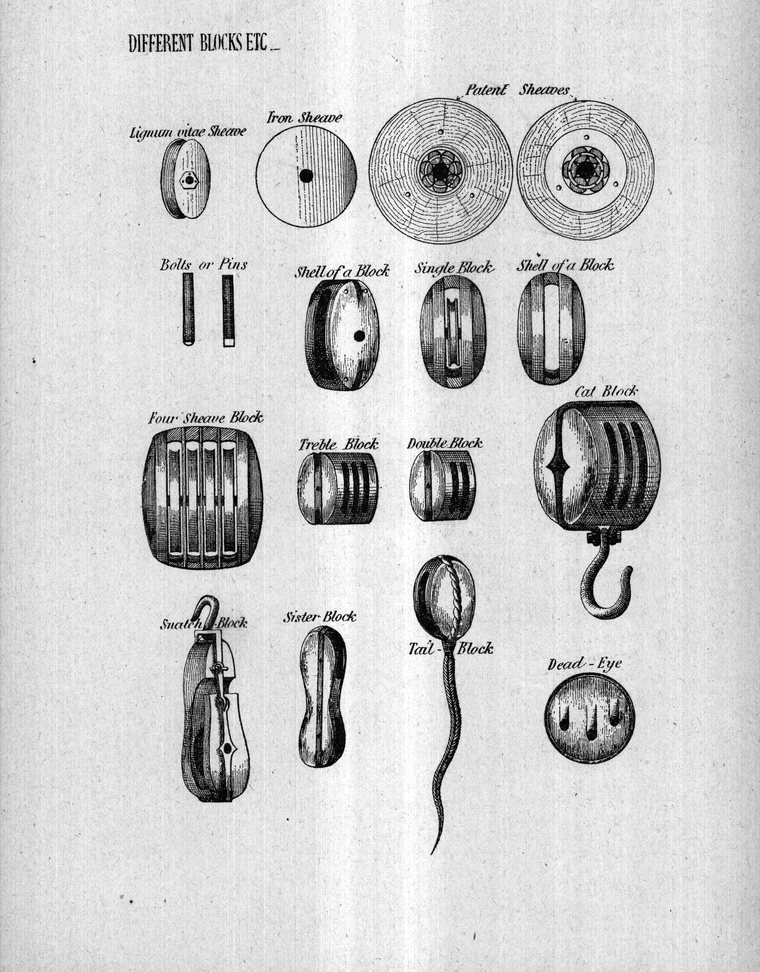
The double or threefold block forming part of the tackle used in hoisting the anchor to the cat-head.
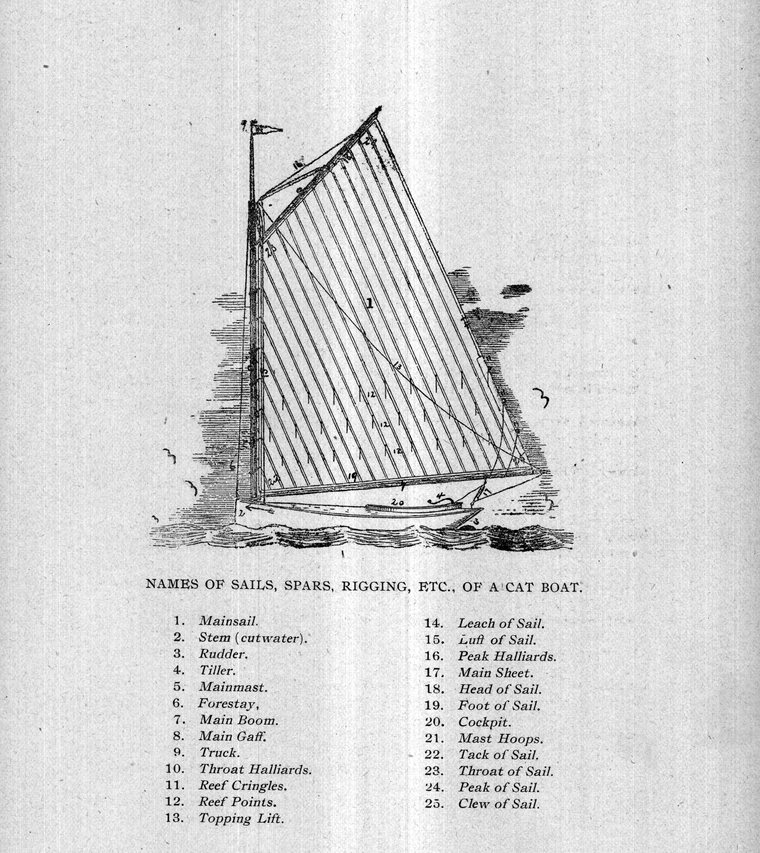
An open, or half-decked, one-mast sailing boat with the mast stepped in the eyes. This vessel has only a gaff mainsail, no head-sail being carried.
An iron overhanging beam stepped like a boat davit, and used in place of a cat-head for catting the head.
(See Cat Head.)
Short lengths of rope used for binding in the rigging abreast of the topsail yards, in order that those yards may be braced up as sharp as possible.
Horizontal timbers projecting from a vessel's bows, and to which the anchor is raised (catted) and secured after it has been hove up. (See Cat Crane.)
A large hook fitted to the strop of the cat block, and which is hooked into the anchor ring, when catting the anchor, to lift the latter to the cat head.
To lift the anchor ring to the cat-head and secure it there.